Blocker Bluffs on the River
A blocker bluff on the river uses your own cards to remove your opponent's best calls. How blockers work, which cards to pick, and a worked example.
On this page · 6 sections
A blocker bluff on the river uses your own two cards to make your opponent’s best calls less likely to exist. The logic is simple but powerful: if you’re holding a card that’s part of your opponent’s nut hand, then he can’t be holding that exact combination, so he has fewer strong hands to call with. On the last street, where equity is fixed and the only path to winning with a weak hand is a fold, blockers are the single most reliable edge a bluffer has.
How a blocker actually helps
Every hand your opponent could hold is a specific combination of two cards. When you hold one of those cards, you eliminate whole combos from his range. Take a board with three hearts. If you hold the ace of hearts, your opponent cannot have the nut flush — you’ve got the card that makes it. That doesn’t remove all his flushes, but it removes his very best ones, the hands most likely to call a big bet. Fewer nut combos in his range means a higher fold frequency, which is exactly what a bluff is buying. This is the river application of the general blocker bluff idea.
Which cards to hold
The strongest river blockers are the nut cards of completed draws:
- The ace of the flush suit on a three-flush board (blocks the nut flush).
- A card completing the top straight (blocks the nut straight).
- Cards that block your opponent’s likely top pairs and two-pairs on paired boards.
The best blocker bluffs also have no showdown value of their own. A busted flush draw holding the nut-flush card can never win by checking, so betting is strictly better — you lose nothing by turning it into a bluff, and you gain the fold equity its blocker creates.
A worked example
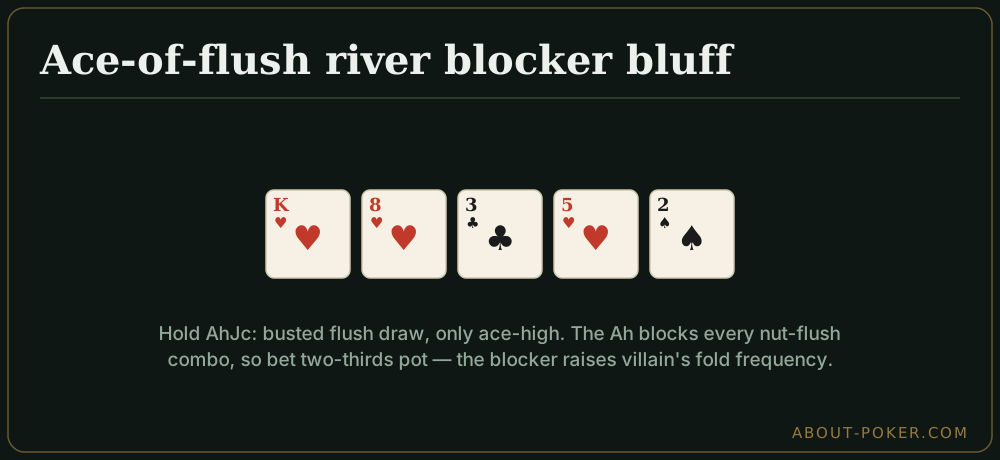
You hold Ah Jc. The board runs Kh 8h 3c on the flop, 5h on the turn, 2s on the river. You were semi-bluffing a flush draw that never completed — your final hand is just ace-high, no pair. But look at that ace of hearts. Three hearts are on the board, so the nut flush is a real hand your opponent could hold. Because you have the Ah, he cannot: you block every combination of the nut flush. His range for calling a big river bet is now weighted toward smaller flushes and one-pair hands he doesn’t love. You fire a two-thirds-pot bet. The Ah blocker means a meaningful slice of his strongest continues simply aren’t in his hand, so his fold frequency climbs — and your ace-jack, which can’t win a showdown, becomes a profitable bluff instead of a check-fold.
Blockers are one input, not the whole answer
A blocker tilts the math in your favor; it doesn’t win the pot by itself. Your opponent still holds other calling hands — smaller flushes, sets, two-pair — that your ace of hearts doesn’t touch. Blockers work best stacked on top of the other conditions for a good river bluff: a capped or bluff-catcher-heavy opponent, a board where your range credibly contains the nuts, and a size that folds out the hands you’re targeting. Against a calling station who never folds a made hand, no blocker in the deck will save a bluff.
The flip side: blocker bluff-catching
Blockers cut both ways, and understanding them makes you a better caller too. When you’re deciding whether to call a river bet, the cards you hold that block your opponent’s value hands make a call better, and the cards that block his bluffs make a call worse. That’s the core of good bluff-catching: call more when your hand blocks his value, fold more when it blocks his missed draws. The bluffer wants blockers to villain’s calls; the caller wants blockers to the bettor’s value.
A quick river blocker checklist
- Is there a completed draw whose nut card I’m holding?
- Does my hand have zero showdown value, making a bet strictly better than a check?
- Is my opponent’s range capped enough that folding out his nut combos matters?
- Does my sizing actually fold out the hands my blocker leaves in his range?
- Is he a thinking player who can fold — or a station who calls regardless?
Frequently asked
What is a blocker bluff on the river?
It's a river bluff chosen because your own cards remove combinations of your opponent's strongest calling hands. By holding a card that is part of his nut hands — like the ace of the flush suit — you make it less likely he can call, which raises your fold equity.
Which cards make the best river bluff blockers?
The nut card of a completed draw is the strongest: the ace of the flush suit on a three-flush board, or a card that completes the top straight. Cards that block your opponent's top pairs and two-pairs also help. The best blocker hands have no showdown value of their own.
Why bluff with a hand that blocks the nuts?
If you hold a card that's part of his nut hand, he simply can't have as many of those hands, so he folds more often. Betting a nut-blocker with no showdown value is also strictly better than checking it, because the hand can never win at showdown.
Do blockers guarantee a bluff works?
No. Blockers shift the odds in your favor by removing some strong combos, but your opponent still has other calling hands. Blockers are one input alongside range reads, board texture, and sizing — they make good bluffs better, not bad bluffs good.