Bluff Sizing on the River
River bluff sizing is a pure fold-equity question: pick the size that folds out the bluff-catchers you're targeting and matches your value bets.
On this page · 6 sections
Bluff sizing on the river is the cleanest sizing decision in poker. There are no more cards to come, so equity is fixed — you either have the best hand or you don’t. That means a river bluff is a pure fold-equity bet: you’re paying a price to buy the pot, and the only question is which size buys it most profitably. Everything comes down to two things: the fold frequency your size requires, and the specific hands you need your opponent to release.
The break-even math still rules
A river bluff profits when it folds out better hands often enough to cover the times it gets called. The formula is the same one that governs bluff sizing on any street:
Required fold percent = bet ÷ (bet + pot)
- Half-pot river bluff: 0.5 ÷ 1.5 ≈ 33 percent. Your opponent only needs to fold a third of the time.
- Pot-sized river bluff: 1 ÷ 2 = 50 percent.
- 1.5x pot overbet: 1.5 ÷ 2.5 = 60 percent.
- 2x pot overbet: 2 ÷ 3 ≈ 67 percent.
Because the river is the last street, there’s no “implied” future to muddy this number. If you bet pot and your read says villain folds more than half his range, the bluff is profitable long-term, full stop.
Match your value bets, not the board
The single biggest river-sizing mistake is choosing a size based on your hand. If you fire an overbet only when you’re bluffing and bet small only for value, a thinking opponent snaps you off. Pick your river size around the value hands you’d play the same way, then bluff at the same number. On a river where you’d overbet the nuts, overbet your bluffs too. On a river where your value bets are thin and want calls from worse, keep the bluffs small and consistent. This is the practical heart of a polarized river bluffing strategy.
A worked example
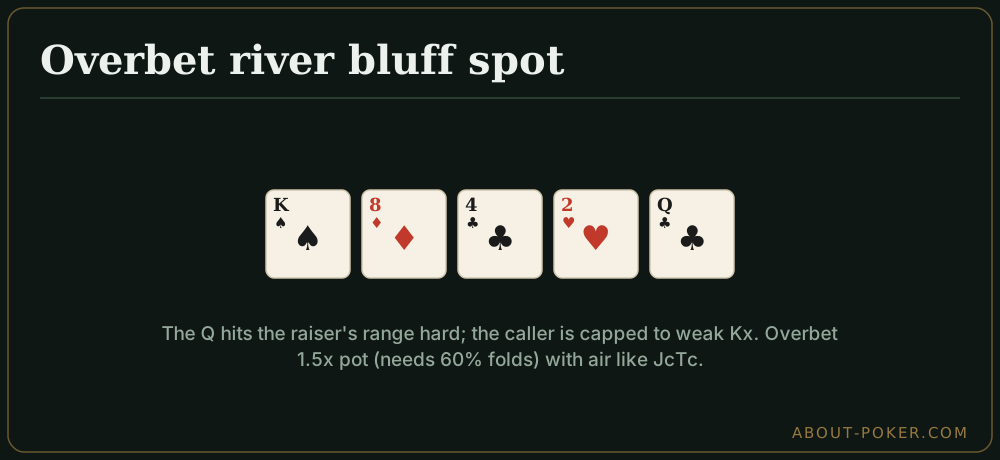
Pot is $100 on the turn, you and one opponent each have $150 behind. Board runs out Kh 9d 4s 6c, river 2h — a total brick. You held Ah Th (missed) and barreled the turn; villain called and looks capped at one-pair hands like KQ, KJ, 99, and a few 9x. You want to fold out his king-x that beats your ace-high.
An overbet of $150 (1.5x pot) asks him to fold 60 percent of the time. Against a range that’s mostly second-best made hands with no way to improve, and holding the Ah as a light blocker to some of his stronger continues, that pressure folds out enough KJ/KQ/9x to profit. A half-pot $50 bet only asks a 33 percent fold — but it also gives him a cheap call with the same one-pair hands, so it wins less. On a river this dry with a capped opponent, the bigger size prints more.
When smaller is correct
Not every river wants an overbet. If your opponent’s range still contains plenty of pure air — busted draws, floats, ace-highs — you don’t need a giant bet to fold those out; a smaller bet folds the same junk while risking fewer chips. Multiway pots also pull sizing down: with two players left to act, each additional caller compounds your risk, so pot-plus overbets get punished. And when you’re out of position with no blockers, a modest size that keeps your whole range consistent usually beats a hero overbet that only your bluffs would ever make.
Pick blockers before you pick a size
Sizing and hand selection work together. The best river bluffs hold cards that block your opponent’s calling range — the ace or the exact card that makes his nuts. Using blocker logic lets you bluff bigger with confidence, because you know a chunk of his strong continues simply aren’t in his hand. Holding the nut-flush blocker on a completed flush river, for instance, justifies an overbet that would be reckless with a random bluff.
River bluff sizing checklist
- Confirm your opponent’s range is capped or bluff-catcher heavy before firing.
- Set your size to the value bets you’d make on the same river.
- Compute the required fold percent and sanity-check it against your read.
- Prefer bigger sizes when villain is capped and you hold relevant blockers.
- Shrink or skip the bluff multiway, or when air is already a big part of his range.
- Never let your bluff size differ from your value size on the same board.
Frequently asked
How big should you bluff on the river?
Match the size of the value bets you'd make in the same spot, and pick the size that folds out the specific bluff-catchers you're targeting. On polarized rivers that's usually two-thirds pot to an overbet; when you only need to fold out air, a smaller bet does the job.
Does a bigger river bluff work better?
A bigger bet needs to succeed less often to break even, but it costs more when called and folds out fewer marginal hands you might already beat. Since the river has no more cards to come, sizing is purely about maximizing profitable folds, so bigger is only better when your opponent's range is genuinely capped.
Should river bluffs and value bets be the same size?
Yes. If you overbet only when bluffing and bet small only for value, observant opponents read your hand off the sizing. Using one size for both your value hands and your bluffs on a given river keeps you unexploitable.
What fold frequency does a river bluff need?
Required fold percent equals bet divided by (bet plus pot). A pot-sized river bluff needs to work more than 50 percent of the time; a half-pot bluff needs about 33 percent; a 1.5x overbet needs about 60 percent.