Picking Bluffing Frequencies
How often should you bluff? Learn the GTO bluff frequencies by street, how bet sizing sets your ratio, and when to deviate to exploit opponents.
On this page · 7 sections
Picking bluffing frequencies is about answering one question with real numbers: out of all the times you bet, how often should it be a bluff versus a value hand? Get it right and you’re impossible to exploit while still extracting maximum folds. Get it wrong and observant opponents will either fold to everything or call you down to zero. This guide gives the GTO baselines by street and sizing, then shows when to break from them.
The core idea: bluff frequency comes from bet size
The mathematical anchor is making your opponent indifferent to calling with a bluff-catcher. That indifference point depends entirely on the pot odds your bet lays them, which depends on your sizing. The bigger you bet, the more bluffs your range can support.
On the river, the standard value-to-bluff ratios are:
- Half-pot bet: about 2 value to 1 bluff — roughly 25% bluffs.
- Two-thirds-pot bet: about 1.5 value to 1 bluff — roughly 29% bluffs.
- Pot-sized bet: about 1 value to 1 bluff — roughly 33% bluffs.
- Overbet (2x pot): you can bluff even more, up to about 40%.
These come straight from the pot odds you offer. A pot-sized bet gives 2-to-1, so the caller needs to be good 33% of the time; balancing to that number keeps them indifferent. Our bluff-to-value ratio page derives these numbers step by step.
Frequencies change by street
Earlier streets support more bluffs because your bluffs still have equity and more streets remain to apply pressure:
- Flop: you bluff frequently — many c-bets are bluffs or semi-bluffs, because folds are cheap to buy and your bluffs can still improve.
- Turn: you tighten. Bluffs need better equity or blockers; you’re committing more chips and have one fewer card to hit.
- River: the ratios above apply strictly, because there’s no more equity — every bluff is pure and must be balanced against value by sizing.
Think of it as a funnel: wide on the flop, narrowing to a disciplined river ratio. For a plain-language walkthrough, see how often should you bluff.
A worked example
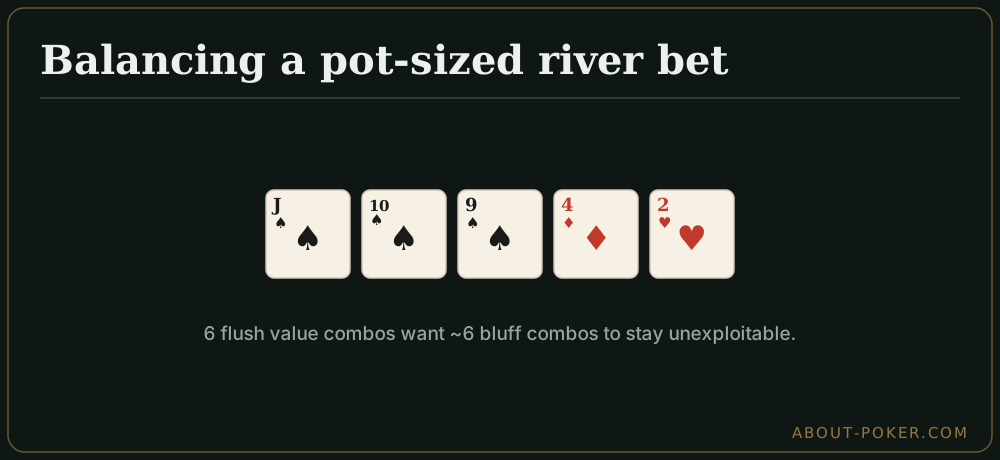
River, pot is 100. You decide to bet 100 (pot-sized). To stay balanced, you want about a 1-to-1 value-to-bluff ratio, so if you have 6 value combos in this spot, you add roughly 6 bluff combos.
Say your value here is 6 combos of a made flush. You’d select about 6 bluff combos from your busted draws — ideally the ones with the best blockers. Now your opponent’s bluff-catchers are exactly indifferent: calling breaks even against your range. If you’d instead only bluffed 2 combos, you’d be under-bluffing, and a smart opponent could profitably fold all bluff-catchers. Bluff 12 combos and you’re over-bluffing, so they’d profitably call everything. The pot-sized bet demands roughly equal value and bluffs — that’s the whole point.
Adjusting to exploit real opponents
GTO frequencies make you unexploitable, but they’re the floor, not the ceiling of profit. Deviate based on how opponents fold:
- Vs. calling stations: slash your bluffs, even to near zero. If they never fold, every bluff loses. Value bet thinner instead.
- Vs. nits and over-folders: crank bluffs up well past GTO. If they fold 70% to a river bet, bluffing is printing money regardless of your value.
- Vs. tough regulars: stick close to balanced frequencies; they’ll punish any imbalance.
Detailed exploit adjustments live in our GTO balance coverage.
Common mistakes
- Bluffing the same frequency at every size. A small bet supports far fewer bluffs than an overbet. Match your bluff count to your sizing.
- Ignoring street-by-street tightening. Firing turn and river bluffs at flop frequencies leaves you badly over-bluffed by the river.
- Playing GTO against exploitable players. Balancing perfectly against a station leaves money on the table — deviate.
- Counting hands, not combos. Frequencies are about combinations. Blockers change how many combos of each hand you actually hold.
Quick reference by river sizing
| Bet size | Pot odds offered | Target bluff share |
|---|---|---|
| Half pot | 3-to-1 | ~25% |
| Two-thirds pot | ~2.4-to-1 | ~29% |
| Pot | 2-to-1 | ~33% |
| Overbet (2x) | 1.5-to-1 | ~40% |
Quick checklist
When picking a bluffing frequency, ask: What size am I betting, and what bluff share does that support? Which street am I on — should I be tightening from flop toward river? Which of my hands have the best blockers to fill the bluff slots? And most importantly, does this opponent fold enough to justify GTO frequency, or should I deviate? Answer those and your bluffs will be balanced against tough players and exploitatively profitable against everyone else.
Frequently asked
How often should you bluff on the river?
The GTO baseline ties bluff frequency to bet size. Betting half pot, roughly 25% of your betting range should be bluffs; two-thirds pot, about 29%; and pot-sized, around 33%. Larger bets support more bluffs because they lay your opponent worse pot odds to call.
Why does bet size change bluff frequency?
A bigger bet gives your opponent worse pot odds, so they must fold more to avoid being exploited. That lets you include more bluffs while keeping them indifferent to calling. Smaller bets support fewer bluffs relative to value.
Should you use GTO frequencies against everyone?
No. GTO frequencies make you unexploitable, but against real players you profit more by deviating. Bluff less against calling stations who never fold, and bluff more against nits who over-fold to aggression.