Triple Barrel Bluffs
A triple barrel bluff bets all three streets to fold out a bluff-catcher. When the story is credible, which hands to pick, and the pot-odds math.
On this page · 7 sections
A triple barrel bluff bets the flop, the turn, and the river with a hand that can’t win at showdown, applying relentless pressure to fold out your opponent’s bluff-catchers. It’s the boldest and most expensive line in no-limit hold’em, and it fails hard when it’s mistimed. Done right, it wins big pots against capped ranges. Done wrong, it’s the fastest way to torch a stack. The difference is almost always story credibility and hand selection.
The story has to hold up
A triple barrel only works if your opponent believes you could be betting three streets for value. That belief comes from the runout matching a value hand you’d credibly hold. If you raised preflop, c-bet a king-high flop, barreled a turn that completed a draw, and bet a river that pairs the top card, you can represent a huge range of made hands. But if the board ran out in a way that misses everything you’d raise preflop, a third barrel represents nothing and gets snapped off. Every barrel must extend the same consistent story, the way a disciplined double barrel sets up the river before the turn bet is even made.
Pick hands with no showdown value and good blockers
The ideal triple barrel is a busted draw that also blocks your opponent’s calling range. Because it can’t win by checking, betting is strictly better — you’re not giving up any showdown equity. And its blockers make it less likely villain holds the nuts.
- Busted flush draws holding the nut-flush card (blocks his made flushes).
- Missed straight draws holding a card that removes his top pairs or two-pair.
- Hands whose ranks sit in villain’s strong continuing range.
Choosing bluffs by their blocker value is what separates a thinking triple barrel from a reckless one. A hand with a pair or two has showdown value and should usually check the river instead of turning itself into a bluff.
The river math
The three barrels are separate decisions, and the river bet is judged on its own size, not the total you’ve already committed. Required fold percent = bet ÷ (bet + pot).
- Two-thirds pot river barrel: 0.67 ÷ 1.67 ≈ 40 percent.
- Pot-sized river barrel: 1 ÷ 2 = 50 percent.
- 1.5x pot overbet: 1.5 ÷ 2.5 = 60 percent.
The chips you put in on the flop and turn are gone regardless of what you do now — they should never guilt you into a bad river barrel or scare you out of a good one.
A worked example
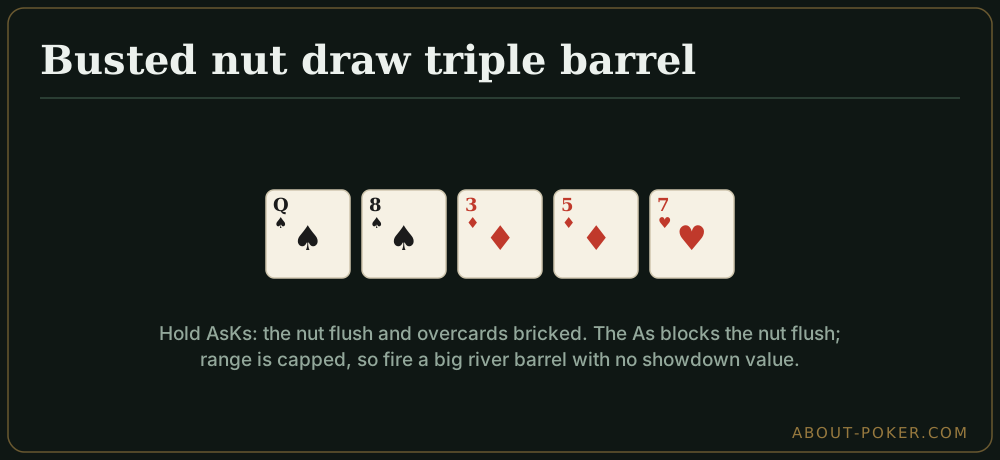
You open Ah 5h from the cutoff; the big blind calls. Flop Kh 9h 4c — you have the nut flush draw. You c-bet, he calls. Turn 7h completes your flush… but say instead it’s the 2c, a blank; you barrel again as a semi-bluff and he calls. River is the Qs: your flush draw missed entirely, leaving ace-high. This is a strong triple-barrel spot. You hold the Ah, blocking the nut flush he might have made had the board been different, and the runout — king-high flop, brick turn, broadway river — lets you represent KQ, AK, and sets. Your ace-five has no showdown value, so betting is strictly better than checking. You fire a two-thirds-pot river bet needing roughly a 40 percent fold, and his one-pair kings and nines are in a miserable spot.
When not to fire the third barrel
Triple barrels crater against the wrong opponent or the wrong board:
- Calling stations who never fold a pair — bet only for value against them.
- Boards that improved his range more than yours on the turn or river.
- Rivers where your story falls apart because no value hand got there.
- Spots where you hold a hand with showdown value that could win by checking.
The most common triple-barrel leak is betting a third time out of momentum. If the river doesn’t extend your story and fold out real hands, check and give up. A well-timed river bluff beats a stubborn one every time.
Sizing across three streets
A credible triple barrel usually escalates. Small-to-medium on the flop to fold out air cheaply, a larger turn bet to charge draws and pressure one-pair hands, then a big river bet or overbet to make bluff-catchers fold. This escalation matches how real value hands bet: they build the pot as their hand stays strong. If your sizes shrink or stay flat across the streets, the line looks like a bluff losing conviction, and thinking opponents pick it off. Match the sizes you’d use with your actual value hands on the same runout, so the bluff and the nuts are indistinguishable.
Triple barrel quick checklist
- Does the runout let me credibly represent value hands I’d bet three times?
- Is my opponent’s range capped to bluff-catchers rather than nutted?
- Does my hand have zero showdown value, making betting strictly better than checking?
- Do I hold blockers to his strongest calling combinations?
- Is he a player who can actually fold a bluff-catcher — not a station?
- Do my three sizes tell the same story as my value bets on this board?
Frequently asked
What is a triple barrel bluff?
It's betting all three postflop streets — flop, turn, and river — as a bluff, applying maximum pressure to fold out your opponent's bluff-catchers. It's the most expensive bluff in poker, so it demands a credible story and a range your opponent believes you'd bet three times for value.
When should you triple barrel bluff?
Fire three barrels when the runout tells a consistent story you'd play the same way with value, when your opponent's range is capped to bluff-catchers, and ideally when you hold blockers to his strongest calls. Don't triple barrel into calling stations or when the board changed against your range.
Which hands make the best triple barrel bluffs?
The best are missed draws that block your opponent's value, especially busted flush and straight draws holding the key card. These hands have zero showdown value, so betting is strictly better than checking, and their blockers make it less likely villain can call.
How often does a triple barrel need to work?
By the river the pot is large and your bet is often two-thirds pot to an overbet, so you typically need a fold around 40 to 60 percent of the time on the last bet. Because you invested on earlier streets, the river bet's break-even is judged on its own size, not the total you've committed.