Turning Hands into Bluffs
Turning a made hand into a bluff means betting a hand too weak to win at showdown but that can fold out better. Learn which hands qualify and when.
On this page · 7 sections
Turning a hand into a bluff means taking a made hand that’s too weak to win at showdown and betting it as a bluff to fold out better hands. It sounds backwards — why bet a hand you could just check? — but in the right spot it converts a hand with near-zero showdown value into a profitable pot-winner. This guide explains which hands qualify, the blocker logic behind the play, and the mistakes that make it a leak.
What “turning a hand into a bluff” means
Every hand you reach the river with falls into one of three buckets: value bets (bet for value, win when called), bluffs (bet to fold out better), or check-backs with showdown value (check and hope to win at showdown). Turning a hand into a bluff moves a hand from that third bucket into the second: instead of checking a weak made hand and giving up, you bet it to make a better hand fold.
The key insight is that some hands can’t win by checking anyway. If your busted middle pair loses to everything your opponent would check back, checking wins nothing extra — so the showdown value is an illusion. Betting it as a bluff at least adds fold equity. Contrast this with knowing when to quit: giving up on a bluff covers the other side.
The rule: bet the bottom of your bluffs, check the middle
A crucial principle from balanced play: when choosing which hands to bluff, use your weakest made hands and busted draws — not your medium-strength ones. A hand with real showdown value (a middle pair that beats their bluffs) should check and try to win for free. A hand with no showdown value should be the one you turn into a bluff.
This is why you don’t turn a decent bluff-catcher into a bluff. You’d be betting a hand that could have won at showdown while checking hands that couldn’t. Picking correctly is the whole skill — see picking bluffing hands for the selection framework.
A worked example
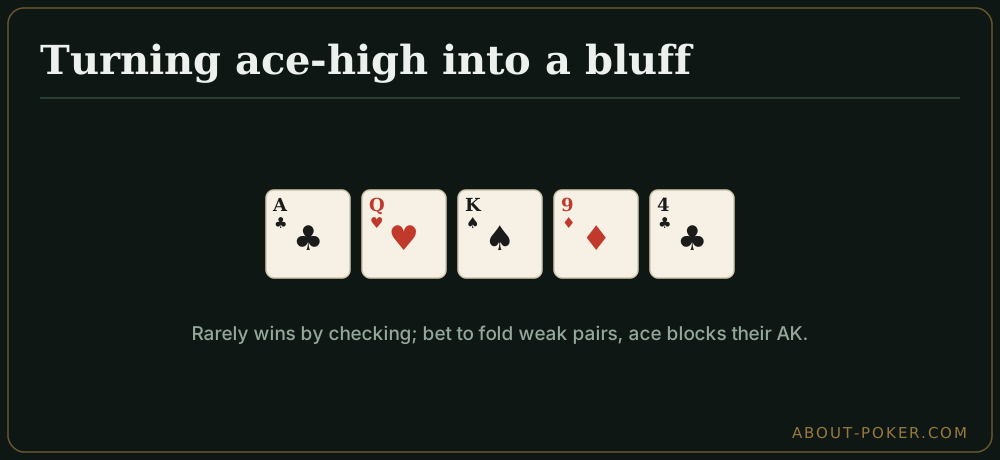
You raise Ac Qh preflop, the big blind calls. Board runs out Ks 9d 4c 2s 7h. You c-bet the flop, they call, and both check the turn. On the river you have ace-high — no pair, no draw. It beats only their busted draws and other ace-highs.
Ace-high has some showdown value, but against a range that check-called flop and turn, you rarely win by checking; they’ll show down a king or a pair. Here, turning your hand into a bluff can work: bet, and you fold out weak pairs and other ace-highs that beat you, while your ace blocks some of their strong aces. If you instead held a small pair with genuine showdown value that beats their bluffs, you’d check. The weaker your made hand, the better a bluff candidate it is.
Blockers decide which weak hands to bluff
Among your no-showdown-value hands, pick the ones with the best blockers:
- Block their calls. Holding a card that removes their strong calling combos (like an ace that blocks their AK) means fewer hands can call your bluff.
- Unblock their folds. Your hand should overlap with the hands they’d fold, so those combos are still in their range to be folded.
A busted flush draw that holds the ace of the flush suit is a premium candidate: it blocks their nut flush and their ace-high calls, and it has zero showdown value. That combination — no showdown value plus a great blocker — is the ideal hand to turn into a bluff. Getting the ratio right ties into your overall bluff-to-value ratio.
When NOT to turn a hand into a bluff
- The hand can win by checking. If your made hand beats their bluffs, check and take the free showdown — don’t bet away a winner.
- Your opponent won’t fold. Against a station, turning a hand into a bluff just donates chips. No fold equity, no play.
- Your hand blocks their folds. If your cards overlap with the hands they’d fold, you’ve removed the very combos you wanted gone, leaving more calling hands behind.
- You’d be over-bluffing. If you’ve already got enough bluffs on the river, adding more tips your ratio too far and lets them profitably call wider.
Common mistakes
- Bluffing the middle of your range. Betting a medium hand with showdown value while checking your air is exactly backwards.
- Ignoring blockers. Turning a hand with the worst blockers into a bluff means max combos can call. Pick the hands that block calls.
- Doing it against the wrong player. This is a play for thinking opponents who can fold, not for calling stations.
- Confusing “no showdown value” with “must bet.” Sometimes checking and giving up loses less than a doomed bluff. If there’s no fold equity, just check-fold.
Quick checklist
Before turning a hand into a bluff, confirm: Can this hand win by checking? (If yes, check.) Does it block my opponent’s calls and unblock their folds? Will this opponent actually fold? Am I under my bluffing quota for this river? When the hand is weak, the blockers are right, and the fold equity is real, betting your no-showdown-value hand is a clean, profitable bluff.
Frequently asked
What does turning a hand into a bluff mean?
It means betting a made hand that has little chance of winning at showdown, using it as a bluff to fold out hands that would otherwise beat it. You give up the small showdown equity in exchange for the bigger fold equity of a bluff.
Which hands should you turn into bluffs?
Hands with weak showdown value that also block your opponent's calling range or unblock their folding range. A busted draw that holds a blocker to the nuts is a classic candidate, as is a low pair that can't win a called bet anyway.
When should you not turn a hand into a bluff?
Don't do it when the hand has enough showdown value to win by checking, when your opponent won't fold, or when the hand blocks the very hands you want them to fold. In those cases, checking and taking a free showdown is more profitable.