Avoiding Revenge Tilt
Revenge tilt is trying to beat one specific player instead of the game. Learn to spot the trigger, break the fixation, and play the table — not the grudge.
On this page · 6 sections
Avoiding revenge tilt starts with recognizing what it actually is: the moment you stop trying to win money and start trying to beat one specific person. A player cracks your aces, stacks you in a cooler, or types something in the chat box — and now your goal quietly shifts from “make the best decision” to “make them pay.” That shift is invisible and expensive, and beating it is a skill you can build.
What revenge tilt actually is
Revenge tilt is a targeted form of tilt. Ordinary tilt makes you play worse across the board; revenge tilt aims your worst play at a single opponent. You find yourself three-betting them light, calling their river bets because “he’s always bluffing me,” and entering pots you’d fold against anyone else — all to settle a score.
The trap is that it feels justified. Your brain frames it as “adjusting” or “playing back at an aggressive player.” Occasionally that framing is even correct — but when it’s driven by emotion rather than evidence, you’re not exploiting them, you’re donating to them.
The trigger: it’s personal, not strategic
The tell that you’re on revenge tilt is that a specific person is now living rent-free in your head. You notice their seat. You watch their stack. You feel a jolt when they enter a pot. A calm player thinks “villain in the cutoff, likely wide range.” A revenge-tilted player thinks “that guy again — this time I’ve got him.”
That personalization is the whole problem. Poker is a game against a range and a situation, not against a human you have a grudge with. The chips your rival won don’t have his name on them; they’re just chips, spread across the whole table, and your job is to win the most from everyone, not to reclaim a specific pot from a specific villain.
A worked example
You hold A-K on a K-7-2 board and get it in against a loose player who called your three-bet with 7-2 offsuit and rivered two pair. Brutal — but you played it perfectly. Twenty minutes later that same player limps, you look down at K-9 offsuit in the cutoff, and you raise big “to isolate him.” He calls. Flop comes Q-8-4. He checks, you c-bet, he calls. Turn 5, he checks, you barrel again with nothing but a gutshot draw and no fold equity against a station. He calls with second pair. River bricks, he checks, and you fire a third time hoping to blow him off it. He snaps.
Every street there was a story: “I’m getting him back.” Against a calling station, that’s the exact wrong opponent to bluff. K-9 offsuit was a fold or a small raise preflop, and the multi-barrel bluff was pure revenge. You turned a normal cooler into a self-inflicted disaster because you were playing the man, not the math. This is why emotional control matters more against the players who get under your skin.
How to break the fixation in the moment
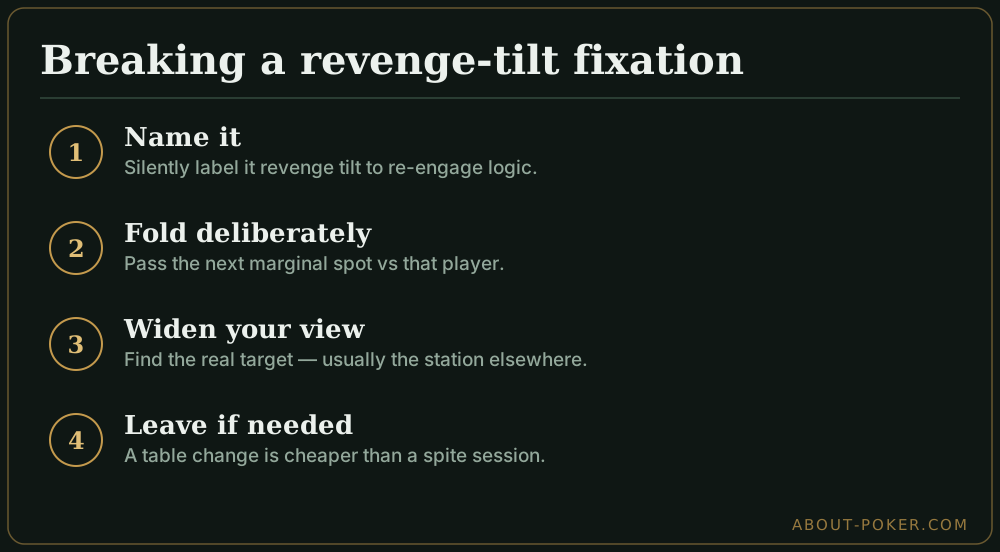
- Name it. Silently say “this is revenge tilt.” Labeling an emotion measurably reduces its grip — the rational brain re-engages the moment you notice.
- Fold the next marginal spot against that player. Deliberately. One conscious fold breaks the pattern and proves to yourself you’re back in control.
- Widen your view. Deliberately look at the other seats. Who’s the real target? The station three seats over is worth ten times your grudge.
- If it won’t fade, leave. A short walk or a table change is cheap. A revenge-tilt session is not.
This is the same physical-reset logic covered in how to stop tilting: behavior first, feelings later.
Reframe the villain as your best customer
Here’s the mindset flip that kills revenge tilt for good: the player who just cracked you is usually the player you most want to keep in the game. If they got there with 7-2, they are exactly the kind of opponent who hands you money over the long run. Chasing them off with hostility, or spewing at them out of spite, drives away your best source of profit.
So instead of resenting the fish, protect him. Compliment the bad beat in the chat if you talk at all. Keep the game friendly. Let him keep making the mistakes that pay your rent. The grudge wants to punish him; your bankroll wants him to stay and keep gambling.
Prevention checklist
- Before every session, decide: I play ranges and situations, not people.
- When one player starts occupying your attention, that’s the alarm — check whether it’s evidence or ego.
- Keep a mental rule: never make a bluff or a wide call because of who’s on the other end.
- Treat the player who beat you as your best customer, not your enemy.
- If naming and folding don’t reset you within a few hands, quit the table.
Beat revenge tilt and you unlock a quiet edge: while everyone else is busy settling scores, you’re the one calmly stacking the whole table.
Frequently asked
What is revenge tilt?
Revenge tilt is the urge to specifically beat one opponent who cracked you, needled you, or coolered you. You start playing more pots against them, calling wider, and bluffing more just to 'get them back' — even when the spots are bad. You're playing the person instead of the game.
Why is revenge tilt so dangerous?
Because it narrows your focus to a single player and a single goal — winning their chips — instead of making the most profitable decision available. It leads to wide calls, hero bluffs, and staying in bad games far longer than you should, all to settle a score that doesn't exist.
How do I stop targeting one player?
Name the feeling out loud in your head, then deliberately fold the next marginal spot against that player. Physically breaking the pattern once resets the loop. If it persists, leave the table — the grudge is not worth a losing session.