Goal Setting for Poker
Result goals like 'win $10k' set you up to fail because you don't control variance. Learn to set process goals you can actually hit every session.
On this page · 6 sections
Most poker players set goals like “win $10,000 this year” or “make it to 500NL,” then feel like failures when variance doesn’t cooperate. The problem isn’t ambition — it’s that they’re grading themselves on results they don’t control. Good goal setting in poker means separating what you can influence (your decisions, your study, your discipline) from what you can’t (short-term outcomes), and building your goals almost entirely around the first category.
Result goals vs. process goals
A result goal targets an outcome: win a certain amount, reach a certain stake, cash a certain tournament. The trouble is that variance sits between your effort and the result. You can play flawlessly for a month and lose; you can punt every session and run hot. When variance grades your work, the feedback is noise, and noise is a terrible teacher.
A process goal targets an action you fully control: play 15,000 hands this month, study two hours every week, never play a hand past your stop-loss, three-bet a specific bluff you keep folding. You either did it or you didn’t — no luck involved. Process goals give clean, honest feedback every single session, which is exactly what improvement needs. This distinction is the backbone of poker goals and study habits.
Why the money goal quietly hurts you
Tying your self-worth to a dollar target does two bad things. When you’re running below expectation, you feel like a failure even though you’re doing everything right — which itself becomes a tilt trigger. When you’re running above expectation, you feel like a genius and stop studying, because the scoreboard says you’re winning. Either way, the money goal teaches you the wrong lesson at the wrong time.
The fix is to move your emotional accounting to the process. Learning to let the scoreboard be noise is a skill of its own, covered in detachment from results. Once results stop grading your effort, you can finally judge sessions by whether you executed your plan.
A worked example: rebuilding a goal
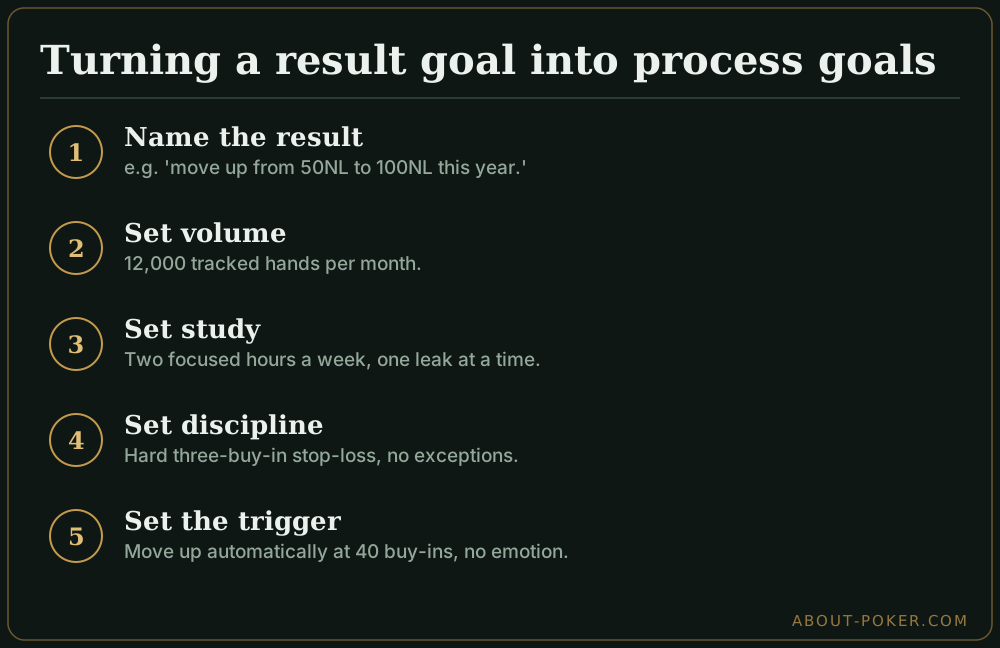
Say your original goal was “move up from 50NL to 100NL this year.” That’s a result goal disguised as a plan — the move-up depends on winnings, which depend on variance. Rebuild it into process goals you control:
- Volume: 12,000 hands a month, tracked.
- Study: two hours weekly, focused on one leak at a time.
- Discipline: hard stop-loss of three buy-ins; no exceptions.
- Bankroll trigger: move up automatically when you reach 40 buy-ins for 100NL, regardless of how you “feel.”
Now the move-up isn’t a wish — it’s the natural result of hitting controllable targets. If you play the volume, study the leaks, and keep your discipline, the shot-take arrives on schedule. The bankroll rule even removes the decision from your emotions. Notice you’re no longer chasing money; you’re stacking process wins that produce the money as a byproduct.
Making goals measurable
A goal you can’t measure isn’t a goal, it’s a mood. “Play better” and “tilt less” sound nice but give you nothing to check. Convert them:
- “Play better” becomes “review five hands a week and fix one recurring mistake.”
- “Tilt less” becomes “hit my stop-loss with zero violations this month.”
- “Study more” becomes “two hours a week, logged in my journal.”
If you can’t put a number and a deadline on it, sharpen it until you can. Then it slots straight into a weekly study routine, where the review closes the loop.
Common goal-setting mistakes
- Too many goals at once. Pick one or two. A dozen goals means none of them get real attention, and you burn out.
- All outcome, no process. If every goal is a dollar figure, variance owns your motivation. Flip the ratio.
- No review. Goals you never check are decorations. Build a weekly five-minute review to mark each goal hit or missed and adjust.
- Rigid targets. If you set 20,000 hands a month and life gets busy, don’t abandon the whole plan — scale it. A shrunk goal you hit beats a heroic goal you quit.
A quarterly framework
Zoom out and set goals in three horizons. Long term (a year or more) can include a modest result goal — a stake or a bankroll number — because over that timescale your skill edge finally shows through the variance. Medium term (a quarter) should be process-heavy: volume, a specific leak, a discipline record. Short term (each session) is pure process: hit your warm-up, respect your stop-loss, review two hands after. Each layer feeds the one above it.
Done this way, goal setting stops being a source of disappointment and becomes a steering wheel. You control the process, the process produces the results, and the results — over enough hands — take care of themselves. Start from the mental game hub to see how goals connect to discipline, study, and tilt control.
Frequently asked
What's the difference between process goals and result goals in poker?
Result goals target outcomes you don't fully control, like 'win $5,000 this month' — variance decides whether you hit them. Process goals target actions you do control, like 'study two hours a week' or 'never play past my stop-loss.' Only process goals give reliable feedback, so those are the ones to build around.
Why is 'win X dollars' a bad poker goal?
Because you can play perfectly and still lose over any short stretch, and play badly and still win. Tying your goal to money means variance grades your effort, which is demoralizing when you're unlucky and misleading when you're lucky. Judge yourself on decisions, not the scoreboard.
How do I set realistic poker goals?
Start from actions you control and can measure weekly: volume, study hours, a specific leak to fix, and discipline rules like stop-losses. Set one or two at a time, review them honestly, and adjust. Save any dollar figures for the very long term where your skill edge actually shows through the noise.