Handling Bad Beats
A bad beat is a good decision punished by variance. How to reframe them, stop the tilt spiral, and keep playing your A-game after the worst river of your session.
On this page · 6 sections
You get it all in on the flop with the best hand, a monster favorite, and the one card that beats you falls on the river. The stack slides away. Your chest tightens. This is a bad beat, and how you respond in the next sixty seconds matters more than the pot you just lost. Handling bad beats is a learnable skill, and the players who master it quietly out-earn the ones who let a single river ruin a session.
What a bad beat actually is
A bad beat is a correct decision punished by variance. You got your money in as the favorite and the underdog got there anyway. That is the entire event. Crucially, it is not a mistake — in fact it is the opposite of one. If you keep getting your chips in ahead, you are doing exactly what winning poker requires; the results simply lag the process. Reframed this way, a bad beat is evidence you are playing well, not badly. The opponent who called off drawing thin just made a losing play that will pay you off far more often than it burns you. Seeing this clearly is the first line of defense, and it connects directly to the reframes in bad beat recovery.
The real cost is the next hand
The pot you lost on the bad beat is already gone — nothing you do changes it. The danger is what comes after. Tilt from a bad beat pushes players to open too wide, call too light, and try to win it all back immediately, and that is where the session actually gets destroyed. The bad beat costs you one stack; the tilt it triggers can cost you three. So the single most important move is to protect the hands that follow. Take one or two hands completely off — literally fold whatever comes — breathe, and let the adrenaline drain before you make another real decision. This is the practical core of how to stop tilting.
A worked example
You hold pocket aces and get it in preflop against pocket kings. Aces are about an 82% favorite here — you will win better than four times out of five. A king spikes on the flop and you lose the pot. It stings, but run the math: over five identical situations, you expect to win roughly four and lose one. This was the one. Nothing about your play was wrong; you would jam aces over kings every time it comes up because it prints money in the long run. Now imagine a set of eights against a flush draw — you are about 66% (roughly 2-to-1) to win by the river. Losing that one is even more common, and even less your fault. When you can recite these numbers in the moment, the bad beat loses its power to enrage you.
Reframe the injustice
Bad beats hurt because they feel unfair — you did everything right and got punished anyway. But poker never promised per-hand justice; it only promises that skill dominates over the long run. The luck that just cost you a stack is the same luck that keeps losing players at the table handing you their money. If bad beats never happened, weak players would stop calling with drawing hands and the games would dry up. In that light, the occasional bad beat is the price of a good game, not an insult. Recognizing this is what separates emotional players from those with a durable edge. The specific emotional pattern here is one of the classic types of tilt in poker.
Build a bad-beat protocol
Do not rely on feeling calm in the moment — build a fixed response you run automatically. A simple protocol: (1) name it out loud in your head — “that was a bad beat, money went in good”; (2) take two hands off; (3) take one slow breath; (4) ask whether your decision was correct, and confirm it was; (5) return to normal play. Having a scripted response means you do not have to invent composure while flooded with adrenaline — you just execute the steps. Over time the protocol runs faster and faster until bad beats barely register.
The bad-beat checklist
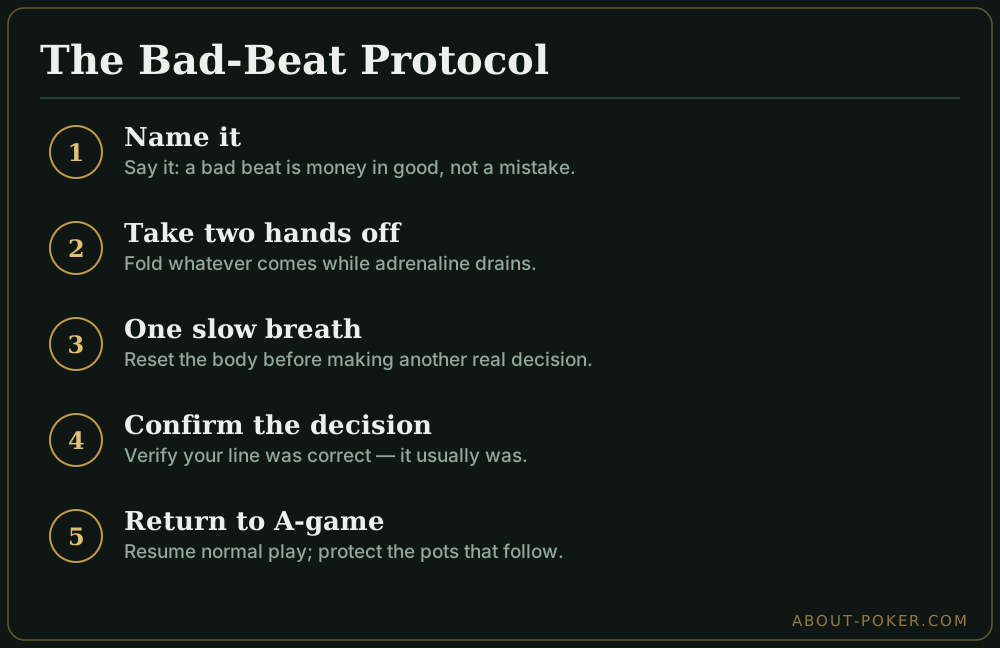
- Name it: a bad beat is a correct decision losing to variance — not a mistake.
- Protect the next hands — the tilt costs more than the pot ever did.
- Take two hands off and one slow breath before playing again.
- Recall the math (aces vs. kings ≈ 82%; set vs. flush draw ≈ 66%) to defuse the sting.
- Reframe the injustice: bad beats are the price of games full of losing calls.
- Run a fixed protocol so composure is executed, not improvised.
You cannot stop bad beats — they are baked into a game worth playing. What you can control is the sixty seconds after, and that control is where the money is.
Frequently asked
What is a bad beat in poker?
A bad beat is when you get your money in as a clear favorite and lose to a lucky card. Getting it in with a set against a flush draw and losing when the flush hits is a classic example — your decision was correct and variance simply went the other way.
How do I stop tilting after a bad beat?
Take a hand or two off immediately, breathe, and remind yourself the money went in good. The worst damage from a bad beat is not the pot you lost — it is the pots you spew afterward while tilted. Protect those by pausing before you play the next hand angry.
Are bad beats actually good for you?
In a sense, yes. A bad beat means you got your money in as the favorite, which is exactly what you want to do repeatedly. If opponents keep drawing out on you, they are making losing plays that pay you off over the long run — the results just haven't caught up yet.
Why do bad beats hurt so much?
Because they feel like injustice — you did everything right and still lost. Our brains weight recent, vivid losses heavily and crave a reason. Accepting that poker distributes luck randomly in the short run is what defuses that sting over time.