Managing Fear of Moving Up
Moving up stakes triggers scared money play that sabotages your edge. A practical framework for taking shots without the fear that makes you play worse.
On this page · 6 sections
You’ve beaten your current stake for a solid sample, your bankroll clears the threshold, and it’s time to move up. Then something strange happens: you play the higher game and you’re suddenly worse than you were a week ago. You fold rivers you’d have called, you pass on value, you tighten into a nit. This is fear of moving up, and it’s one of the most common ways players sabotage their own progress. The good news is it’s a structural problem with a structural fix.
Why moving up makes you play scared
At your comfortable stake, the money has gone abstract. A buy-in is just chips, and you make aggressive, edge-maximizing plays without a second thought. Move up, and the buy-in suddenly represents more real dollars and a bigger chunk of your bankroll — the money becomes real again, and your brain shifts into loss-avoidance mode.
Loss-avoidance is poison to a winning strategy. Poker profit comes from thin value bets, well-timed bluffs, and calling down when you’re ahead of a range. A scared player skips all of it: they fold to avoid the sting of being wrong, and in doing so they hand back the exact edge that earned the shot. This is the same mechanism described in scared money and fear of losing — the higher stake just makes it louder.
Structure the shot so fear can’t change your game
The core fix is to make the shot small enough that the stakes stop feeling existential. You don’t move up by throwing your whole bankroll and self-image at a new game. You move up with a defined shot: a set number of buy-ins earmarked for the attempt, and a clear rule for when to stop.
A simple version: only take the shot once you have a comfortable buy-in count for the new stake, then set a stop — for example, if you lose three buy-ins at the new level, you drop back down, rebuild, and try again later. Now the worst case is small and known. There’s no all-or-nothing pressure because the downside is capped in advance. The bankroll hub covers exactly how many buy-ins to require before and during a shot.
A worked example
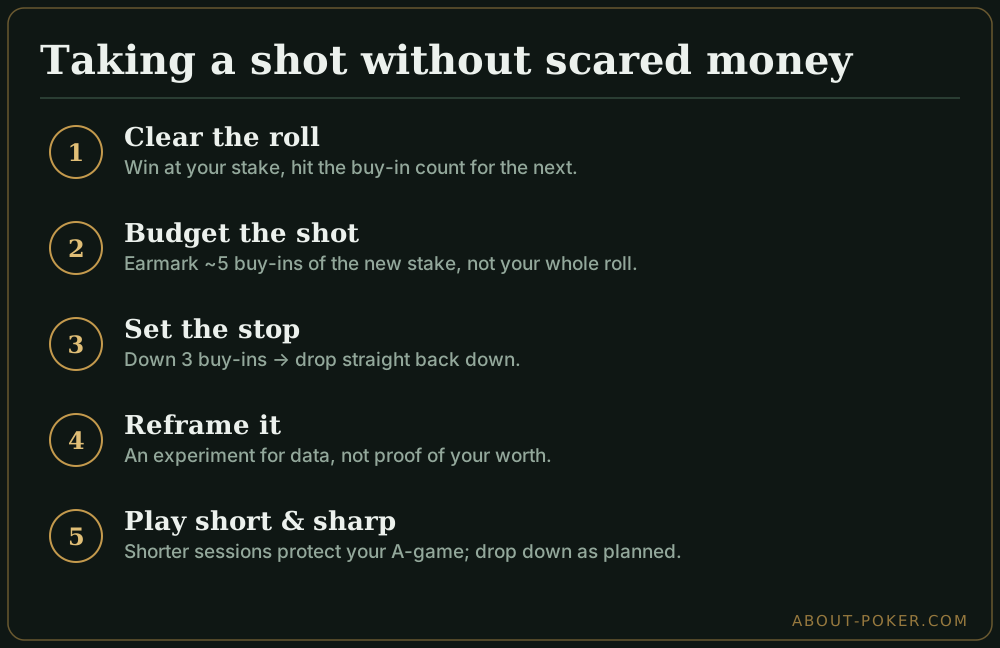
Suppose you’re a winning 50NL player (buy-in $50) with a $2,500 bankroll — 50 buy-ins. You want to try 100NL (buy-in $100). Instead of moving your whole roll up, you carve out a shot:
- Shot bankroll: you’ll risk up to 5 buy-ins of 100NL = $500, roughly 20% of your roll.
- Stop-loss: lose 3 buy-ins ($300) and you drop straight back to 50NL.
- Continue rule: if you’re up or even after a solid sample, you keep the shot going and start moving more of your roll up.
Now sitting down at 100NL, the math is friendly: the absolute worst outcome is a $300 dip you can rebuild in a few good 50NL sessions. That framing shrinks the fear to a size your A-game can survive. You’re not “risking everything” — you’re spending a small, budgeted amount to buy information about whether you’re ready.
Reframe what a shot actually is
A shot-take is an experiment, not a graduation. You’re not proving your worth; you’re gathering data on whether you beat the game. If the shot fails, nothing about you failed — you learned the timing was early, you dropped down as planned, and you rebuild. Removing the identity stakes (“if I lose here I’m not really good enough”) removes most of the fear. This mindset shift is the same one at the heart of building a winning poker mindset.
It also helps to expect to run bad on the shot. Over five buy-ins, variance is enormous — a winning player loses a five-buy-in stretch regularly. Deciding in advance that a losing shot is normal and fine stops the results from spiking your fear mid-session.
Common mistakes when moving up
- Moving up your whole roll at once. This makes every downswing an emergency. Move up gradually.
- No stop-loss. Without a drop-down rule, a bad shot can eat your whole bankroll and your confidence together.
- Chasing losses at the new stake. Trying to “win it back” at the level that’s beating you is how a shot becomes a bankroll disaster. Drop down as planned.
- Playing longer, tighter sessions to “protect” the shot. Shorter sessions protect your A-game; grinding scared for hours does the opposite.
A quick pre-shot checklist
Before you move up, confirm: your bankroll clears the buy-in count for the new stake, you’ve won convincingly at your current level over a real sample, you’ve set a specific stop-loss, and you’ve mentally accepted that dropping back down is a normal outcome, not a defeat. When all four are true, the fear has nowhere to grab hold — the downside is small, budgeted, and reversible.
Handled this way, moving up stops being a nerve-wracking leap and becomes a routine, repeatable process. You’ll still feel the flutter of nerves at a new table — everyone does — but the structure keeps those nerves out of your decisions. For the wider context, start at the mental game hub.
Frequently asked
Why do I play worse when I move up stakes?
Because the money suddenly feels real again. When a buy-in represents more of your bankroll or your comfort, you become risk-averse — folding winning spots, passing on thin value, and avoiding the aggression that made you a winner at the lower stake. That's scared money, and it directly cancels your edge.
How much of my bankroll should I risk when moving up?
Take shots with a defined, small slice of your roll rather than your whole stack of confidence. A common approach is to move up only when you have a full buy-in count for the new stake, and to set a stop — for example, drop back down if you lose a set number of buy-ins. That caps the damage and removes the all-or-nothing pressure.
Is it normal to be nervous moving up in poker?
Completely normal. Every player feels it, including professionals. The goal isn't to eliminate the nerves but to structure your shot so the nerves don't change your decisions — smaller sessions, a clear stop-loss, and a plan to drop back down make the fear manageable.