Playing Your A-Game More Often
Your win rate is set by how often you play your A-game, not by how high your ceiling is. Learn to raise your C-game floor and stay in your best gear longer.
On this page · 6 sections
Your long-run win rate isn’t set by how brilliant you are on your best day — it’s set by how often you play near your best and how rarely you crash into your worst. Playing your A-game more often is the highest-leverage mental-game skill there is, because most players already know enough strategy; they just don’t apply it consistently. The goal isn’t a higher ceiling. It’s a higher floor.
A-game, B-game, C-game
Think of your play in three gears. Your A-game is you at your sharpest: focused, patient, reading the table, making clean value bets and disciplined folds. Your B-game is your competent autopilot — fine, but missing the finer reads. Your C-game is the wreck: tired, tilted, distracted, spewing chips into spots you’d never touch when sharp.
Here’s the trap. Almost everyone tries to improve by pushing their A-game ceiling higher — studying more theory, learning fancier plays. But you spend relatively few hours in your A-game and many hours in your B and C gears. The math is unforgiving: shaving hours off your C-game moves your win rate far more than nudging your A-game ceiling. Improving your mindset is really about raising the floor, not the peak.
Why the floor matters more than the ceiling
Imagine a session where you play beautifully for two hours, then get tired and give it all back in the third. Your average result is a wash — despite genuine A-game skill on display. The C-game hour didn’t just fail to add profit; it erased profit you’d already earned.
Now imagine you’d quit after two hours. Same skill, but you kept the win. That’s the entire argument for floor over ceiling: your best play only counts if your worst play doesn’t cancel it. Consistency isn’t a boring virtue here — it’s literally where the money is.
Protect the conditions your A-game needs
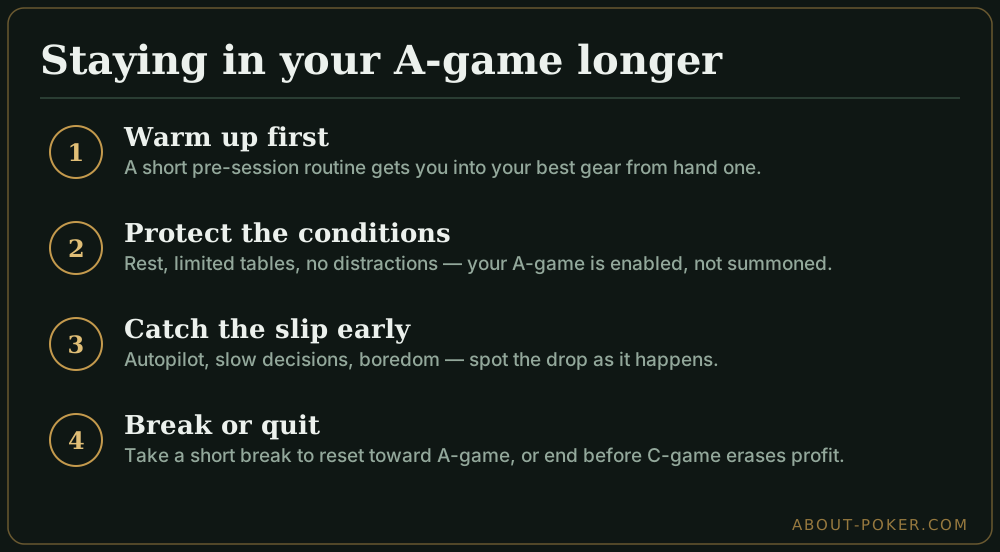
Your A-game isn’t summoned by willpower; it’s enabled by conditions. Protect them:
- Rest and physical state. A tired brain cannot access its A-game, period. Sleep is a poker skill.
- A warm-up. A short pre-session routine gets you into your best gear from hand one instead of drifting up to it.
- Session length. End before fatigue, not after. Know your personal focus window.
- Table count. Multi-tabling past your capacity forces autopilot — your B-game becomes your best-case.
- Distraction control. Phone away, streams off. Split attention is a C-game guarantee.
None of these are strategy. All of them determine how much of your strategy you actually get to use.
A worked example
You’re an online player who’s genuinely a solid winner in your first two hours — that’s your reliable A-game window. You typically play four-hour sessions across six tables because “more hands, more profit.”
Track it honestly and the picture flips. Hours one and two: sharp, focused, clearly winning. Hour three: you start clicking buttons, missing that a passive player suddenly woke up with aggression, flatting spots you’d fold when fresh. Hour four: near-pure C-game — you punt a stack to a river raise you’d have snap-folded at your best.
The fix isn’t more study. It’s cutting to a two-and-a-half hour session and dropping to four tables. Fewer hands, but nearly all of them at A- or B-game quality. Your win rate per hand climbs, your total profit rises, and you feel better doing it. You didn’t get smarter — you just stopped spending time in your worst gear.
Catch the slip early
The skill is noticing the drop as it happens, not after the stack is gone. Warning signs: you stop reading opponents and start reacting, decisions come slower or more impulsively, you feel bored or irritable, you catch yourself on autopilot. These are the same alarms that drive focus and discipline. When you spot one, take a short break or end the session. The break resets you toward A-game; grinding through drops you deeper into C.
A consistency checklist
Before a session: are you rested, warmed up, and free of distraction? During: watch for the slip signals and break the moment they appear. After: log how long your A-game actually lasted so you can set the right session length next time. Over weeks, that log turns “play your best more often” from a slogan into a schedule. For the wider system, return to the mental game hub.
Frequently asked
What does A-game, B-game, and C-game mean in poker?
Your A-game is your best, sharpest decision-making; your C-game is your worst — tired, tilted, or distracted play. Most players focus on raising their A-game ceiling, but win rate is driven far more by how often they slip into their C-game.
How do I play my A-game more often?
Raise your floor rather than your ceiling. Protect the conditions your A-game needs — rest, a warm-up, short enough sessions — and quit before fatigue or emotion drop you into your C-game. Consistency beats occasional brilliance.
Why is raising my C-game more important than improving my A-game?
You spend far more hours in your average and worst gears than in your peak. Cutting the frequency and severity of your C-game removes losing stretches that quietly erase profit, which moves your win rate more than a slightly higher ceiling ever could.
How long can I stay in my A-game per session?
For most players, deep focus lasts one to three hours before decision quality declines. The exact window is personal — track when your play starts slipping and set your session length to end before, not after, that point.