Pre-Session Mental Warm-Up
A five-minute mental warm-up loads your ranges, sets your intentions, and resets focus so your first orbit plays as sharp as your hundredth. Here's the routine.
On this page · 6 sections
The first ten minutes of a poker session are often the worst ten minutes you’ll play. Your ranges aren’t loaded, your attention is still on whatever you were doing, and you’re making real-money decisions before your brain has switched on. A pre-session mental warm-up fixes that. In five to ten minutes you reload your strategy, set your intentions, and reset your focus, so your very first orbit plays as sharply as your hundredth — instead of paying tuition to warm up.
Why the cold start costs you
Skill in poker isn’t a light switch; it ramps. Sit down cold and you’ll fold or call a few marginal spots on autopilot before your decision-making fully engages. Those early hands are played at maybe 70% of your capacity, and at the table 70% is a losing player. The warm-up front-loads the ramp so you arrive at full capacity on hand one.
There’s a mental-state angle too. If you sit down carrying stress from your day, that residue makes you impatient and tilt-prone before the first bad beat even arrives. A warm-up is where you deliberately set that baggage down. This is the focused, intentional version of the broader pre-session routine — zeroed in on getting your mind right rather than logistics.
The five-minute warm-up, step by step
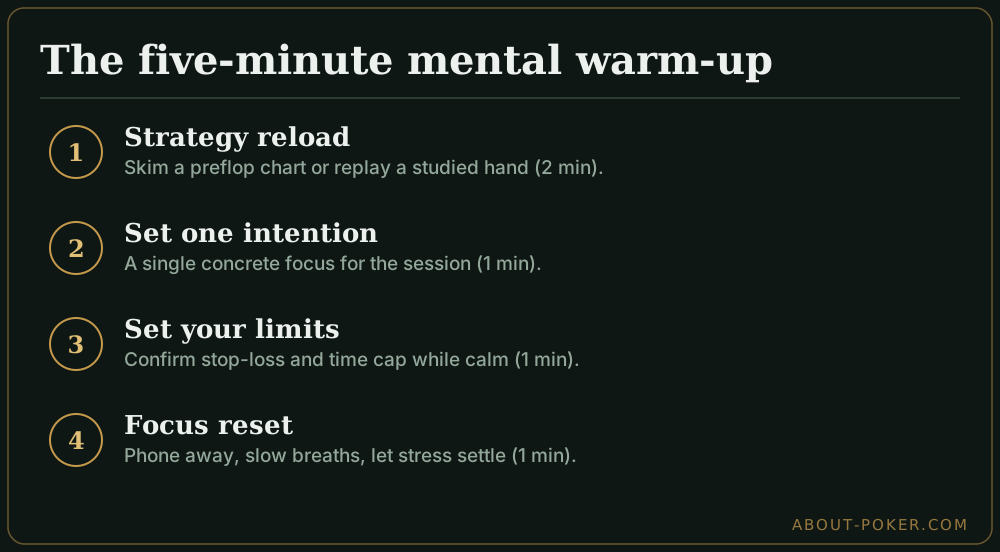
Here’s a compact routine you can run every time:
- Strategy reload (2 min). Skim a preflop chart for the game you’re about to play, or replay one or two hands you studied recently. The goal is simply to make your ranges feel fresh so you’re not reconstructing them at the table.
- Set intentions (1 min). Name one concrete focus for the session — “three-bet my bluffs,” “no loose river calls,” “table-select actively.” One intention, not ten.
- Set your limits (1 min). Confirm your stop-loss and time limit out loud or in writing. Deciding this before you’re stuck removes the emotion from the decision later.
- Focus reset (1 min). Put your phone away, close other tabs, take several slow breaths, and let your day’s stress settle. This is the switch from “distracted person” to “poker player.”
That’s the whole thing. It’s short on purpose — a routine you’ll actually do every session beats an elaborate one you skip.
A worked example
Say it’s a weeknight and you’ve had a stressful day. You sit down to play 100NL online without a warm-up: you’re annoyed, distracted, and your ranges are rusty. In the first orbit you open too wide from early position out of restlessness, then call a three-bet out of position with a hand you’d normally fold. You’ve already put yourself in two −EV spots before hand ten.
Now run the tape with a warm-up. Two minutes on your opening chart reminds you early-position ranges are tight — you fold the junk. Setting the intention “play tight and focused tonight” gives your restless brain a job. The focus reset drains the workday annoyance so you’re not itching for action. Those same first ten hands now play clean. The warm-up didn’t teach you anything new; it made sure you used what you already knew from the first hand on. Loading focus deliberately is the same skill covered in focus and attention at the table.
Pre-loading emotional control
The stop-loss and intention steps aren’t just organization — they’re tilt insurance. When you commit to a stop-loss while calm, you’ve made the hard decision in advance, so when you’re stuck and tempted to push on, you’re following a rule instead of fighting your emotions in real time. Deciding under pressure is where players break; deciding beforehand is where they hold. This front-loading is one of the most practical tools in emotional control in poker.
Adapting the warm-up to context
Scale the routine to the situation. Before a long tournament, spend a little longer on the strategy reload and a full focus reset — you’ll be there for hours. Before a quick 30-minute session, a two-minute version is fine: silence the phone, set the stop-loss, name one intention. Coming off a bad session or a tilty day, weight the focus and emotional-reset steps more heavily and consider whether you should be playing at all. The warm-up is also the natural place to run a quick physical check: sleep, food, and energy. If those are low, the honest move is to shorten the session or make it a study day instead.
Common warm-up mistakes
- Skipping it when you’re eager to play. The days you most want to jump in cold are usually the days you’re least prepared to.
- Making it too long. A 30-minute ritual won’t survive contact with a busy schedule. Keep it tight so it’s sustainable.
- Studying new material as a “warm-up.” Learning something new right before playing scatters your focus. Warm up with review, not fresh study.
- Setting no intention. Without one focus point, your attention drifts. A single clear intention gives the session a spine.
Run this before every session and you’ll notice the difference fastest in your early hands and your worst days. The warm-up won’t make you a better player on its own — but it guarantees that the player you already are shows up from the first hand. For how it fits with focus, discipline, and tilt control, start at the mental game hub.
Frequently asked
What is a pre-session mental warm-up in poker?
It's a short routine you run before playing to get your brain into peak decision-making mode — reviewing a few strategy spots, setting your intentions and stop-loss, and doing a brief focus reset. It prevents the cold-start mistakes players make in the first orbit before they've settled in.
How long should a poker mental warm-up take?
Five to ten minutes is plenty. The point isn't a long ritual — it's a deliberate transition from whatever you were doing into a focused playing state. Even a two-minute version beats sitting down cold.
Does a mental warm-up actually help poker performance?
Yes. Most avoidable early-session mistakes come from playing before your ranges are loaded and your focus is engaged. A warm-up front-loads that preparation so the first hands play as well as the rest, and it sets the mental guardrails that keep tilt in check.