Staying Patient Card Dead
Card dead means folding hand after hand while your stack bleeds. Learn to stay patient, defend blinds correctly, and pick spots without forcing action.
On this page · 6 sections
Staying patient while card dead is one of the least glamorous and most profitable skills in poker. Being card dead means you’re dealt a long run of unplayable hands — 8-3 offsuit, J-4, Q-6 — while the blinds and antes quietly drain your stack. The urge to “make something happen” is exactly what a card-dead stretch is designed to punish, and beating it is pure discipline.
What card dead really is
Card dead is not a malfunction; it’s math. Premium hands are simply rare. You’re dealt a pocket pair only about once every 17 hands, and any specific big hand — say, a pair of aces — shows up roughly once every 221 hands. String a few of those low-probability draws together and you can fold for an hour straight without seeing a hand worth raising.
The mistake players make is treating this as a problem to be solved rather than weather to be endured. It feels like you’re doing something wrong because you’re not playing — but folding trash is you doing everything right. As covered in patience and boredom at the table, the boredom is the test, not the enemy.
The trap: forcing action out of boredom
Here’s how card-dead sessions go wrong. You’ve folded 30 hands. You’re restless. You look down at K-7 offsuit in early position and think, “close enough, I need to play something.” You open, get three-bet, and now you’re either folding (having wasted chips) or calling out of stubbornness with a dominated hand. The boredom didn’t just cost you that pot — it broke your discipline for the next several hands too.
The chips you save by folding K-7 in early position are just as real as the chips you win with a big hand. A fold is a decision with positive expected value when the alternative is playing a losing hand. Card dead doesn’t lose you money; reacting badly to being card dead loses you money.
What you can actually do while card dead
Patience doesn’t mean total passivity. There are legitimate ways to stay involved without spewing:
- Defend your blinds correctly. When someone steals your big blind, you’re getting a price to see a flop with a wide range. This is normal, profitable play — not “forcing it.”
- Attack in position. If the players to your left are tight and folding a lot, a steal from the button or cutoff with a mediocre hand is a spot, not a spew. You’re playing your position and your opponents, not your cards.
- Use late position with any two. Being card dead in the small blind is very different from being card dead on the button. Position lets marginal hands become playable.
The key distinction: loosen up because of position and opponents, never because of boredom.
A worked example
You’re in a tournament, 40 big blinds deep, and you’ve folded for two full orbits. Blinds are climbing. You reach the button and look down at Q-8 offsuit. The cutoff folds. Both blinds are tight, short-stacked players who’ve been folding to raises all session.
This is a raise — not because Q-8 offsuit is a good hand (it isn’t), but because you have position on two players who fold too much, and the blinds and antes are worth stealing. You open to 2.2 big blinds, both fold, and you’ve picked up chips without a showdown. That’s how you fight card-dead pressure: you don’t wait for a monster, you exploit the situations where your cards barely matter.
Contrast that with opening the same Q-8 offsuit under the gun with seven players behind you. Same hand, completely different decision. One is patient aggression; the other is boredom in disguise. Reading the table well here ties directly to focus and attention at the table — you can only steal correctly if you’ve been watching who folds.
Managing the mental side
The real damage of card dead is emotional. Watching your stack shrink while you do nothing feels awful, and that feeling leaks into your next playable hand — you overplay it out of relief, or you tilt into a wide call. Staying level is the whole game. This is where broader emotional control work pays off directly.
A useful reframe: your job at the table is not to play hands, it’s to make good decisions. On a card-dead stretch, the good decision is usually “fold” — and executing 40 correct folds in a row is a genuine skill most players don’t have. When you finally do pick up a hand, it’ll have more value because your tight image means opponents give you credit.
Card-dead checklist
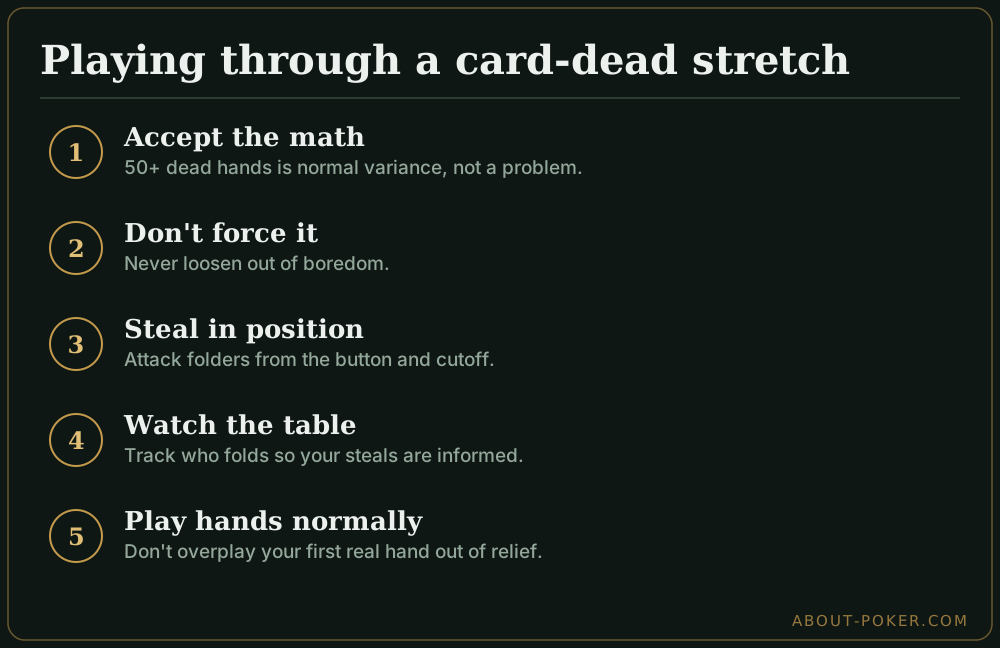
- Accept that 50+ hands without a premium is normal variance, not a problem.
- Never loosen because you’re bored — only because of position or weak opponents.
- Keep defending blinds and stealing in late position; that’s not spewing.
- Watch the table during dead hands so your steals are informed.
- When a real hand comes, play it normally — don’t overplay it out of relief.
Master the card-dead stretch and you’ve mastered the part of poker most players quietly fail: doing nothing, correctly, for a very long time.
Frequently asked
What does 'card dead' mean in poker?
Card dead means you keep being dealt weak, unplayable hands for a long stretch — folding orbit after orbit while the blinds and antes eat your stack. It's a normal, common experience, not a sign anything is wrong with your game.
How long can you stay card dead?
Longer than feels possible. Premium hands are rare — you'll be dealt a pocket pair only about once every 17 hands and a specific big hand far less often. Going 50 or 100 hands without a strong holding is completely normal variance.
Should I loosen up when I'm card dead?
Only slightly, and only for the right reasons — like defending your blinds or attacking weak opponents in position. Do not start playing trash hands out of boredom. The correct response to being card dead is disciplined patience plus selective aggression, not forced action.