Table Image and Psychology
Your table image is the story opponents believe about you. Learn to read it, shape it, and exploit the gap between your image and your real range.
On this page · 7 sections
Your table image is the story your opponents believe about you — tight or loose, honest or tricky — and it’s built entirely from the hands they’ve seen, not the hands you’ve actually held. Table image and psychology is about controlling that story and then betting into the gap between what people think you have and what you really have. Get it right and your value bets get paid while your bluffs get folds.
What table image actually is
Image is not your real playing style. It’s the perception of your style, assembled by opponents from a tiny, biased sample: the hands you’ve shown down and the bets they remember. You might be a balanced, thoughtful player, but if the last two things you tabled were stone bluffs, your image is “maniac” — regardless of how tight you actually are.
That gap is the whole point. Poker profit comes from opponents making mistakes, and a false image manufactures mistakes. If they think you’re tight, they fold to your bluffs. If they think you’re wild, they call your value bets light. Your job is to notice which story they believe and then deliberately do the opposite of what that story expects.
Reading your own image
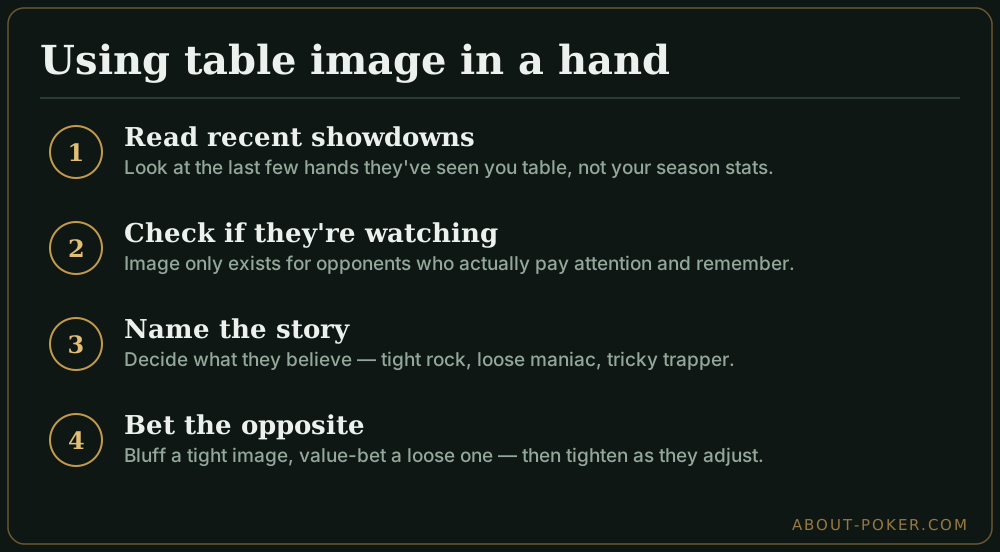
Most players never stop to ask what they look like from the other side of the table. Do this consciously. The relevant data is recent and small — the last handful of showdowns, not your season-long stats.
- Just showed a bluff? Your image is loose. Value-bet thinner; they’ll call.
- Just showed the nuts twice? Your image is strong. Bluff more; they’ll fold.
- Been card-dead and folding for an hour? Your image is a rock. Steal blinds and c-bet freely.
- Been in every pot? Your image is a station or a spew. Slow down and let them pay off your real hands.
This is a core piece of table image and confidence: confidence comes from knowing your image, not from guessing.
Shaping the image on purpose
You can nudge your image before you ever need it. Showing down a bluff early — cheaply, in a small pot — advertises that you’re capable of bluffing, which pays off later when you value-bet big. Conversely, tabling a monster you slow-played tells the table you trap, which makes your future bluffs scarier.
The advanced move is to advertise intentionally against observant opponents while ignoring image entirely against players who aren’t watching. Advertising to a distracted recreational player is money set on fire. This is the practical side of poker mind games — you only manipulate the people capable of receiving the message.
A worked example
You’re in a live $1/$2 game. Two orbits ago you got caught barreling a busted flush draw and had to show it. Since then you’ve folded almost every hand. To the table, you look like a spewy player who’s now on the back foot.
You pick up A-K on the button and raise. The big blind, who saw that bluff, calls with a wide, disrespectful range. The flop comes K-8-3. You bet, he calls. Turn is a 6, you bet again, he calls with a weak pair because “this guy bluffs.” River is a brick and you bet big for value.
Because his image of you is “over-aggressive bluffer,” he calls with a hand he’d fold against a rock — and pays off your top pair, top kicker. You didn’t change your strategy; you cashed in the story he already believed. That’s exploiting image at its cleanest.
When image barely matters
Image is powerful only when opponents are watching and remembering. That condition fails constantly online. In fast-fold games, anonymous tables, or huge rotating pools, nobody is building a read on you, so leaning on image is a fantasy. There, you fall back on stats and a solid default — and on real notes. Reading opponents’ patterns, covered in taking notes on opponents, replaces the live-read information you’re missing.
Even live, image has a shelf life. The moment opponents adjust — the tight-image bluffs start getting called, the loose-image value bets start getting folded — the edge is gone. Image is a resource you spend, not a permanent buff.
Common mistakes
- Assuming everyone is paying attention. Most recreational players barely notice you exist. Advertising to them wastes money.
- Believing your own press. Just because you think you look tight doesn’t mean they’ve noticed. Confirm with actual showdowns.
- Riding an image too long. Over-bluffing off a tight image until the whole table has recalibrated turns a strength into a leak.
- Ignoring the individual. Table “image” is really per-opponent. One player thinks you’re a nit; another saw your bluff and thinks you’re wild. Adjust to each, not to the room.
A quick checklist
Before you act in a pot, run this: What have they seen me show down recently? Do they seem to be watching at all? What story does that create? And what’s the opposite of what that story expects? Bet toward the answer. For the full framework on how psychology drives every decision at the table, return to the mental game hub.
Frequently asked
What is table image in poker?
Table image is the perception opponents have of how you play — tight or loose, aggressive or passive, tricky or straightforward. It's built from the hands they've seen you show down and the way you've bet, not from how you actually play.
How do I know what my table image is?
Watch what you've shown down and how recently. If you just tabled two big bluffs, your image is loose and your value bets get paid. If you've folded for an hour, your image is tight and your bluffs earn more respect. Track the last few showdowns, not your whole session.
Does table image matter more live or online?
It matters most live and in small, stable player pools where the same opponents watch you for hours. In fast online games with anonymous or constantly rotating opponents, image barely registers, so lean on stats and default strategy instead.
How do I exploit a tight image?
When opponents think you only bet strong hands, you can bluff more and steal more blinds because they fold too much. The trap is over-bluffing until they adjust — use the respect while it lasts, then tighten back up once they start calling.