Short Deck Flush Over Full House
In Short Deck, a flush beats a full house. Learn why the ranking flips, how it changes your betting, and how to avoid stacking off with a boat.
On this page · 6 sections
Short Deck, also called Six Plus Hold’em, strips the deuces, threes, fours, and fives out of the deck, leaving a 36-card pack from six up to the ace. That single change ripples through everything: hands connect more often, action gets bigger, and two familiar rankings flip. The one that traps the most players is this: in Short Deck, a flush beats a full house. If you carry your Hold’em instincts to the felt, you will eventually stack off with a boat into a flush and never see it coming.
Why the ranking flips
Hand rankings exist to reward rarity. The harder a hand is to make, the higher it ranks. In a standard 52-card deck each suit has thirteen cards, and flushes are common enough that a full house is the rarer, stronger hand. Remove the deuces through fives and each suit drops to nine cards. Suddenly completing a flush requires hitting from a much thinner pool, while pairs and trips are unaffected in the same way, so full houses actually become relatively easier to make than flushes.
Because the flush is now the rarer hand, the ranking is reordered to keep the logic honest: flush jumps above full house. This is the same rarity principle behind ordinary Omaha hand rankings; the ordering simply follows the probability of the deck you are actually playing. It is not an arbitrary house quirk, it is math correcting for four missing ranks in every suit.
How the deck math changes
With nine cards per suit instead of thirteen, flush draws are meaningfully harder to complete. If you flop a four-flush in regular Hold’em you have nine outs; in Short Deck you have only five suited cards left in the deck to pair with your two, so a flopped flush draw has just five outs, not nine. That is why a completed flush is now something to respect rather than expect.
Meanwhile full houses arrive more often because everyone connects with the board more frequently in the compressed deck. Trips and two pair are everywhere, boards pair constantly, and boats show up in pots that would have been one-pair affairs in a full deck. The result is a game where the boat you are proud of may be the second-best hand at the table. Understanding this is closer to Omaha flush rules thinking than to Hold’em, where you learn early that a made flush in Omaha is not automatically the nuts either.
A worked example
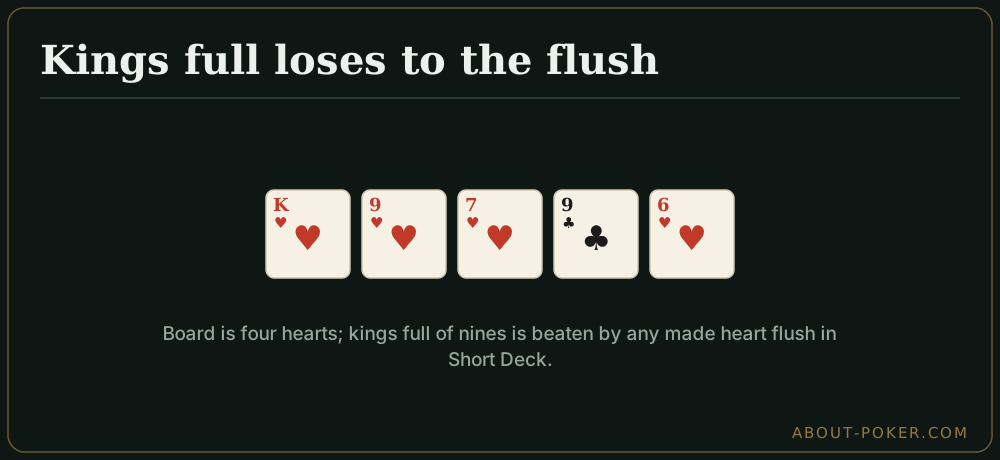
You hold Kc Kd and the board runs out Kh 9h 4-is-gone… let us use a legal Short Deck board: Kh 9h 7h 9c 6h. You have kings full of nines, a monster in any normal game. But look at the board: four hearts are showing. An opponent who called your flop and turn bets with Ah-Tx now shows down the ace-high flush.
In Hold’em your kings full crush a flush and you happily get it in. In Short Deck the flush beats your full house, and you have just lost a stack you should never have committed. The tell was the four-flush board combined with an opponent who kept calling. When three or four cards of one suit are out and a Short Deck opponent shows real interest, your full house is no longer a lock. Slow down, size down, and be prepared to fold the boat if the flush completes and the action screams that they got there.
Adjusting your betting
The practical adjustment is to treat flush-completing boards with fresh caution even when you hold a full house. On a monotone or four-to-a-flush runout, a boat becomes a bluff-catcher against heavy aggression rather than a value-betting machine. Bet for value against worse boats and worse made hands, but pump the brakes the moment the board texture favors a flush.
On the other side, your own made flushes climb in value. A flush that would be a good-but-beatable hand in Hold’em is now above a full house, so you can bet it harder and get value from the trips and boats that Short Deck players love to overplay. Flushes are strong, but keep the nut principle in mind: a low flush can still lose to a higher flush, so pace your aggression by how close you are to the nut flush.
Common mistakes to avoid
The number one mistake is auto-stacking full houses. In Short Deck a boat is strong but not the near-nuts it is in Hold’em, and flush boards demand real discipline. The second mistake is overvaluing weak flush draws, forgetting they now have only five outs on the flop instead of nine. The third is not confirming the house ruleset; some rooms also rule that a set beats a straight, and mixing up the local rules leads to costly showdown surprises. If you play dealer’s choice, treat Short Deck like any other entry in the wider world of Omaha poker variations and check the ranking chart before your first hand.
Quick reference for the reordered rankings
Commit the two flips to memory before you sit: flush beats full house, and in most games a set beats a straight. Everything above the flush stays the same, so four of a kind, straight flush, and royal still top the chart, and everything below the reordered pairs behaves normally. Keep those two exceptions front of mind and the compressed deck stops surprising you at the worst possible moment.
Frequently asked
Why does a flush beat a full house in Short Deck?
Short Deck removes the deuces through fives, leaving 36 cards. With four fewer cards of each suit in play, completing a flush becomes mathematically harder than making a full house, so the hand ranking is reordered to reflect the new odds: flush now outranks a full house.
Does a flush always beat a full house in Short Deck?
In the standard Short Deck ruleset, yes, any flush beats any full house. Some home games or casinos use variant rankings, so confirm the house rules before you sit, but the widely accepted competitive standard places the flush above the full house and below four of a kind.
What other hand rankings change in Short Deck?
Besides flush beating full house, a set (three of a kind) commonly beats a straight because straights complete more easily in the compressed deck. Also the ace can play low to make A-6-7-8-9 the lowest straight. Always verify which set-vs-straight rule your game uses.