Stud Bring-In Strategy
In Seven-Card Stud the lowest upcard must post the bring-in. Learn when to just post, when to complete, and how to play from the forced bet on third street.
On this page · 6 sections
Seven-Card Stud does not use blinds. Instead, every player antes, and on third street the player with the lowest upcard is forced to post the bring-in, a bet smaller than the full lower limit. That forced bet shapes the entire hand. Playing the bring-in well means knowing when to simply post the minimum and surrender cheaply, and when to turn the forced bet into an aggressive completion that seizes the initiative. Stud is one of the classic games covered in our Omaha and mixed poker variations coverage.
How the bring-in works
After the antes, each player receives two down cards and one up card. The lowest up card by rank must post the bring-in. When two players share the lowest rank, suit breaks the tie in the order clubs, diamonds, hearts, spades, from lowest to highest, so the two of clubs is the single worst possible upcard and always brings it in when present. The bring-in player can post the minimum forced amount or complete to a full lower-limit bet.
Post or complete: the core decision
Posting the minimum is the default with weak or speculative hands. You are forced to put in a small amount, so you do it and see how the table reacts, prepared to fold to a completion. Completing to a full bet is an aggressive choice you make when your hand is strong enough to want a bigger pot and to build it while representing power. A buried pair of kings, a hidden pair of aces, or three cards to a strong flush or straight are all hands worth completing.
Completing has a hidden benefit: because you show a low card, opponents do not expect strength, and a completion can win the antes outright or isolate a single caller you have well beaten.
A worked example
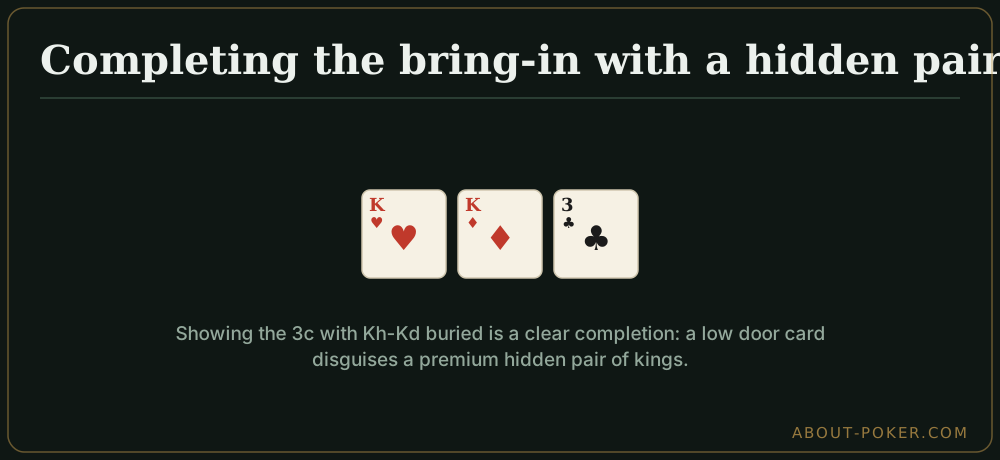
You post the bring-in showing the 3 of clubs, with two down cards of Kh Ks. You have a hidden pair of kings, a genuinely strong Stud hand, and your low upcard disguises it completely. This is a clear completion. You raise to a full bet, and because your board card looks harmless, you often get called by a single high card or a smaller pair that you dominate. Now you are the aggressor with a big concealed pair and control of the hand.
Contrast that with posting the 3 of clubs holding 9h 4d down. That is a weak, disconnected hand. You post the minimum, and if anyone completes behind you, you fold and lose only the forced bet. There is no reason to invest more with a hand that flops, or rather draws, to almost nothing.
Reading the other upcards
Because Stud is a game of exposed information, the bring-in decision depends heavily on the other upcards showing. If several high cards are out and a player with an ace up is likely to complete, your marginal hands lose value and you should lean toward posting and folding. If the exposed cards are all low and scattered, a completion with a decent hand can more easily take the pot down. Tracking upcards is a positional read much like the awareness discussed in PLO position play, applied to face-up information.
Common mistakes
The first leak is completing too often from the bring-in with mediocre hands, bloating pots out of position with holdings that cannot stand a raise. The second is the opposite: only ever posting and never completing with strong hidden hands, which telegraphs weakness and wastes value from your best holdings. The third is ignoring the other boards and completing into obvious strength, such as a completion behind from a player showing an ace.
Quick checklist for the bring-in
When forced to bring it in, ask: is my hand strong enough to complete and build a pot, or should I post the minimum? Are my big cards buried, giving me a disguised holding worth completing? What upcards are showing behind me, and is a big raise likely? Am I drawing to nut-quality hands or second-best ones? Complete with hidden strength and premium draws; post and be ready to fold everything else. The bring-in is a forced bet, but how you respond to it sets the tone for the entire hand. For a feel for how Stud fits alongside other split-pot and mixed games, our Big O guide shows the same read-the-board discipline in a related format.
Frequently asked
Who posts the bring-in in Seven-Card Stud?
The player showing the lowest upcard on third street must post the bring-in, a forced bet smaller than the full lower-limit bet. Suits are used to break ties, ranked clubs, diamonds, hearts, spades from lowest to highest, so the club is the lowest and posts.
Should you complete or just post the bring-in?
Post the minimum with weak holdings and complete to a full bet when you have a strong hand you want to build a pot with, such as a big pair or three to a strong draw. Completing from the bring-in turns a defensive forced bet into an aggressive raise and can win the antes uncontested.
What is a good hand from the bring-in position?
Since you act first and show a low card, you want either a genuinely strong hand worth completing, like a buried big pair or three cards to a flush, or a hand cheap enough to defend. Marginal high-card holdings should usually just post and fold to a completion.