Stud Fourth Street Play
Fourth street is where Seven-Card Stud hands take shape. Learn how new upcards change ranges, when an open pair unlocks the big bet, and how to fold early.
On this page · 6 sections
Fourth street is the pivot point of a Seven-Card Stud hand. Everyone now has two up cards and two down, and the new card either improves your hand, improves an opponent’s, or does neither. The betting order flips from third street, an open pair can unlock the big bet, and the exposed cards start to tell a clear story. Playing fourth street well is about reading those boards accurately and committing only when the picture favors you. Stud sits alongside the other formats in our Omaha and mixed poker variations coverage.
What changes on fourth street
Two things flip compared to third street. First, the action order changes: instead of the low card bringing it in, the player showing the best hand on board now acts first, and that continues for the rest of the hand. Second, the fixed-limit betting structure can jump. If any player shows an open pair, the table has the option to use the larger upper-limit bet size rather than the small bet. Catching an open pair therefore does more than improve your hand; it can double the stakes.
Reading the new upcards
Because Stud is played face-up in part, fourth street hands enormous amounts of information. Track what each opponent caught. A player who paired their door card just made an open pair and may now be able to bet big. A player who caught a second card of your flush suit lowered your outs. A player whose board went from coordinated to scattered probably missed. This board reading is the Stud equivalent of the positional awareness in PLO position play: you act on visible information rather than guessing.
A worked example
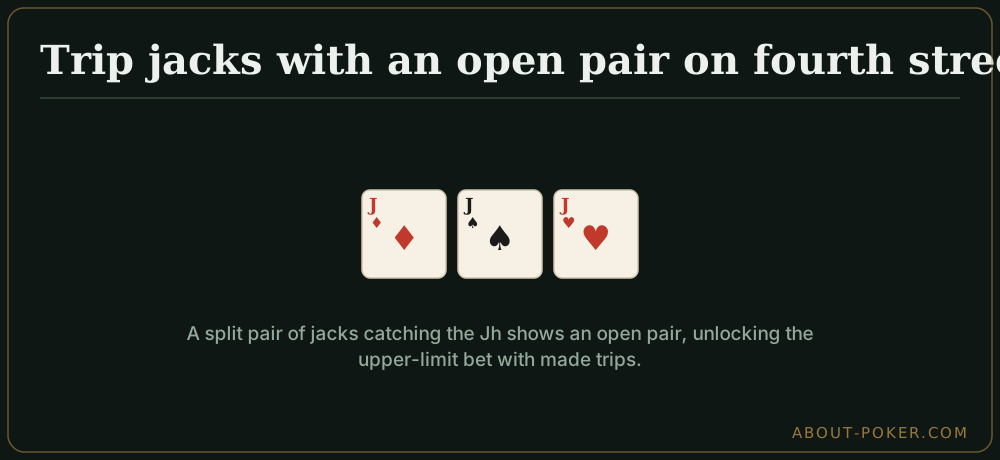
You raised on third street with a split pair of jacks, showing the Js with a Jd down. On fourth street you catch the Jh, giving you trip jacks and an open pair of jacks on your board. Because you show an open pair, you can now bet the larger upper-limit amount. This is a strong bet: you have a made three of a kind, and the double-size bet charges any draws heavily. Your visible pair also means you act first, so you drive the action.
Now flip it. You hold three cards to a flush and on fourth street you catch an offsuit blank while an opponent pairs their door card and bets big. You have only a four-flush needing running help, drawing thin, and you are facing an upper-limit bet into a hand that likely has you beaten. This is a clean fold. Chasing a weak draw against a made open pair for a double bet is exactly how Stud bankrolls disappear.
When to continue and when to fold
Continue on fourth street when your hand improved to a genuine made hand or a strong live draw with most of your outs still available. Fold when your draw is dead or badly outnumbered, when your outs are visibly in other players’ boards, or when you face a big bet from an open pair that beats your holding. The discipline to release marginal hands here, before the bets get large on fifth street and beyond, is what separates winning Stud players. The same fold-early instinct pays off across mixed games like Big O.
Common mistakes
The first leak is ignoring dead cards. If two of your flush suit are showing in other players’ boards, your draw is far weaker than it looks, yet many players chase anyway. The second is failing to use the big bet with a made open pair, letting draws in cheaply. The third is calling fourth street bets out of curiosity with hands that cannot improve to anything competitive.
Quick checklist for fourth street
Ask yourself: did my card actually improve me, or leave me drawing? How many of my outs are visible in other boards and now dead? Did anyone pair their door card and gain the big-bet option? Am I showing the best board and driving the action, or reacting to strength? Continue with made hands and live draws, use the upper-limit bet when you catch an open pair worth building, and fold weak or dead draws before the streets get expensive. Fourth street is where good Stud players quietly win money by folding the hands that everyone else keeps chasing.
Frequently asked
What is fourth street in Seven-Card Stud?
Fourth street is the second up card each remaining player receives, giving everyone two exposed cards and two down cards. It is the first betting round after third street, and it is where hands begin to define themselves as pairs, draws, or dead ends become clearer.
When can you bet double on fourth street?
In fixed-limit Seven-Card Stud, if any player shows an open pair on fourth street, all players have the option to bet or raise the larger upper-limit amount rather than the small bet. This rule makes catching an open pair on fourth street a meaningful strategic moment.
Who acts first on fourth street?
Unlike third street where the low card brings it in, on fourth street and every later street the player showing the highest-ranking hand on board acts first. So a visible pair or high cards drive the action for the rest of the hand.