Online Poker Note-Taking
How to take online poker notes that actually earn money: a short color-code system, what to write down, when to write it, and how to use notes at speed.
On this page · 7 sections
Everyone tells you to take notes online, and almost nobody does it well. The typical player writes a wall of text after a bad beat, never reads it again, and calls that note-taking. Useful notes are the opposite: short, specific, and built to be read in the half-second you have before you act. This guide is about the system, not the intention.
Why notes beat memory
Online, you might sit with a thousand different screen names in a month. You will not remember that the player two seats over check-raised the turn with a naked flush draw six weeks ago — but a note will. That is the entire edge: notes turn a fleeting observation into a permanent, exploitable read. A HUD gives you frequencies, but frequencies are averages. Notes capture the exception — the specific, deviant thing a specific player did — and exceptions are where the money is.
A three-color system
Speed matters more than detail, so start with color tags you can apply in one click. Keep the palette small:
- Red — strong, aggressive, or tricky regulars. Tighten up, avoid marginal spots.
- Green — loose-passive recreational players. Value bet relentlessly, bluff less.
- Yellow — tight, nitty players who fold too much. Attack their blinds, respect their raises.
Three colors is enough to change how you play against 90% of the pool. You can add a fourth (say, blue for maniacs) once the base system is automatic. The rule is that a color must mean the same thing every single session — a code you have to stop and interpret is a code that fails at speed.
What actually belongs in a note
Write down deviations from standard play, not standard play itself. “Folded to a 3-bet” is worthless — most people fold to 3-bets. These are worth typing:
- Showdowns that reveal a bluff, a thin value bet, or a strange line.
- Sizing tells: “min-raises the flop only with sets,” “overbets rivers as a bluff.”
- Reactions to aggression: folds to double barrels, never folds top pair.
- Preflop leaks: limp-calls with small pairs, cold-calls 3-bets out of position.
A good note is a sentence, not a paragraph: “Called river 3x-pot with 2nd pair, station.” You will read that in half a second and know exactly what to do.
A worked example
You raise the button with Ac Ts, the big blind calls. Flop Kd 7h 2c, you c-bet, he check-raises. You fold. Nothing happened — no note yet. Two hands later he turns over a hand at showdown: he’d check-raised the same K72 board with 9c 8c, pure air, and got there on a running draw. Now you write: “BB check-raises dry flops as a bluff — bluff-heavy, don’t fold top pair.” Next session, same player check-raises your c-bet on a dry board. Because of that one note, you call down with king-high-plus and win a pot you’d have surrendered blind. That single stored read can be worth more than the tournament note you spent a paragraph on.
Note-taking while multi-tabling
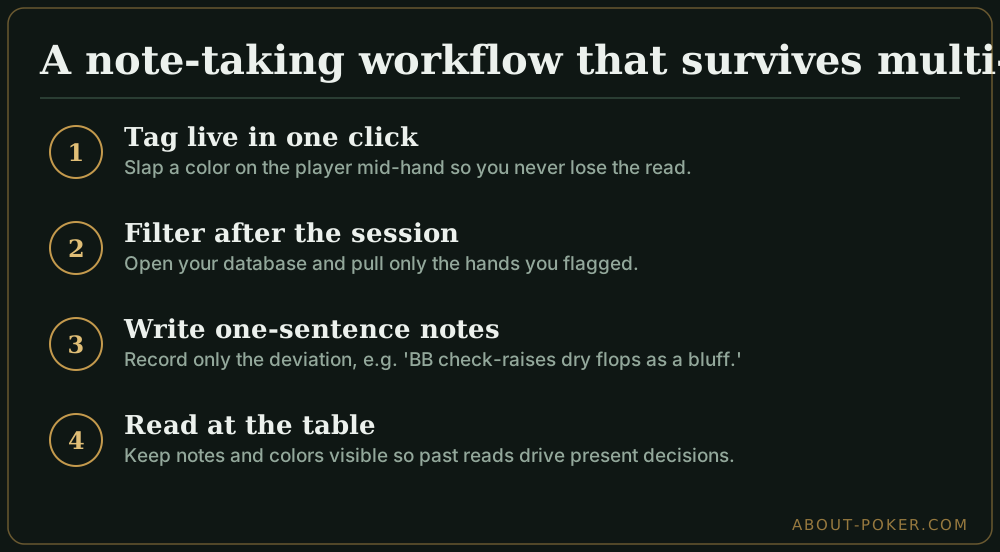
The obvious objection: who has time to write notes across multiple tables? The answer is to split the work. During the hand, do the one-click part — slap a color on the player and, if you must, type a single keyword like “bluffs.” After the session, open your database, filter for the hands you flagged, and write the full sentences while the context is fresh. This is the same discipline as reviewing hands: the value comes from a deliberate pass, not from cramming everything into the moment of action.
Common mistakes
- Writing essays. If you can’t read it before you act, it isn’t a note.
- Recording standard play. Only deviations are worth storing.
- Emotional notes. “Idiot donk sucked out on me” tells future-you nothing. What did he actually do?
- Never reading them. Set your interface so notes and colors are visible at the table. A note you don’t see is a note you didn’t take.
- Over-tagging. If everyone is red, red means nothing. Reserve tags for players who genuinely differ from the pool.
A quick checklist
- Set a three-color code and never change what the colors mean.
- Tag players in one click during the hand.
- Write full notes after the session, filtering flagged hands.
- Record only deviations, in one sentence.
- Make sure notes and colors display at the table.
- Re-read and prune stale notes every so often — players change, and so should your reads.
Do this for a month and you’ll find yourself acting on a read you don’t consciously remember forming. That is the system working: your past observations quietly making your present decisions better.
Frequently asked
Are online poker notes worth taking if I already run a HUD?
Yes, because a HUD tells you frequencies but not context. A note captures the one thing stats can't: what a specific player actually did in a specific spot, like showing down a bluff-raise on a scary river. Stats and notes answer different questions, so the best players keep both.
What color code should I use for poker notes?
Keep it to three or four colors so you can read them at a glance. A common scheme is red for aggressive or tricky regulars, green for loose passive recreational players, and yellow for tight nits. Whatever you pick, use it identically every session so the color means the same thing every time.
When should I write the note — during the hand or after?
Tag the player during the hand with a color or one-word flag so you don't lose the read, then write the full note between hands or after the session. Trying to type a paragraph mid-hand across multiple tables is how you time out and misclick.
Do my notes carry over between sessions?
On most sites and in tracking software, player notes and color tags are saved to that screen name and reappear whenever you sit with them again. That persistence is the whole point — a note you write once can pay off months later.