Playing Spin & Go Online
How to play Spin & Go online: the three-handed hyper-turbo format explained, push-fold basics, adjusting to the prize multiplier, and a starting-hand plan.
On this page · 7 sections
Spin & Gos are poker distilled to its most explosive form: three players, a tiny starting stack, blinds that climb by the minute, and a lottery-style multiplier that decides how much the whole thing is worth before a single card is dealt. They are quick, thrilling, and deceptively hard to beat. Understanding the format’s mechanics — and playing a disciplined, aggressive game inside them — is what separates a long-run winner from a player donating to the variance.
How the format actually works
A Spin & Go is a three-handed hyper-turbo sit & go. You register for a set buy-in, and when the third player sits, a wheel spins to assign a prize multiplier — usually anywhere from 2x the buy-in up to enormous jackpot multiples in rare cases. Most of the time it lands on the smallest multiplier and pays only first place, winner-take-all.
Two features define your strategy. First, stacks start shallow, commonly around 25 big blinds, and blinds rise fast, so you are pushed toward all-in decisions quickly. Second, the winner-take-all payout means there is no ladder to climb — second place usually gets nothing — so you play purely to win the whole thing. That removes the ICM caution of larger sit & gos and rewards straightforward chip accumulation. For the broader speed-format picture, see turbo poker tournaments online.
Early: play tight and positional
With three players and 25 big blinds, the early stage is the deepest you will ever be, so it is where real postflop poker still happens. Play a tight-aggressive range, favor position, and avoid bloating pots out of position with marginal holdings. You want to win small pots uncontested and reach bigger pots with strong hands.
From the button (which is the small blind in three-handed play), you can open wider and apply pressure, because you act last postflop and often only one opponent stands between you and the pot. From the big blind, defend selectively — you are out of position and the stacks are shallow enough that getting stubborn with weak hands is costly.
When it becomes push-fold
Because blinds escalate so fast, most Spin & Gos collapse into push-fold territory within a few orbits. Once your effective stack drops to roughly 10-12 big blinds or less, open-limping and small raises stop making sense; your best tool is shoving all-in or folding. This is where knowing solid push-fold ranges pays off directly.
The logic is simple: with a short stack, a min-raise commits so much of your stack that folding to a shove is a disaster, so you may as well jam and deny opponents the chance to play well against you. Shove a wide but sensible range from the button when it folds to you, tighten up from the small blind into the big blind, and call shoves with the hands that have the equity to justify it.
A worked example: a button jam at 10 big blinds
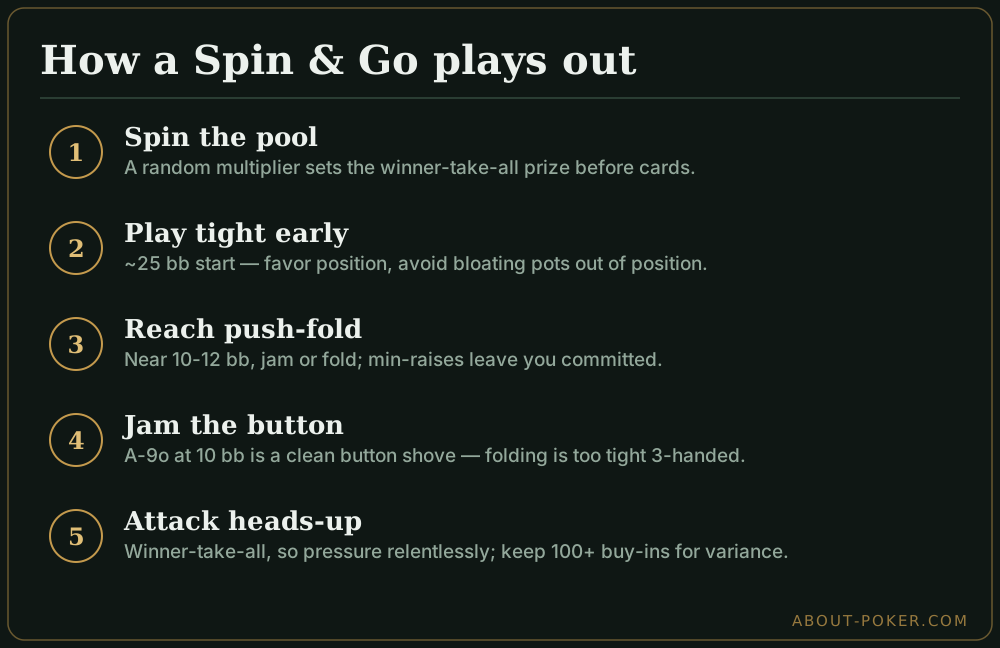
It folds to you on the button with A-9 offsuit, 10 big blinds effective, blinds 500/1,000. Your options are limp, min-raise, or shove. Limping invites both blinds to see a flop cheaply and outplay you; a min-raise to 2,000 leaves you pot-committed anyway if either blind shoves. Jamming all-in for 10 big blinds is clean and correct: A-9o is comfortably ahead of the range that either blind can call a 10-big-blind shove with, and folding this strong an ace with only three players left would be far too tight.
If the big blind wakes up with a bigger ace or a pair, you are behind but rarely crushed, and against the many worse hands they must fold, you pick up 1,500 in blinds risk-free. Over thousands of such spots, taking the aggressive line is the whole edge.
Heads-up: apply constant pressure
Bust one opponent and you are heads-up for the win. This is where matches are decided, and where aggression is most rewarded. Stacks are short, folds are frequent, and the player who keeps applying pressure — shoving light, raising most buttons, punishing passivity — accumulates chips fastest. Sitting back and waiting for premium hands hands the initiative to your opponent.
Because it is winner-take-all, there is no reason to preserve chips for a pay jump; there is no pay jump. Play to bust your opponent, not to survive.
Bankroll and volume reality
The multiplier structure means most of your profit comes from the uncommon large multipliers you occasionally spin. That makes variance brutal and demands a bigger bankroll than a normal sit & go — many winning regulars want a hundred buy-ins or more for the stake. Undercapitalize and a normal downswing busts you before the good multipliers arrive. Ground your stakes in the principles from online poker bankroll for beginners.
A quick Spin & Go checklist
- Play tight-aggressive early and lean on position from the button.
- Switch to push-fold once you are near 10-12 big blinds, and know your jamming ranges.
- Ignore ICM — it is winner-take-all, so play purely to win.
- Attack relentlessly heads-up, where most matches are decided.
- Bring a deep bankroll because the multiplier variance is severe and your edge is thin.
Play them this way — tight then explosive, disciplined then relentless — and Spin & Gos reward you with volume and the occasional big multiplier. Play them loose and hopeful, and the fast blinds and thin edges will grind you down before the wheel ever lands in your favor.
Frequently asked
What is a Spin & Go?
A Spin & Go is a three-handed hyper-turbo sit & go where a randomized multiplier sets the prize pool the moment it starts, usually paying only first place. Blinds rise very fast and stacks start around 25 big blinds, so the format is short, aggressive, and heavily push-fold.
Is Spin & Go profitable?
It can be, but the high variance and the rake baked into the multiplier make the edges thin. Winning players rely on volume, disciplined push-fold play, and a large bankroll to survive the swings. Most of your long-run profit comes from the rare large multipliers, so you must be well-rolled to reach them.
What strategy works best in Spin & Gos?
Solid push-fold fundamentals when stacks get short, tight-aggressive starting hands early, and relentless pressure once you reach heads-up. Because the format is winner-take-all and fast, chip accumulation and ICM-free aggression matter far more than in deeper sit & gos.