2-7 Triple Draw Starting Hands
The best 2-7 triple draw starting hands are strong two-card and pat draws to a seven. Learn how to rank deuce-to-seven starts, snowmen, and when to break.
On this page · 6 sections
Deuce-to-seven triple draw is a lowball draw game where the worst conventional poker hand wins — with two crucial twists: the ace is always high, and straights and flushes count against you. That makes the number-one hand 7-5-4-3-2 offsuit, not the wheel you’d want in ace-to-five lowball. Starting-hand selection is the foundation of the game, because with three draws to come, the quality of your first five cards sets your ceiling. Pair this guide with the full 2-7 triple draw strategy for street-by-street play.
Understanding what beats what
Because straights and flushes are high, you must dodge them. The best possible low is a number-one: 7-5-4-3-2, offsuit and unpaired. Next is the number-two: 7-6-4-3-2. Any pat seven is a monster. Eights are strong, nines are marginal, and tens or worse are usually trash. Aces are your enemy — they play high, so an “ace-low” is actually a very bad hand. Keep this ranking in mind; it’s the opposite of ace-to-five lowball.
Ranking your starting hands
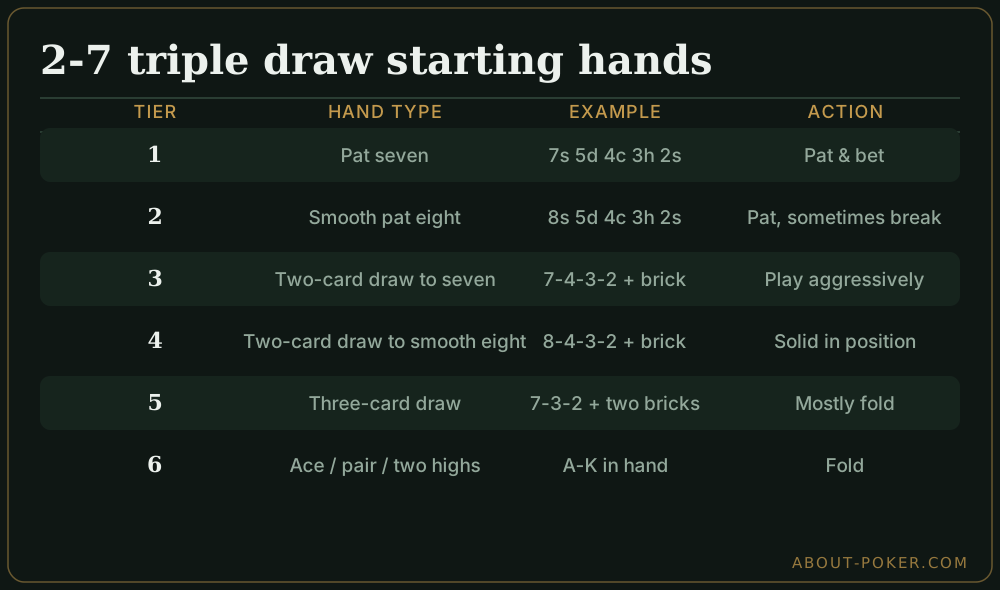
Starting hands fall into two families: pat hands (already made) and draws. Here’s a practical ranking:
- Pat seven — like 7-5-4-3-2. Premium; usually stand pat and bet.
- Pat eight, smooth — like 8-5-4-3-2. Strong; often pat, sometimes break to draw.
- Two-card draw to a seven — four unpaired low cards drawing to a number-one or -two. The best drawing hand.
- Two-card draw to a smooth eight — solid, especially with position.
- Three-card draw — weak; mostly fold, occasionally take one from late position.
Any hand containing a pair, an ace, or two high cards drops sharply in value. A pair means you must break it, effectively drawing more cards than the count suggests.
Position and the number of draws
You have three draws in this game, which rewards patience but also means made hands can be caught. Position is enormous: acting last lets you see how many cards opponents draw before you decide to break, stand pat, or bet. A pat eight in late position is far more comfortable than the same hand under the gun, where a strong seven-draw behind you can put you in a squeeze. From early position, tighten up; from the button, you can play a wider set of draws and take an extra draw more freely.
A worked 2-7 example
You’re dealt 8♠ 5♦ 4♣ 3♥ 2♠ — a pat smooth eight, the third-best category. Should you stand pat or break?
From late position in a passive pot, standing pat and betting is often best: you already have a strong made hand, and breaking to draw to a seven risks turning a made eight into a busted nine or worse. But if an opponent stands pat behind you and bets aggressively across draws, your eight may be second-best, and against a known pat-seven range you might break — discard the 8 and draw one to a seven, giving up made-hand value for a shot at the nuts. The decision hinges on your read: pat and bet against draws, consider breaking against a likely better pat hand.
Common starting-hand mistakes
The biggest leak is playing hands with an ace, forgetting the ace is high. A second is treating three-card draws as playable; with only five cards showing and three draws, a three-card draw is a large underdog and bleeds bets across the streets. A third is refusing to break a made hand that’s clearly beaten — stubbornness with a pat nine against pat-seven aggression. Finally, playing out of position too loosely turns marginal draws into money-losers. Compare draw-game discipline with five card draw strategy to see how draw counts drive both games.
Starting-hand checklist
- Is it a pat seven or smooth eight? Premium — usually pat and bet.
- Is it a two-card draw to a seven? The best drawing hand; play aggressively.
- Any ace, pair, or two high cards? Big downgrade — usually fold.
- What’s my position? Tighten early, widen and take extra draws on the button.
- Am I clearly beaten? Be willing to break a made hand against better pat ranges.
Start with strong pat hands and two-card draws to a seven, respect position, and you’ll enter every pot with the equity edge that triple draw rewards over three full drawing rounds.
Frequently asked
What is the best hand in 2-7 triple draw?
The best hand is the number-one, or 'wheel' of lowball: seven-five-four-three-deuce, all offsuit and unpaired. In deuce-to-seven, straights and flushes count against you and the ace is always high, so this seven-low is unbeatable. Any pat seven is a premium starting hand.
What are good starting hands in 2-7 triple draw?
Good starts are pat sevens and eights, and strong drawing hands like a two-card draw to a seven or a smooth eight. The ideal drawing hand is four low, unpaired, non-flush cards that draw to a number-one or number-two low. Avoid hands with pairs, aces, or high cards, and be cautious with three-card draws.
Should I draw three cards in 2-7 triple draw?
Three-card draws are generally weak and should mostly be folded, especially from early position. With three draws available you can occasionally take one, but a three-card draw is a big underdog to made hands and two-card draws. Reserve them for late position in unraised pots or against very loose fields.
Do straights and flushes count in 2-7 triple draw?
Yes, and they count against you. In deuce-to-seven lowball, a straight or a flush is a high hand, not a low one, so you want to avoid making them. That's why the best low is seven-five-four-three-deuce rather than five-four-three-two-ace, which would be a straight.