Badugi Starting Hands
The best badugi starting hands are pat low badugis and strong three-card draws. Learn how to rank badugi starts, count outs, and fold weak four-card holdings.
On this page · 6 sections
Badugi is a triple-draw lowball game with one unique wrinkle: your hand must have four cards of different suits and different ranks to count as a full four-card hand — a “badugi.” The lower your badugi, the stronger it is, with the best being 4-3-2-A of four different suits. Starting-hand selection revolves around how close you are to a low badugi and how live your outs are. If you’re new, read the badugi rules and strategy overview first, then use this guide to sharpen your draws.
How badugi hands rank
A made four-card badugi always beats a three-card hand, which always beats a two-card hand. Within four-card badugis, the lower the highest card, the better — so a four-badugi (4-3-2-A) beats an eight-badugi. When two hands have the same top card, you compare the next card down, and so on. This means smooth low badugis are the target, and understanding the structure is essential before you pick starting hands. For the full breakdown of what beats what, see the badugi best hand guide.
Ranking your starting hands
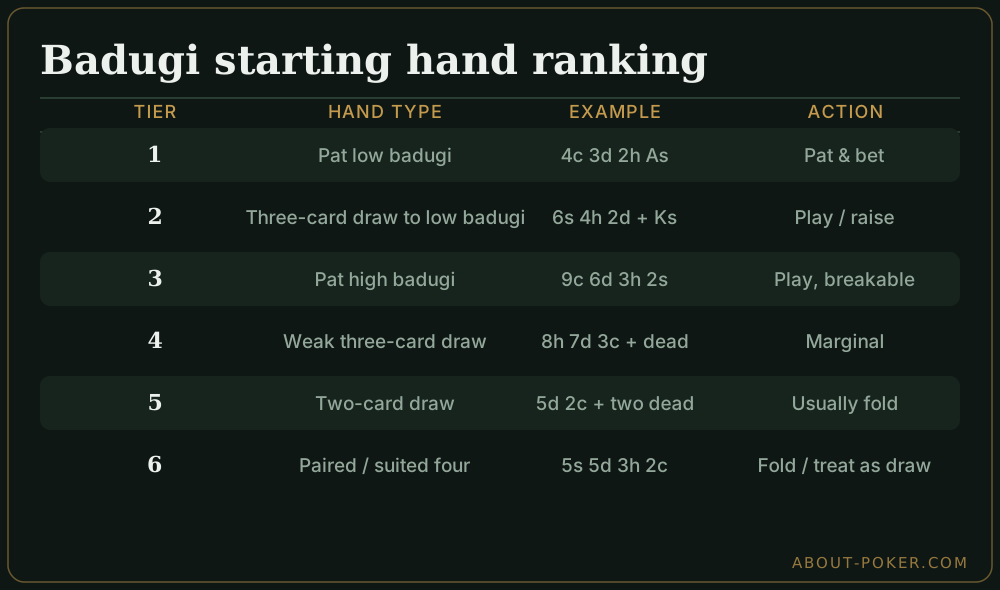
Badugi starts fall into three groups: pat badugis, three-card draws, and everything else. A practical ranking:
- Pat low badugi — a made four-badugi through seven-badugi. Premium; often stand pat.
- Three-card draw to a low badugi — three low cards of different suits, drawing one. The workhorse strong hand.
- Pat high badugi — an eight- or nine-badugi. Playable but breakable.
- Weak three-card draw — drawing to a high badugi, or with dead outs. Marginal.
- Two-card draws and paired/suited four-card holdings — usually fold.
The key insight: a three-card draw to a smooth low is often stronger than a made high badugi, because you have three draws to complete a much better hand.
Counting outs and live cards
When you hold a three-card draw, count how many cards complete your badugi. Say you hold 5♠ 3♦ 2♣ and need a low club-free, spade-free, diamond-free card — that is, any heart (a new suit) that’s also low and doesn’t pair you. The number of live cards drives the value of the draw. Because opponents’ discards and boards are hidden in badugi (there are no up cards), you rely on the count of remaining low off-suit cards and on how many draws opponents take.
A worked badugi example
You’re dealt 6♠ 4♥ 2♦ K♠ — three low cards of different suits (spade, heart, diamond) plus a dead king that shares a suit with your six. This is a three-card draw to a six-badugi, a strong start. You discard the K♠ and draw one card, hoping for any low club to complete a smooth six-badugi.
From late position in an unraised pot, this is a clear play: raise or call and take one card. If you complete a low badugi on the first draw, you can stand pat and bet the next two rounds, applying pressure on opponents still drawing. If you brick, you still have two more draws to hit. Compare this to a marginal start like a pat nine-badugi — with three draws remaining, a live three-card draw to a six is often the stronger holding.
Common starting-hand mistakes
The most common leak is overvaluing four-card holdings that aren’t badugis — such as a hand with two of the same suit or two of the same rank. Those are effectively three-card draws with a dead card, so treat them as draws, not made hands. A second mistake is standing pat with a high badugi against opponents who are clearly drawing to something better; sometimes you should break a nine-badugi to draw to a smooth low. Cross-reference the badugi odds to see how draw math supports these decisions. Finally, playing weak two-card draws is a fast way to lose across three betting rounds.
Starting-hand checklist
- Do I have a made low badugi? Pat sevens-or-better are premium.
- Is it a three-card draw to a low badugi? Play it, especially with live cards and position.
- Are two of my cards the same suit or rank? Treat the hand as a draw, not made.
- How many outs complete my badugi? More live cards means a stronger draw.
- Should I break a high badugi? Consider it against opponents drawing to smoother lows.
Enter badugi pots with made low badugis and strong three-card draws to smooth lows, and you’ll consistently have the equity edge that three drawing rounds reward.
Frequently asked
What are the best starting hands in badugi?
The best starting hands are pat low badugis — four cards of different suits and ranks, all low, such as a four-badugi (4-3-2-A of four suits). After made badugis, the strongest starts are three-card draws to a low badugi, especially ones drawing to a smooth low with live cards.
What is a badugi in badugi poker?
A badugi is a four-card hand with all four cards of different suits and different ranks. It beats any hand with fewer distinct suit-and-rank cards, so a made four-card badugi always beats a three-card hand. The lower the badugi, the stronger it is, with the best being four-three-two-ace of four suits.
Should I play a three-card draw in badugi?
Yes, strong three-card draws are core badugi starting hands. A three-card eight-or-better drawing to a low badugi is very playable, especially with live cards and position. Weaker three-card draws to high badugis, and most four-card non-badugi holdings, should be folded.
How many cards do you draw in badugi?
Badugi is a triple-draw game, so you get three drawing rounds. You may discard any number of your four cards each draw, or stand pat if you already have a strong made badugi. The number of cards you draw signals hand strength, so experienced players watch draw counts closely.