Razz Starting Hands
The best razz starting hands are three low cards, ideally three to the wheel. Learn how to rank razz third-street hands, read door cards, and fold high.
On this page · 6 sections
In razz the goal is the lowest hand, so everything flips from a high game: aces are gold, pairs are poison, and picture cards are trash. The best razz starting hands are three unpaired low cards — ideally three to the wheel. Because razz is a stud game with four of every player’s cards eventually face up, starting-hand selection is inseparable from reading door cards. If you’re new to the format, start with the razz poker rules and then use this guide to sharpen your third-street decisions.
What makes a razz hand strong
A razz hand is made from your five lowest unpaired cards, and the best possible hand is the wheel: five, four, three, two, ace. On third street you want three cards that build toward that. Two things matter: how low your cards are, and how smooth they are. “Smooth” means no gap that forces you to catch a specific card. A-2-3 is smoother than A-2-8 because it’s already three to the wheel, while the 8 leaves you needing two more babies to make a strong low.
Any three unpaired cards eight-or-lower are playable, but their strength varies enormously. Three babies (ace through five) are premium. A hand with a seven or eight in it is playable but rougher and more situational.
Ranking third-street hands
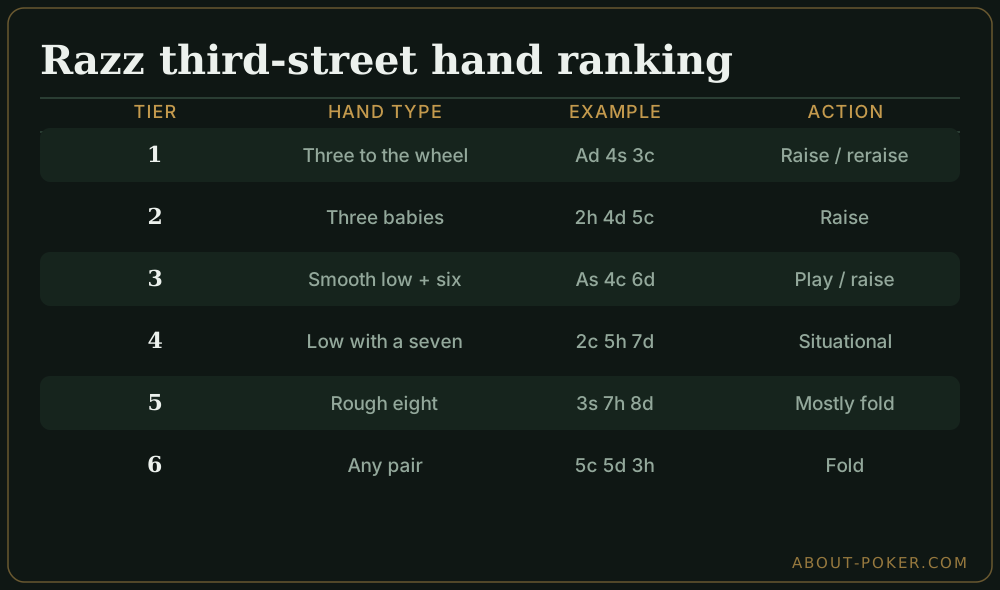
Here is a practical ranking of razz starting hands from strongest to most marginal:
- Three to the wheel — like A-2-3 or A-3-4. The nuts of starting hands.
- Three babies — three cards five-or-lower, no pair. Raise and reraise these.
- Smooth three-low with a six — such as A-4-6. Strong and playable.
- Three low with a seven — such as 2-5-7. Solid but weaker; watch live cards.
- Rough three-low with an eight — such as 3-7-8. Marginal; often fold.
Compare this against the razz poker hand rankings cheat sheet so the low-hand logic is second nature.
Reading door cards and live cards
Because each opponent shows one up card on third street, you get an instant read on the field’s strength. If everyone shows a jack, queen, or king, your three babies are enormous favorites. If two opponents show an ace and a deuce, your own low is under more pressure.
Live cards matter too. If you hold A-2-3 but three more aces and two deuces are already showing around the table, some of your best pairing-safe cards are gone — though in razz you actually want to avoid pairing, so heavy exposure of your own ranks slightly reduces your risk of pairing while also meaning fewer low cards remain in the deck for everyone.
A worked razz example
You are dealt (A♦ 4♠) 3♣ — three to the wheel, the best kind of start. Scan the door cards: three opponents show a king, a queen, and a jack, while only one shows a low card (a six). This is close to ideal. Your A-4-3 is a monster against a field of high cards, so you should raise to build the pot and charge the high hands to draw out.
The six calls, the picture cards fold. You are now heads-up with the best low, in great shape, with your opponent needing to catch several low cards just to compete. This is exactly the spot strong razz starting hands are meant to create — playing a made-low-in-progress against a hand that must catch perfectly.
Common razz starting-hand mistakes
The biggest leak is playing hands with a high card or a pair “because they’re cheap.” A pair on third street is a serious flaw in razz — you’d need to discard one of the paired cards, so you’re effectively down to two useful low cards. Fold most paired starts. The second leak is calling with rough eights and nines against low door cards; you’re often drawing to second-best. The third is failing to steal: from late position with a low door card and folded-around action, a raise to pick up the antes is standard, even with a mediocre three-low.
Razz starting-hand checklist
- Three unpaired low cards? If not, lean toward folding.
- How smooth and low? Three-to-the-wheel and three babies are premium.
- What do the door cards show? Attack fields full of high cards.
- Am I paired? A pair is a major flaw — usually fold.
- Is this a steal spot? Late position plus a low door card justifies raising marginal lows.
Get third street right in razz and the rest follows: you’ll be entering pots with the best low and forcing high-card hands to catch up. For deeper play across all five streets, continue with the full razz poker strategy guide.
Frequently asked
What are the best starting hands in razz?
The best razz starting hands are three unpaired low cards, ideally three to the wheel such as an ace, two, and three. Any three cards eight or lower with no pair is playable, and the lower and smoother your three cards, the stronger your hand. Three babies (ace through five) are premium.
Does an ace count as low in razz?
Yes. In razz the ace always plays as the lowest card, and the best possible hand is the wheel — five, four, three, two, ace. Because pairs and high cards count against you, an ace is a valuable building block for a strong low.
Should I play three cards to a nine in razz?
Usually only in favorable spots. Three low cards where one is a nine (a 'rough' start) are marginal and should mostly be folded, especially against opponents showing very low door cards. They can be played to steal from late position or when your cards are live and the field is weak.
What is a good door card in razz?
A low door card is good in razz because low is the goal. An ace, two, or three showing lets you represent a strong low and attack the antes, while a high door card broadcasts weakness. Reading opponents' door cards is central to razz, since it reveals a big part of their hand.