Seven-Card Stud Third Street Strategy
Third street decides most of your seven-card stud edge. Learn how to read live cards, use the bring-in, and complete or fold your first three cards.
On this page · 6 sections
Third street is where seven-card stud is won and lost. With two hole cards and one up card in front of you, you make a decision — fold, call the bring-in, or complete — that shapes every later street. Because most of your opponents’ cards will eventually be face up, stud is a game of information, and third street is where you first weigh it. If you have not learned the format yet, read the seven-card stud rules first, then come back for the strategy.
Why third street matters most
In hold’em, a marginal preflop mistake can be recovered on the flop. In stud, third-street errors compound. The antes and bring-in are small relative to later bets, so the temptation is to see “one more card cheap.” But stud has five streets, and a weak, dead hand bleeds bets on every one of them. Disciplined players fold the large majority of their third-street hands and enter pots with either a made hand, a big live pair, or a strong live draw. That folding discipline is the foundation of the whole seven-card stud strategy.
Reading live cards before you act
Before you touch a chip, scan every visible up card. Count how many of the cards you need are already dead. A pair of tens with a jack kicker looks fine — until you notice two more tens and a jack are showing around the table. Those are your outs, and they’re gone. Now the same holding is a trap.
The rule of thumb: for a pair, you want your improvement cards (the matching rank and your kicker) mostly live. For a three-flush or three-straight, you want the suit or the connecting ranks mostly live. If two or more of your suit are already exposed, downgrade a three-flush sharply.
Using the bring-in and completing
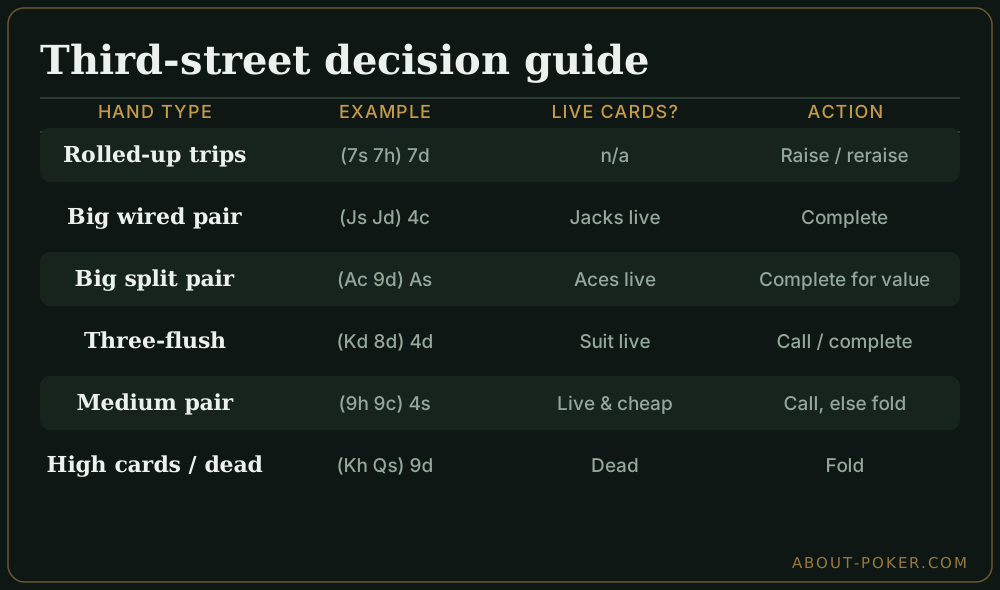
The player with the lowest up card must post the bring-in — a forced partial bet. As the next player to act, you have three choices: fold, call the bring-in, or complete to a full small bet. Completing is your aggression tool.
Complete when you hold a big pair (tens or better), rolled-up trips, or a premium live draw and you want to build the pot or narrow the field. If your door card is high — an ace or king — completing also lets you represent a monster and sometimes take the antes uncontested. Just calling the bring-in is usually a mistake with strong hands, because it invites cheap multiway pots that reduce your equity.
A worked third-street example
You are dealt (J♦ J♠) 4♣ — a hidden pair of jacks with a low door card. Scan the table: no other jacks are showing, one four is dead, and only one club is exposed. Your jacks are fully live and completely concealed. This is an excellent completing hand. You raise to a full small bet.
An opponent showing K♥ calls, and another with an exposed pair of sixes — 6♦ 6♣ showing — calls as well. Here your hidden strength shines. If a jack or an overcard-free brick comes on fourth street, the king player often continues, unaware you already have a bigger pair. Your low door card gives away nothing, which is exactly why concealed big pairs outperform openly showing pairs.
How position and pairs change your plan
Acting last on a street is valuable in stud too. Later position lets you fold dead hands after seeing others commit, and steal when the board checks around. With a big split pair (one of your pair showing), you gain pot-building power but lose concealment. With a big wired pair (both hole cards paired, hidden), you have deception but a low door card that can’t threaten a steal. Neither is strictly better — you simply play the split pair more for value and the wired pair more for traps.
Small and medium pairs are marginal. Play them only when they are live, cheap to enter, and you are not facing a completed bet from a higher door card. Three-flushes and three-straights are drawing hands: strong when live, foldable when dead. Compare this ranking against the full seven-card stud starting hands chart to calibrate.
Third-street checklist
Run this quick mental checklist before every third-street decision:
- Is my hand a legitimate starter? Big pair, trips, or a live draw — otherwise lean fold.
- Are my cards live? Count dead ranks and dead suits. Dead hands fold.
- What does my door card say? High cards can steal; low cards conceal.
- Is anyone else showing strength? Give respect to completed bets from big door cards.
- What’s my plan for later streets? If you can’t picture fourth and fifth street, don’t enter.
Master third street and the rest of stud becomes far simpler: you’ll be entering pots with the best of it, with live cards, and with a clear plan.
Frequently asked
What is third street in seven-card stud?
Third street is the first betting round, when each player holds two down cards and one up card. The player showing the lowest up card must post the bring-in, and action proceeds from there. It's the single most important decision point in stud because it sets up every later street.
Should I complete the bet on third street?
Complete when you have a genuinely strong hand — a big pair, rolled-up trips, or a live three-flush — and want to build a pot or thin the field. If you hold a big pair with a high door card, completing also charges drawing hands to continue. Avoid completing with speculative hands out of position.
How do live cards affect third street play?
Live cards are the ranks and suits you need that are not yet showing in opponents' up cards. A pair of jacks is far stronger when no other jacks and few of your kicker's cards are dead. Always scan the exposed cards before you act, because a 'dead' drawing hand should usually be folded.
What is a good door card in seven-card stud?
A door card is your single up card on third street. A high door card (ace or king) lets you represent strength and can steal the antes, while a low door card paired with a hidden big pair disguises your hand. The best situation is a concealed strong holding with a door card that gives nothing away.