Playing the Hijack
The hijack is the first true late-position seat, two off the button. Learn the wider opening range, blind-stealing angle, and how to defend against 3-bets.
On this page · 6 sections
The hijack is where late-position poker begins. Sitting two seats to the right of the button — directly right of the cutoff — it’s the first spot where you can open a genuinely wide range and start applying pressure to the blinds. The name says it all: you’re “hijacking” the steal attempt the cutoff and button would otherwise make. Play the hijack with the right blend of aggression and awareness of the seats behind you, and it becomes one of the most profitable positions at the table.
Where the hijack sits and why it matters
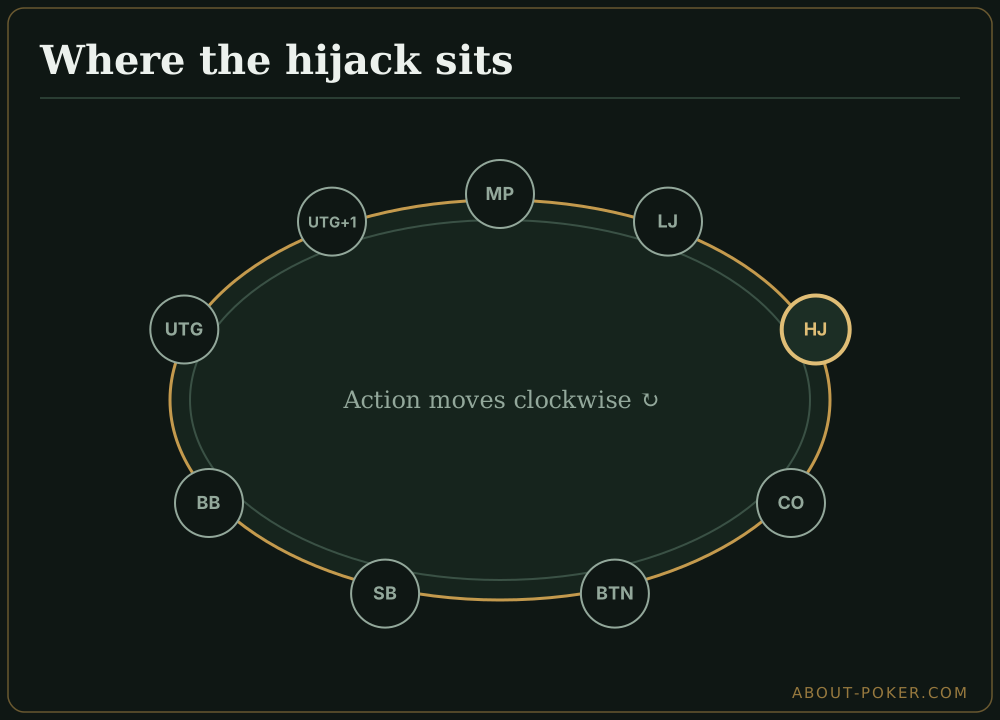
Only three players act after you from the hijack: the cutoff, the button, and then the two blinds. Compared with middle position, that’s a meaningful drop in the number of opponents who can wake up with a hand. Fewer players behind means fewer chances to get 3-bet or trapped, so you can open more hands profitably. The one caveat is that the two seats behind you — the cutoff and button — are the strongest positions at the table and will fight back if they smell weakness.
The hijack opening range
A solid full-ring hijack range is roughly 20-25% of hands. Building on the middle-position range, you add:
- Most suited connectors and one-gappers: T9s, 98s, 87s, 76s
- More offsuit broadways: KJo, QJo, ATo, KTo
- Weaker suited aces used as steal/bluff opens: A9s-A2s
- Suited kings and queens: K9s, Q9s
In 6-max the hijack effectively becomes an even-later seat because early position is compressed, so you can push toward 27-30%. Line these up with the rest of your ranges by position so each seat opens slightly wider than the one before it.
A worked example: hijacking a steal
Folded to you in the hijack with 9h-8h, you open to 2.5 big blinds. This is a textbook hijack open — a suited connector with good playability, opened while three players remain. The button calls, both blinds fold, and you take a heads-up flop in position against the button… except you’re not in position, the button is. That detail matters: even from a strong seat like the hijack, you can end up out of position against the button, which is why suited connectors — hands that flop draws and can barrel or check-fold cheaply — are the right kind of hand to add rather than weak offsuit junk. If instead the cutoff 3-bets your 98s, you can fold cheaply; you opened it knowing it’s near the bottom of your range.
Contrast that with opening Ad-Qc from the hijack: this hand wants action and plays well against a 3-bet, so if the button 3-bets you can continue confidently. Strong hands anchor your range; suited speculative hands round it out.
Common hijack mistakes
- Treating the hijack like the button. You still have two elite positions behind you. Opening a full button range from the hijack is too loose and gets punished by 3-bets.
- Folding to every 3-bet. If you fold your entire hijack range to a button 3-bet, thinking players will 3-bet you relentlessly. Keep enough strong hands to continue and occasionally 4-bet.
- Limping instead of raising. As in every position, open-raising is stronger — it lets you steal the blinds outright and take initiative.
- Ignoring the blinds’ tendencies. If the blinds defend wide and play well post-flop, tighten slightly; if they fold too much, widen your steals.
Adjusting to the players behind you
The hijack’s profitability hinges on the cutoff and button. If those seats are tight and rarely 3-bet, you can open near the top of your range and steal freely. If an aggressive 3-bettor sits on the button, tighten up and be prepared to 4-bet your value hands — AA-QQ, AK, and the occasional suited-ace bluff — rather than flat-calling out of position.
Against wide, passive blinds, the hijack is a steal machine: open, take it down uncontested often, and play in position against the loose defenders when called. Against sticky blinds who peel light, lean on your value hands and cut back on the thinnest suited-ace opens.
Hijack checklist
- Is my hand in the ~20-25% hijack range (wider in 6-max)?
- Am I aware of how the cutoff and button play back at opens?
- Am I raising, not limping, with a consistent size?
- Do I have a 3-bet-defense plan for my strongest hands?
Play the hijack as what it is — the gateway to late position. Widen up, take initiative, steal the blinds when you can, but keep one eye on the cutoff and button who still get the last word.
Frequently asked
Where is the hijack in poker?
The hijack is the seat two to the right of the button, directly to the right of the cutoff. It's the first of the true late-position seats, sitting just after middle position and the lojack.
How wide should you open from the hijack?
Around 20-25% of hands in full ring and wider in 6-max. You add most suited connectors, more offsuit broadways, and weaker suited aces because only three players — cutoff, button, and the two blinds — act after you.
Why is it called the hijack?
The name comes from 'hijacking' the steal that the cutoff and button would normally make. By opening from the hijack you take the initiative in the pot before the later seats can attack the blinds themselves.
Should you 3-bet from the hijack?
Yes, selectively. Against loose openers in middle position you can 3-bet strong value hands and mix in suited-ace bluffs, but stay mindful that the cutoff and button behind you can cold-4-bet or call in position.