Position in Multiway Pots
Position matters even more in multiway pots. Learn how acting last against several opponents changes your bluffing, value betting, and pot control.
On this page · 6 sections
Everything true about position in a heads-up pot becomes more extreme when three, four, or five players see a flop. Multiway pots reward the player who acts last and punish the one who acts first far more harshly than single-raised heads-up pots do. If you already respect position, multiway spots are where that respect pays the biggest dividends — and where ignoring it costs the most.
Why position magnifies in multiway pots
With one opponent, acting last means you see one decision before you act. With three opponents, acting last means you see three decisions — three chances to gather information about who is strong, who is drawing, and who has given up. The value of the button seat scales with the number of players it acts behind.
There is also a structural reason multiway pots are dangerous. The more players who see a flop, the more likely someone connected hard with it. A dry-looking board is rarely dry when five ranges have hit it. Acting last lets you fold cheaply when the field shows strength and pounce when it shows weakness, which is exactly why the seat matters more here than anywhere else. For the single-opponent version of this logic, in position vs out of position lays out the fundamentals.
Bluff far less, value bet more
The math of bluffing collapses as the field grows. A bluff only works if every remaining player folds. Against one opponent who folds 55% of the time, a bluff often shows a profit. Against three such opponents, the chance all three fold is roughly 0.55 × 0.55 × 0.55, or about 17%. The same fold frequency that made a heads-up bluff great makes a three-way bluff a money-loser.
The practical takeaway: in multiway pots, tighten your bluffing to almost nothing and lean on value. Bet your strong hands for value, check or fold your weak ones, and stop trying to represent hands that four opponents won’t believe. Position helps you make this discipline profitable — when it checks to you on the button, you can fire a value bet knowing no one showed strength; out of position, you are forced to guess.
A worked example: the flush draw on the button
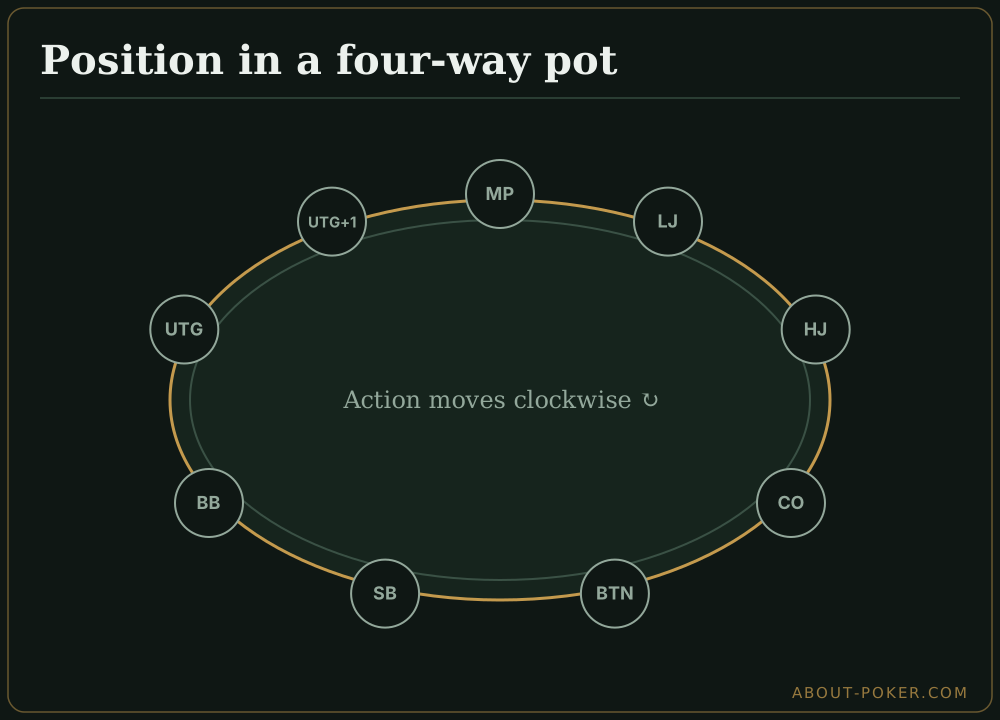
Say four players see a flop of 9h-6h-2s and you hold Ah-Th on the button. The under-the-gun player bets, one player calls, one folds. You have the nut flush draw with two clean overcards — roughly 9 flush outs plus some ace outs, giving you around 35% equity to improve by the river, and you are getting a good price with a caller already in.
Because you have position, you can call and see the turn with full information: if a heart comes you can raise for value against two committed players; if the board bricks and the initial bettor checks, you can take a free card or bet to push out the caller. Now flip the seat — hold the same Ah-Th under the gun. You must lead or check into three players with no read, and you will frequently either bloat the pot as a favorite you’re not, or check and let the field see a free card that beats you. Same draw, same board, wildly different value depending on your seat.
Relative position: watch the pre-flop raiser
In multiway pots there is a second layer worth tracking — relative position, meaning where you sit versus the pre-flop raiser rather than the button. The raiser usually continuation-bets, so you want callers between you and the raiser: their bet forces those callers to react before your decision. Sitting directly to the raiser’s left is the worst spot even if you are not first to act, because you must respond to the c-bet before anyone else does. This distinction is subtle but real, and relative position in poker covers it in full.
Which hands to play multiway
Multiway pots reward hands that make the nuts or near-nuts, not hands that make weak pairs:
- Suited aces and suited connectors — they flop flushes and straights that get paid by a big field.
- Small and medium pocket pairs — set-mining shines when several opponents can pay you off.
- Broadway hands that flop the nuts — think top set or the nut straight, not middling top pair.
Downgrade hands like offsuit weak top-pair holdings; in a five-way pot, top pair with a bad kicker is often beaten and rarely gets three streets of value. For the broader framework on why seat dictates hand selection, see why position is important in poker.
A multiway position checklist
- Count the players in the pot — the bigger the field, the tighter and more value-heavy you play.
- Note your seat versus the button and versus the pre-flop raiser.
- In position, use the field’s actions before deciding; out of position, default to caution.
- Cut bluffs sharply; each extra opponent slashes your fold equity.
- Favor nut-making hands over pair-making hands.
- When you have both the button and a strong hand, bet for value confidently — that is the most profitable spot poker offers.
Multiway pots are where discipline and position compound. Play last, play strong hands, skip the hero bluffs, and let the seat do the heavy lifting.
Frequently asked
Why does position matter more in multiway pots?
In a multiway pot several opponents must act before you when you have position, so acting last gives you information about multiple ranges at once. It also matters more because someone almost always connects with the board, so seeing everyone's action before deciding is far safer than betting blind.
Should I bluff less in multiway pots?
Yes. Bluffs succeed only when everyone folds, and each extra opponent multiplies the chance that someone has a hand worth calling. Value betting your strong hands and giving up on weak ones is usually more profitable multiway than firing thin bluffs.
How does position change value betting multiway?
In position you can see how many players show interest before you bet, so you can size up when it checks around and check back when there's action ahead of you. Out of position you often have to check strong hands to control the pot because you cannot gauge the field's strength first.
What hands play best multiway?
Hands that make the nuts or near-nuts play best multiway: suited connectors, suited aces, and pocket pairs that can flop sets. Weak top-pair hands lose value because someone in a large field often has a stronger made hand or a strong draw.