Re-Stealing From the Blinds
Re-stealing means 3-betting a late-position steal from the blinds. Learn resteal ranges, blockers, sizing, and how to counter thieves who open too wide.
On this page · 6 sections
Re-stealing is how you punish blind thieves. When a late-position player opens a wide steal range and you’re sitting in the blinds, you don’t have to fold or call passively — you can 3-bet to take the pot right back. Because their opening range is so wide, it folds often, and every fold hands you the pot plus their steal. The resteal is one of the most profitable aggressive plays in poker, but it demands the right hands, the right sizing, and a clear read.
Why restealing works
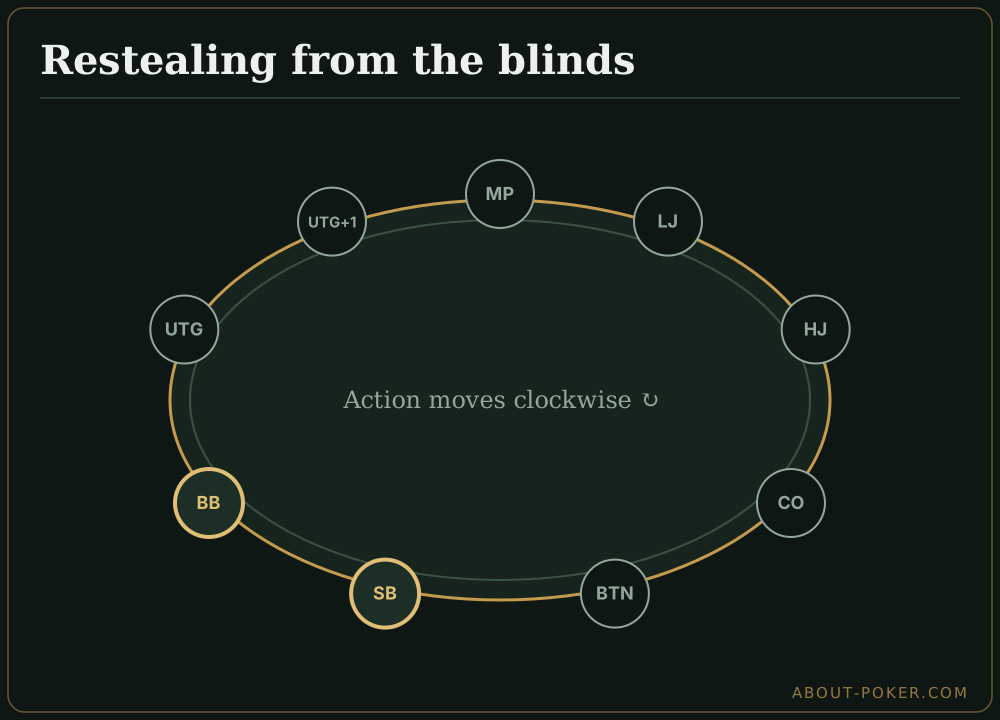
The whole reason stealing the blinds is profitable is that late-position openers raise wide and expect to win the dead money uncontested. That same width is their weakness. A cutoff or button opening 30-45% of hands simply cannot continue against a 3-bet with most of that range — they fold the junk and the marginal suited hands, continuing only with the top slice.
So when you 3-bet from the blinds, you’re attacking a range that’s mostly air. You win immediately a large fraction of the time, and when you get called or 4-bet you fold cheaply with your bluffs and stack off with your value. This is core big blind strategy against aggressive late-position play.
Building a resteal range
A resteal range mixes value and bluffs:
- Value: QQ+, AK, and sometimes JJ/AQ depending on the opener. These want the money in and can 4-bet or stack off.
- Bluffs with blockers: A5s-A2s are ideal — the ace blocks the opener’s strong aces and AA, and the suited wheel card gives you a nut-flush and straight potential when called.
- Playable bluffs: suited broadways and connectors like KJs, QJs, T9s that flop well if the opener calls.
The blocker principle matters: holding an ace makes it less likely your opponent has a premium ace, so your 3-bet gets through more often. That’s why suited aces are the backbone of a good resteal bluffing range.
A worked example
You’re in the big blind with Ah-4h. The button, a known aggressive stealer, opens to 2.2 big blinds with what you estimate is 45% of hands. You 3-bet to 9 big blinds. Against a 45% range, the button folds the vast majority — every offsuit gapper, most weak broadways, the small suited junk — and you win the pot outright most of the time. When the button does call, you have the nut-flush blocker, a wheel draw, and position to give up cheaply on bad flops. If the button 4-bets, you fold A4s having invested little. That’s the resteal in miniature: high fold equity, good blockers, cheap to abandon.
Compare that to restealing with a hand like Kh-9c offsuit: no blocker to premium hands, poor playability when called, and it dominates almost nothing. That’s a worse bluff — the blocker and suitedness of A4s are exactly what make it a better choice.
Common resteal mistakes
- Restealing against tight openers. If the opener only raises 15% of hands, their range is strong and folds rarely. Resteal light against wide thieves, not tight players.
- Sizing too small. Out of position, a small 3-bet invites calls and leaves you playing a bloated pot with a marginal hand. Size up — around 4x the open in the big blind, more from the small blind.
- Only bluffing, or only value 3-betting. If you resteal exclusively with bluffs, observant opponents 4-bet you relentlessly; if only with premiums, they fold and you never get paid. Balance both.
- No plan for the 4-bet or the flop. Know in advance which resteals you’ll fold to a 4-bet and how you’ll play the flop when called.
Adjusting by seat and opponent
From the big blind you close the action, so you can also flat-call a wide portion of hands and resteal selectively. From the small blind you’re out of position to both the opener and the big blind behind you, so lean more toward a raise-or-fold approach and size larger.
The read on the opener is everything. Against a habitual over-folder who opens wide and gives up to 3-bets, resteal aggressively — you barely need a hand. Against a stationy opener who calls 3-bets too often, cut your bluffs and resteal mostly for value, letting your strong hands get paid post-flop.
Resteal checklist
- Is the opener’s range wide enough to fold often to a 3-bet?
- Does my hand have blockers (a suited ace) or good playability?
- Am I sizing large enough out of position (~4x from the big blind)?
- Do I have a fold-to-4-bet and a flop plan ready?
Restealing turns the blinds from a cost into a weapon. Attack the wide openers, use blocker-heavy bluffs alongside real value, size up out of position, and take back the dead money that thieves assume is theirs.
Frequently asked
What is a resteal in poker?
A resteal is a 3-bet made from the blinds against a late-position open, usually with a hand that isn't strong enough to value 3-bet. The idea is to exploit the wide steal range of the cutoff, button, or small blind by taking the pot back with fold equity.
What hands are good for restealing?
Hands with blockers and some post-flop playability are ideal — suited aces like A5s-A2s block the opener's premium aces, and suited connectors and broadways give you equity when called. You mix these bluffs with genuine value hands so you're balanced.
How big should a resteal 3-bet be?
Out of position from the blinds, size larger than an in-position 3-bet — typically around 4x the open when in the big blind, and a bit more from the small blind. The bigger size charges the wide-opening thief and reduces how often you play out of position with a marginal holding.
When should you resteal versus just call?
Resteal (3-bet) when the opener's range is wide and folds too often, and when your hand has blockers or plays poorly as a flat call. Call when your hand realizes equity well multiway or in position and the opener is unlikely to fold to a 3-bet.