Chasing Draws Profitably
When chasing a draw actually makes money: pot odds, implied odds, outs, and fold equity — with a worked hand showing the exact break-even math.
On this page · 8 sections
“Chasing draws” has a bad reputation, and it’s half-deserved. Players who call every flush and straight draw at any price bleed money. But players who chase the right draws at the right price are printing — a completed draw usually wins a big pot, and the math to know when to continue is simple. This guide shows you exactly when chasing a draw is profitable, using pot odds, implied odds, and fold equity together.
The core idea: price versus chance
Chasing a draw is profitable when the price you pay is smaller than your chance of hitting. That’s the whole decision in one sentence. To use it you need two numbers:
- Your chance of hitting — estimated from your outs.
- Your pot odds — the price the pot is laying you to call.
If your chance of hitting is higher than the pot odds price, calling is profitable over the long run. If it’s lower, folding (or semi-bluffing instead) is correct.
Counting outs and equity fast
Use the rule of 4 and 2: multiply your outs by 4 on the flop (two cards to come) or by 2 on the turn (one card to come) to estimate your percentage to hit. A nine-out flush draw is about 36% on the flop and 18% on the turn. An eight-out open-ender is about 32% and 16%. A four-out gutshot is about 16% and 8%. For the full method see rule of 4 and 2.
Turning pot odds into a decision
Pot odds tell you the break-even equity you need to call. If the pot is 100 and your opponent bets 50, you’re calling 50 to win 150, so you need 50 ÷ (150 + 50) = 25% equity to break even. Your flush draw has 36% on the flop, so calling is clearly profitable. If instead the bet were pot-sized (100 into 100), you’d need 100 ÷ 300 = 33% — still fine for a flush draw, marginal for an open-ender, and a fold for a gutshot on raw pot odds. Full walkthrough at what are pot odds.
Implied odds: the reason marginal draws call
Raw pot odds ignore the money you win after you hit. That extra is implied odds, and it’s why chasing works even when the immediate price looks slightly too high. If you’re getting 3-to-1 on a call but your draw needs 4-to-1, you only need to win a little more than the current bet on a later street to make the call profitable.
Implied odds are strongest when:
- Stacks are deep, so there’s money left to win.
- Your draw is hidden (a straight completing on a non-obvious card).
- Your opponent is likely to pay you off with a strong made hand.
They’re weakest with obvious flush boards, short stacks, or opponents who shut down the moment the draw completes. Watch out for reverse implied odds too — a small flush draw can complete and still lose to a bigger flush.
A worked hand
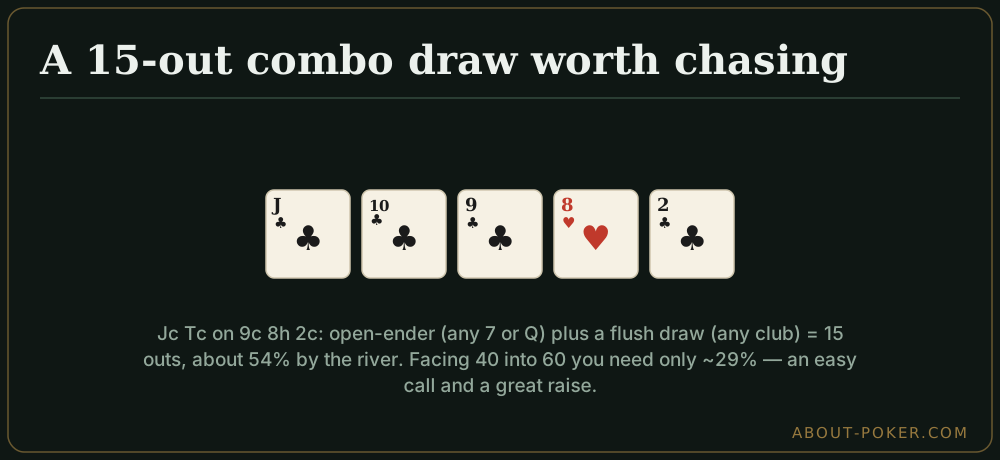
You hold Jc-Tc on a flop of 9c-8h-2c. You have an open-ended straight draw (any 7 or Q) plus a flush draw (any club) — that’s 15 outs, a monster combo draw worth roughly 54% equity by the river against a single made hand.
The pot is 60. Your opponent bets 40, so you’re calling 40 to win 100, needing 40 ÷ 140 = about 29% to break even. Your 15-out combo draw crushes that price, so calling is automatic — and raising is even better because you add fold equity on top of your huge pot equity. This is a spot where chasing isn’t just okay, it’s a premium hand.
Now change the hand to a bare gutshot: you hold Qc-Jd on 9-8-2 rainbow, needing only a 10 (four outs, about 16% flop equity). Facing that same 40-into-60 bet you need 29% but only have 16%. On raw pot odds, this is a fold — unless deep stacks and a hidden payoff give you enough implied odds to continue.
When to bet the draw instead of calling
Calling isn’t your only option. Semi-bluffing — betting or raising your draw — adds fold equity, so you can win the pot two ways. It’s best when a bet folds out better hands and your draw still has backup equity when called. On boards where opponents rarely fold, or when you’d have to fold to a re-raise, calling to see the next card cheaply is often better. Read more in playing draws postflop.
Common chasing mistakes
- Chasing without the price. Calling a pot-sized bet with a gutshot and no implied odds is a leak, full stop.
- Overrating gutshots. Four outs is only 16% on the flop — you need a great price or strong implied odds.
- Ignoring reverse implied odds. A baby flush draw can hit and still lose you a stack to a bigger flush.
- Never folding a draw. Some draws are just too weak at the price offered; folding is correct and profitable.
Profitable chasing checklist
- Count outs, apply rule of 4 and 2 for your equity.
- Calculate pot odds: amount to call ÷ (final pot after your call).
- Compare — if equity beats the price, call is profitable on pot odds alone.
- If marginal, add implied odds (deep stacks, hidden draw, sticky opponent).
- Consider semi-bluffing instead when you have fold equity.
Chase draws when the math says so and fold when it doesn’t. Done with discipline, “chasing” is one of the most reliable ways to make money postflop.
Frequently asked
Is chasing draws a losing strategy?
Not when done correctly. Chasing is only losing when you call without the right price. If your pot odds plus implied odds beat your chance of hitting, chasing a draw is a long-term winning play. The mistake is chasing every draw regardless of the price.
How do I know if I have the odds to chase a draw?
Compare your pot odds to your chance of hitting. Estimate your equity with the rule of 4 and 2 (outs times 4 on the flop, times 2 on the turn), then check whether the price you're paying is smaller than that percentage. If the price is better than your odds to hit, call.
What are implied odds and why do they matter for draws?
Implied odds are the extra money you expect to win on later streets when you complete your draw. They let you call slightly unprofitable prices now because the future payoff makes the whole play profitable. Deep stacks and hidden draws like straights carry the strongest implied odds.
Should I bet my draws or just call?
Both are correct in different spots. Semi-bluffing (betting or raising) adds fold equity — you can win without hitting. Calling is better when you have no fold equity, when you're getting a great price, or when your opponent is unlikely to fold. Mixing keeps you unpredictable.