Calling the Clock: Rules & Etiquette
Calling the clock puts a time limit on a stalling opponent. Learn who can call it, the standard countdown, and the etiquette of when it's fair to use.
On this page · 5 sections
Poker rewards thinking, but not endless stalling. When one player tanks so long that it grinds the game to a halt, anyone at the table can call the clock — a request to put a hard time limit on that player’s decision. It’s the mechanism that keeps deliberate slow-rollers and genuine tank-jobs from holding the whole table hostage. Used correctly it’s fair table management; used carelessly it’s rude. Knowing the difference is part of being a good player.
How calling the clock works
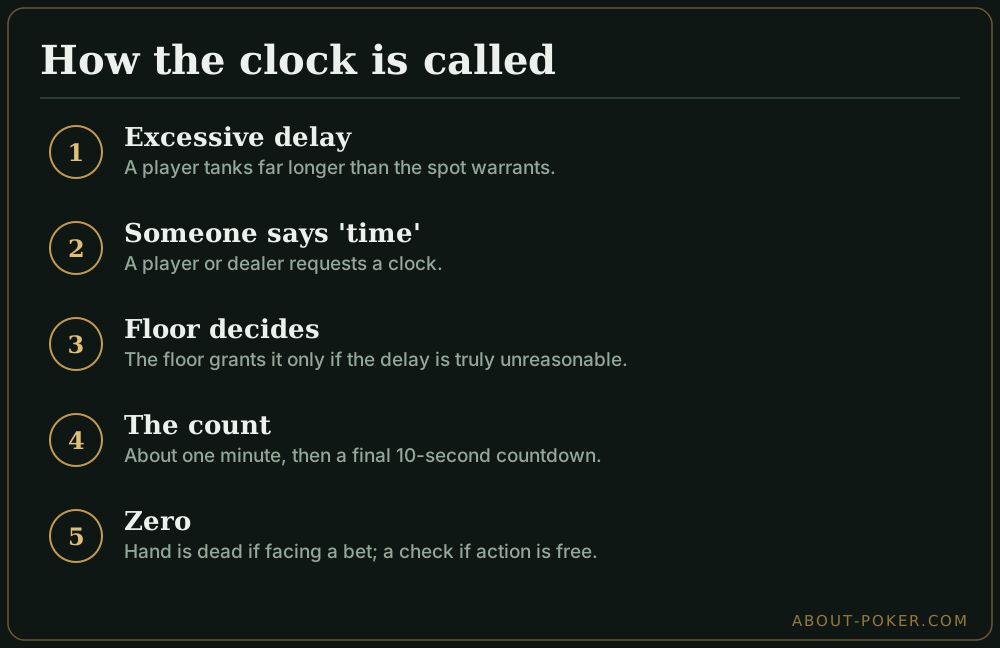
The procedure is standard across most cardrooms and tournaments:
- A player (or the dealer) decides an opponent has taken an unreasonable amount of time.
- Someone says “time” or “can we get a clock?” to the dealer.
- The floor or dealer decides whether enough time has genuinely passed. They control this — the requesting player doesn’t automatically get their way.
- If granted, the dealer announces a countdown. A common structure is one minute to act, followed by a final 10-second count out loud.
- If the player still hasn’t acted when the count hits zero, their hand is ruled dead if facing a bet, or a check if they can check for free.
The key point: the clock is a tool the dealer administers, not a weapon a player wields directly. You’re asking the floor to step in, not demanding it.
When it’s fair — and when it isn’t
Calling the clock is appropriate when a decision has clearly stopped being about thinking and started being about stalling. A player who’s been motionless for two full minutes on a routine spot is fair game.
It is not appropriate to snap-call the clock on someone facing a genuinely huge, tournament-life decision after only 20 seconds. That’s angle-shooting — using a legitimate rule as a pressure tactic. The etiquette here overlaps heavily with general poker etiquette for beginners: give people reasonable time for big spots, and reserve the clock for real stalls.
In tournaments, the clock matters even more because tournament rules and blind pressure make deliberate stalling a real strategy near the money bubble. That’s exactly why the clock exists — to stop players from running out the level on purpose.
A worked example
You’re at a final table. The player under the gun has been staring at the board for what feels like forever. You glance at the dealer, who’s already noted the delay. After roughly 90 seconds of no action, another player says, “Can we call the clock?”
The dealer looks to the floor, who agrees the delay is excessive and announces: “You have one minute to act.” The player keeps tanking. At the one-minute mark the dealer begins the final count: “10, 9, 8…” On “2,” the player finally says “fold.” The count stops, the hand moves on, and the game keeps its pace.
Note what happened: the player got a full, fair minute plus a countdown — over two total minutes of thinking time. The clock didn’t rush a real decision; it capped an unreasonable one.
Etiquette around the clock
- Let the dealer judge the timing. Don’t demand a clock the instant an opponent pauses. Give reasonable spots reasonable time.
- Don’t call it on yourself’s behalf as pressure. Using the clock to needle an opponent in a tough spot is poor form.
- Understand the count structure. Knowing it’s roughly a minute plus a final 10-count helps you plan your own decisions so you never get clocked yourself.
- Keep the game moving generally. The best defense against clocks is acting promptly. Understand how the betting sequence flows so you’re ready when it’s your turn.
The bottom line
Calling the clock is the game’s built-in remedy for stalling: a fair, dealer-administered countdown that gives a player a full minute-plus to act before their hand dies. Use it when someone is genuinely holding up the table, not as a needle on a tough decision. Respect the tool and it keeps games fast and fair for everyone.
Frequently asked
What does calling the clock mean in poker?
Calling the clock is a request to the dealer or floor to put a time limit on a player who is taking excessively long to act. Once granted, the player gets a fixed countdown — commonly one minute plus a short final count — and their hand is declared dead if they don't act in time.
Who can call the clock?
In most rooms any player at the table can request it, but the floor or dealer decides whether enough time has passed to grant it. Some rooms require you to be in the hand; others let any seated player ask. The dealer, not the requesting player, runs the count.
What happens when the clock runs out?
If a player faces a bet and the clock expires, their hand is declared dead (a fold). If they can check for free and time out, the action is ruled a check. The exact final ruling follows the room or tournament rules in effect.