Can You Change Seats Mid-Game
Can you change seats mid-game in poker? How seat changes work in cash games, the seat-change button, blind rules when you move, and casino etiquette explained.
On this page · 5 sections
Yes — you can almost always change seats mid-game, but there is a proper way to do it. Poker is not a free-for-all where you stand up and plop down wherever you like. Cardrooms use a simple, fair system so nobody jumps the queue for a better spot. Once you understand the seat-change button and a couple of blind rules, moving seats becomes routine.
Yes, but you ask for it
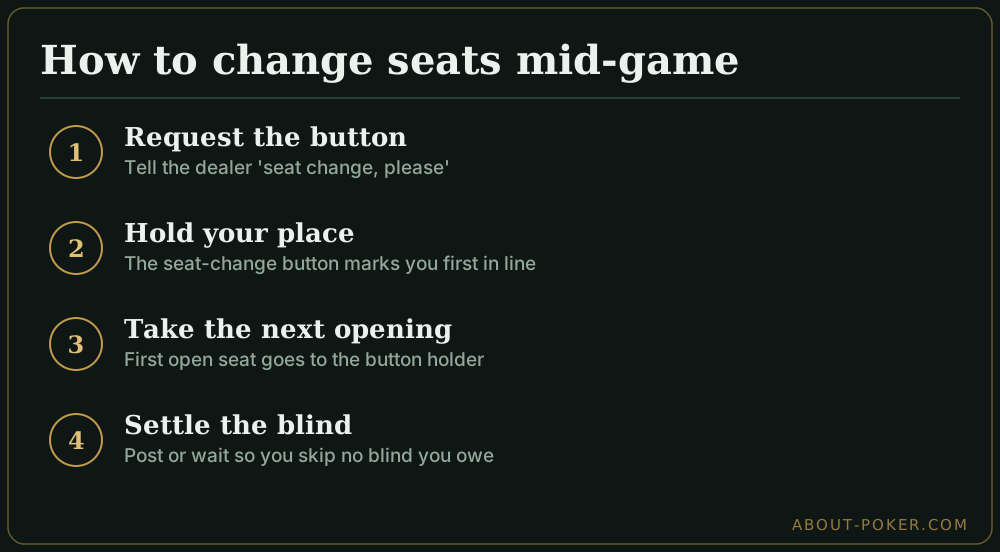
In a live cash game, you request a seat change by telling the dealer, “Seat change, please,” or by asking the floor person. The dealer places a seat-change button in front of you, marking that you are first in line for the next open seat at that table. When a player leaves, the open seat goes to whoever holds the seat-change button. If two people want to move, the button goes to whoever asked first, and the second person gets the next opening.
You do not get to pick which specific seat you want in advance. You take the next one that opens. If you are hoping to sit directly to the left of a particular player, you may need to hold the button through several openings until that exact seat frees up. That is completely allowed — you just keep passing on openings you do not want.
This whole system only applies to cash games. In tournaments you cannot choose your seat at all; the room assigns seats randomly and moves you when tables break.
Why players want to move
Seat selection is one of the few edges available before a single card is dealt. The general principle: you want strong, aggressive players on your right (so they act before you) and weaker, more passive players on your left (so you act after them and can control the pot). Acting last against a loose opponent lets you see what they do before you commit chips.
Players also move to get away from someone who has been running well against them, to sit next to a friend, or simply to get a better view of the board or a more comfortable chair. All of these are legitimate reasons, and no explanation is required — you never have to justify a seat change.
The blind rule when you move
Here is the part beginners trip over. When you change seats, the room does not want you to dodge the blinds. Two things can happen:
- You move toward the button (away from the blinds). You are now further from posting the big blind, so many rooms make you either wait for the big blind to reach you or post a blind to be dealt in immediately, exactly like a new player entering. This prevents “buying” free hands by skipping the blinds.
- You move into or past the blinds. If your new seat means you would owe a blind you just paid, or you jump over a blind you already posted, the dealer sorts it out so you neither pay twice nor skip a payment.
The clean rule of thumb: you cannot use a seat change to avoid posting a blind. If moving would let you dodge one, you post it anyway. When in doubt, ask the dealer before you sit — they handle this dozens of times a day. Our guide to posting blinds rules and etiquette covers the specifics.
A worked example
Say you are in Seat 3 at a nine-handed table. The button is currently on Seat 6. A loud, aggressive regular is in Seat 4, directly on your left, and he keeps re-raising you out of pots. You want him on your right instead.
You ask for the seat-change button. Two hands later, Seat 8 opens up. Seat 8 puts the aggressive Seat 4 player on your right for most of the orbit — good — so you take it. Because Seat 8 is closer to the button than Seat 3 was, you have effectively moved away from the blinds. The dealer tells you the big blind will reach you in a few hands, and you can either wait it out or post a big blind now to play immediately. You choose to wait, sit down, and let the button pass once. Clean, legal, and now you have position on the player who was giving you trouble.
Etiquette and common mistakes
- Never grab an open seat without the button. Even if a seat opens right next to you and looks unclaimed, ask the dealer first. Silently sliding over jumps the line ahead of anyone holding the seat-change button.
- Move promptly. When your seat opens, take it quickly so the dealer can keep the game moving. Do not finish a beer and a phone call first.
- Bring your whole stack. You move with all your chips; you do not “cash out” and rebuy. Stack your chips and carry them, or ask the dealer to help.
- One button per request. You hold the seat-change button until you accept a seat, then it is free for the next person.
- Do not shop endlessly during a hand. Ask between hands, not while cards are in the air.
Seat changes are a normal, expected part of live poker. Learn the button system, respect the blind rule, and you can freely improve your position. If you are new to the room, skim our poker etiquette for beginners so your first seat change goes smoothly and the whole table stays happy.
Frequently asked
Can you change seats mid-game in a cash game?
Yes. In almost every cardroom you can request a seat change at your table whenever an open seat appears. You tell the dealer or floor you want the seat-change button, and the first open seat goes to whoever asked first. You cannot simply stand up and grab any seat without asking.
Do you have to post a blind when you change seats?
Usually only if your move skips you past the blinds. If you change seats and end up moving forward toward the button, you may have to wait or post to enter. If your new seat pushes you into the blinds sooner, you post normally. Rules vary slightly by room, so ask the dealer.
Can you switch tables instead of just seats?
Yes, that is a table change and it works differently. You put your name on a table-change list with the floor, and when a seat opens at your requested table you move with your full stack. A same-table seat change is faster because it only involves the one table.