Can You Show Your Cards During a Hand
Can you show your cards during a hand in poker? Only heads-up, and even then it's discouraged. The rules on exposing cards mid-hand and the penalties.
On this page · 7 sections
“Can I just flash my ace to rattle this guy?” It depends entirely on how many players are still in the pot. Showing your cards during a live hand is only permitted when the pot is heads-up — just you and one opponent — and even then it’s frowned upon. In any multiway pot it’s a clear rules violation. This guide covers the one-player-to-a-hand rule, the heads-up exception, and what happens if you expose cards at the wrong moment.
The short answer: only heads-up, and reluctantly
The governing principle is one player to a hand: information about your cards belongs only to you until the hand is resolved. If three or more players are still contesting the pot, you may not show your cards to anyone. When the pot narrows to just you and one other player, showing becomes technically allowed — there’s no third party left to be unfairly informed — but it can still draw a warning if it delays the game or is used to needle. For the full framework, see rules for exposing cards.
Why the multiway rule is strict
In a multiway pot, showing your cards to one opponent inevitably affects a third. Suppose you flash your hand to the player on your left while a third player is still deciding whether to call. Your left-hand neighbor’s reaction — a sigh, a fold, a raise — now carries information the third player can read. Even the act of showing signals something. Poker only stays fair when every active player’s information is sealed, so the rule forbids any exposure while more than two players remain live.
The heads-up exception
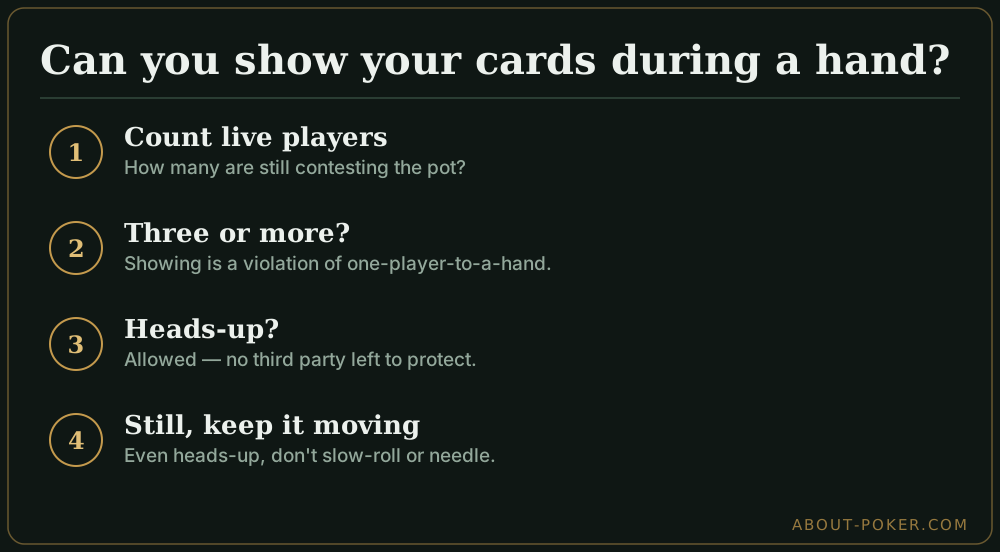
Once everyone else has folded and it’s just you and one opponent, the situation changes. There’s no innocent third party left to protect, so the rules relax: you may show one or both cards. Players sometimes do this to induce a call or a fold, or simply to show a bluff. But dealers still discourage it because it slows play and can spill into gamesmanship. Many rooms will remind you to keep the game moving. It’s legal, but rarely wise.
Worked example
You’re in a three-way pot on the turn. You have the nut flush and want to “prove” you’re strong, so you tip your cards toward the player next to you. That is a violation — a third player is still in the hand, and your reveal (and your neighbor’s reaction) leaks information. The dealer stops you, and depending on the room you get a warning; in a tournament a repeat could cost you the hand. Now the alternate version: the third player folds first, leaving just you and one opponent heads-up. You turn over your flush to induce a crying call. This is allowed — no third party remains — though the dealer may still nudge you to speed up. The single change, three players versus two, flips the ruling entirely. For what happens with a partial reveal, see what happens if you show one card.
Penalties for exposing cards
Consequences scale with intent and context:
- Casual flash of a card to a neighbor, multiway: usually a verbal warning and a reminder of the rule.
- Deliberate exposure to influence still-live players: can be treated as an ethics violation, with the hand potentially declared dead.
- Tournament settings: stricter — repeated exposure can bring a formal penalty (missed hands or an orbit away from the table).
The safest assumption is that showing cards mid-hand will, at minimum, draw attention you don’t want. It also violates the spirit of good poker etiquette.
Common mistakes to avoid
- Showing a “friend” your hand. Even a buddy at the table is another player; multiway, this is a violation.
- Flashing to celebrate or complain. Reacting to your cards visibly leaks the same information as showing them.
- Assuming heads-up means anything goes. It’s allowed, but slow-rolling or needling can still get you warned.
- Confusing during-hand with after-hand. Once the hand is over, showing is your choice; during the hand it’s restricted.
Quick checklist
Before you reveal anything, count how many players are still live. Three or more? Keep your cards to yourself — full stop. Just you and one opponent? It’s allowed, but ask whether it actually helps you, and don’t let it become a slow-roll. The cleanest habit is to keep your cards face-down and protected until the hand is genuinely finished.
Frequently asked
Can you show your cards during a hand in poker?
Only when the pot is heads-up, and even then it is discouraged. If more than two players are still in the hand, showing your cards to anyone is a violation of the one-player-to-a-hand rule. When only two of you remain, showing is technically allowed but can still draw a warning for slowing or influencing the game.
Why can't you show cards in a multiway pot?
Because it gives information to players still contesting the pot, which corrupts their decisions. Showing your hand to one opponent while a third is still involved can help or hurt that third player unfairly. The one-player-to-a-hand rule keeps every active player's information private until showdown.
What is the penalty for exposing your cards?
Consequences range from a verbal warning to your hand being declared dead in serious or repeated cases, especially in tournaments. Casually flashing a card to a neighbor is usually just corrected, but deliberately exposing cards to influence action can cost you the hand or draw a formal penalty.
Can you show one card during a hand?
Flashing a single card is still exposing information and is treated the same way — fine heads-up but a violation multiway. Even heads-up, showing one card mid-hand to needle an opponent can earn a warning. It is best saved for after the hand is over.