Can You Take Money Off the Table
Can you take money off the table in poker? The table stakes rule, why ratholing is banned, when you can cash out chips, and what home games allow.
On this page · 7 sections
“Can I just pocket some of these winnings and keep playing?” It is one of the most common beginner questions, and the answer in any real cardroom is a firm no. The table stakes rule requires that all the chips in front of you stay in play for as long as you are seated. This guide explains why, what counts as breaking the rule, and the narrow situations where taking chips off is actually allowed.
The short answer: no, not while you are playing
Under table stakes, the chips in front of you are your entire commitment to the game, and they must remain on the felt until you leave your seat. You cannot skim your winnings into your pocket, set chips aside “for safekeeping,” or cash a portion out and keep playing. The only legitimate way to remove chips is to rack up and leave the table entirely. For the rule this all flows from, see the table stakes rule explained.
Why the rule exists
The table stakes rule protects the game in two directions. First, it guarantees that everyone can see the true size of each stack, which matters because stack sizes drive strategy. If a player could hide chips, opponents would misjudge how much they can win or lose in a confrontation. Second, it stops a winner from ratcheting down their risk while continuing to threaten everyone else’s full stack. Poker only stays fair when the money at risk is transparent and consistent.
Ratholing: the banned move
Ratholing (also called “going south”) is the act of secretly removing chips from your stack while staying in the game. A player up a few buy-ins pockets some chips so their stack looks smaller, protecting profit while still playing for others’ full stacks. Every regulated room forbids it, and being caught can mean being asked to bring the chips back, being ejected, or being barred. Beyond the formal rule, it is considered serious bad etiquette — it signals you want the upside of a big pot without the corresponding risk.
Worked example: the tempting cash-out
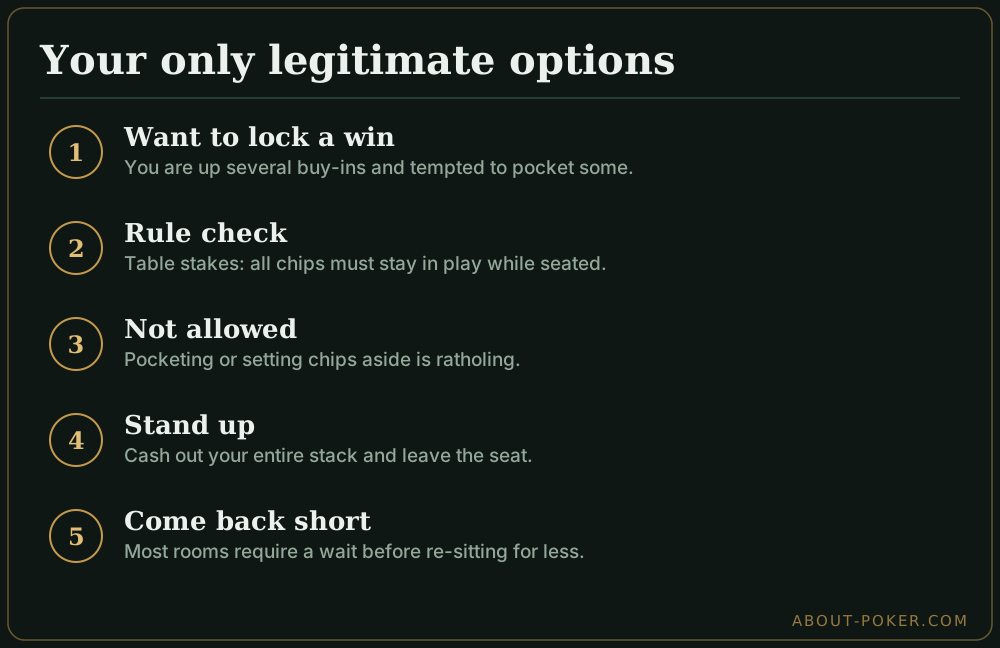
You sit down at 1/2 with a 200 buy-in and run it up to 600 over an hour. You would love to slide 400 into your pocket and keep playing with 200 so you “can’t lose your win.” Table stakes says you cannot. Your options are only two:
- Keep playing with all 600 in front of you, fully at risk.
- Stand up, cash out the whole 600, and either leave or re-buy fresh for a new (smaller) amount after being away from the table.
There is no in-between. The instant you want to lock up part of that stack, you have to give up your seat. Many rooms also require you to be away from the table for a set period — often 30 to 60 minutes — before you can sit back in the same game with a shorter stack, precisely so no one games the system by hopping up and down.
What you can do instead
Table stakes does not trap your money — it just controls the timing:
- Leave and lock it up. Cash out your whole stack and walk. Your win is real the moment you rack.
- Move down in stakes. Cash out, then buy into a smaller game for less, keeping most of your win off the felt.
- Set a stop-win in advance. Decide before you sit that you will quit at a target. That is the disciplined version of “taking money off the table.”
- Bank between sessions, not mid-session. Track results per session, not per pot.
Home games and house rules
Casual home games can bend this if — and only if — everyone agrees ahead of time. Some friendly games let players cash out a portion at a natural break. That is fine as a house rule, but it must be settled before the first hand, because doing it silently is exactly what ratholing is. Understanding how the money flows in a standard cash game makes it obvious why transparency matters even among friends.
Quick checklist
- While seated: all chips stay in play — no pocketing, no setting aside.
- To remove chips: cash out your whole stack and leave your seat.
- Ratholing is banned in every regulated room and is bad etiquette anywhere.
- Coming back short: most rooms require a wait before re-sitting with less.
- Home games: any exception must be agreed by everyone before play starts.
Taking money off the table is really a question about when, not whether — your winnings are yours the moment you stand up and rack. Play the whole stack while you are in the game, and bank the result cleanly when you leave. For more on session flow, see how a cash game works, or return to the how-to-play hub.
Frequently asked
Can you take money off the table in poker?
Not while you are seated and still playing. The table stakes rule requires all your chips to stay in play until you leave the game. You can only take chips off the table by cashing out and giving up your seat.
What is ratholing in poker?
Ratholing is secretly pocketing chips from your stack while still in the game so you appear to have a smaller stack. It is against the rules in every regulated cardroom because it lets a winner protect profit while risking less.
Can you cash out some chips and keep playing?
No. Removing chips from your stack while seated is not allowed. If you want to lock up a win, you must stand up and leave the game entirely, then rebuy fresh if you want to return.
Do home games allow taking money off the table?
Only if everyone agrees in advance. Standard poker follows table stakes, but a casual home game can set its own house rules — just settle the question before the first hand to avoid disputes.