Can You Win With Just a High Card
Can you win with just a high card in poker? Yes — high card is the lowest hand but beats a worse high card and wins pots by bluffing. How and when it wins.
On this page · 7 sections
“I didn’t make a pair — is my hand just dead?” Not at all. You can absolutely win with just a high card. It is the lowest hand in poker’s ranking, but it still takes down pots two different ways: at showdown against an even weaker hand, and — far more often — by everyone else folding before the cards are shown. This guide explains how high card works, when it wins, and why ace-high is quietly one of the most useful holdings in the game.
The short answer: yes, high card can win
A high card hand (also called “no pair”) is five cards that don’t form any combination — no pair, no straight, no flush. It sits at the very bottom of the hand rankings. But bottom of the rankings does not mean it never wins. It wins whenever it is the best hand still contesting the pot — either because you outrank another high card at showdown, or because everyone folded and you were the last player standing.
How high card is ranked
You rank a high-card hand by its single highest card, and if that ties, you move down card by card. So ace-high beats king-high, king-high beats queen-high, and so on. If two players both have ace-high, you compare their second card — this is the kicker — and keep going until one hand is higher or all five cards match and the pot is split. Understanding the kicker is the whole game with high-card hands: A-K beats A-Q because the king outkicks the queen.
Winning without a showdown
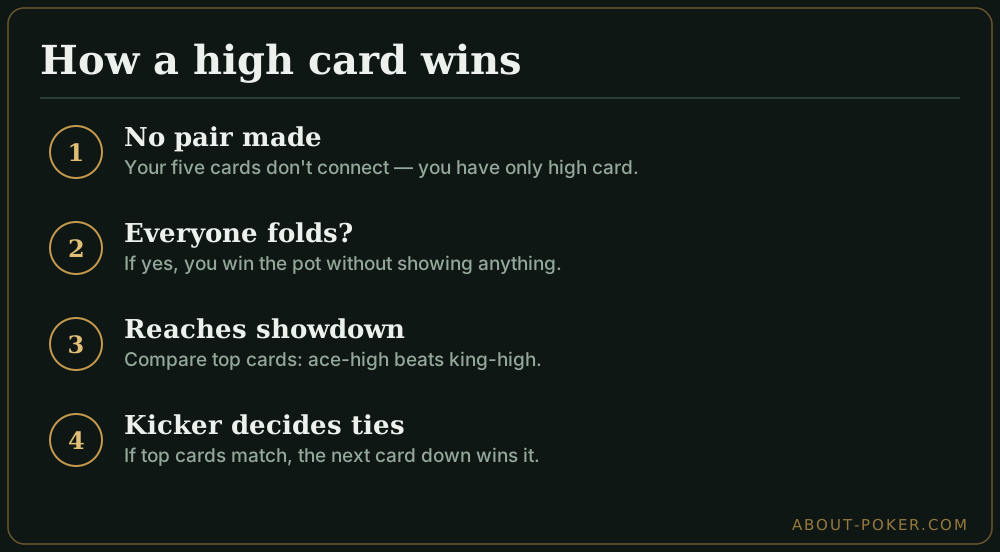
Here’s the part beginners miss: most poker hands never reach a showdown. If you bet and everyone folds, you win the pot regardless of what you hold — you don’t even show your cards. So a player with jack-high who bets the river and gets a fold wins with the worst possible hand. This is the mechanical foundation of bluffing: the pot goes to the last player who did not fold, not to the best hand, unless the hand is contested to showdown. For who has to reveal first when it is contested, see showdown rules.
Worked example
You hold A♦Q♠ on a board of K♣ 9♥ 6♠ 4♦ 2♣. You never paired — you have only ace-high. Your opponent holds K-high? No — say they hold J♦T♠, also no pair, giving them king… no, jack-high (their highest is the jack; the board’s king plays for both, so actually both play the K on board). Let’s make it clean: the board is Q-high, say Q♣ 9♥ 6♠ 4♦ 2♣, you hold A♦K♠ (ace-high), opponent holds J♦T♠ (their best is queen-high using the board Q plus their jack kicker; you have queen-high using the board Q plus your ace-and-king). You compare the first non-board card: your ace beats their jack. You win with ace-high. Neither of you made a pair, yet the pot is yours because your high card is superior. This is exactly why ace-high has real showdown value on dry boards.
Why ace-high matters more than you think
Strong players think about ace-high constantly. In many heads-up situations, betting is not required to win — checking down and showing ace-high beats the missed draws and low cards your opponent gives up with. Recognizing “I only have ace-high, but ace-high is probably the best hand here” is a real skill. It saves bets when you’re behind and wins showdowns you’d have folded away out of fear.
Common mistakes to avoid
- Assuming no-pair means no chance. High card wins pots every session, both at showdown and by fold.
- Overvaluing weak high cards. Seven-high is not the same as ace-high. The lower your top card, the more you rely on folds, not showdowns.
- Folding ace-high too fast heads-up. Against an aggressive opponent on a dry board, ace-high is often a call, not a fold.
- Forgetting the kicker. Two “ace-high” hands are not equal — the second card decides it.
Quick checklist
Before you give up on a no-pair hand, ask: Am I the last one betting? Then it doesn’t matter — I win. If it goes to showdown, is my top card likely the highest? If I hold ace-high on a board nobody connected with, I probably win. High card is the humblest hand in poker, but it drags pots to your side of the table far more than its ranking suggests.
Frequently asked
Can you win with just a high card in poker?
Yes. High card is the lowest-ranked hand, but it still wins two ways: at showdown against an opponent with an even weaker high card, or before showdown when everyone else folds. Ace-high beats king-high, and any made hand loses to none if all opponents fold.
What is a high card hand?
A high card, or no-pair hand, is five cards that do not connect into anything — no pair, straight, or flush. It is ranked only by its highest card, then the next highest as a tiebreaker. Ace-high is the strongest high card and seven-high the weakest possible in Hold'em.
Does ace-high beat king-high?
Yes. When two players both have only a high card, you compare the highest cards first. Ace-high beats king-high, king-high beats queen-high, and so on. If the top cards tie, you compare the next card down as a kicker until one hand wins or the pot is split.
How often does a high card win at showdown?
Not often in multiway pots, but heads-up it happens regularly, especially on dry boards where neither player connected. Ace-high in particular wins a meaningful share of small pots at showdown, which is why strong players value it more than beginners expect.