How to Run a Bar Poker League
How to run a bar poker league — the free-to-play model, a fair points system, weekly blind structure, season standings, and keeping venues and players happy.
On this page · 6 sections
A bar poker league turns a slow weeknight into a packed room. The format is simple: free-to-play weekly tournaments where players earn points toward a season-long leaderboard, with prizes supplied by the venue or sponsors rather than a cash prize pool. Bars love it because it fills seats and sells drinks; players love it because they get real tournament competition with no financial risk. Running one well is mostly about two things — a fair points system and a schedule that actually finishes so the venue does not lose its late crowd.
If you have organized a single event before, this is that skill repeated weekly — start from how to run a poker tournament at home and add a season structure on top.
Step 1: Use the free-to-play model
The safest and most popular league format charges no buy-in and awards no cash at the table. This is what keeps most leagues legal, because a free game with non-cash prizes usually falls outside gambling regulation — but confirm the rules in your jurisdiction before you start. The venue’s payoff is the food-and-drink business a full room generates, so partner with a bar that understands the trade: they provide space and prizes, you provide the players and the organization.
Prizes come from the venue or sponsors: bar tabs, gift cards, merchandise, or the classic grand prize — a paid seat into a larger tournament.
Step 2: Design a fair points system
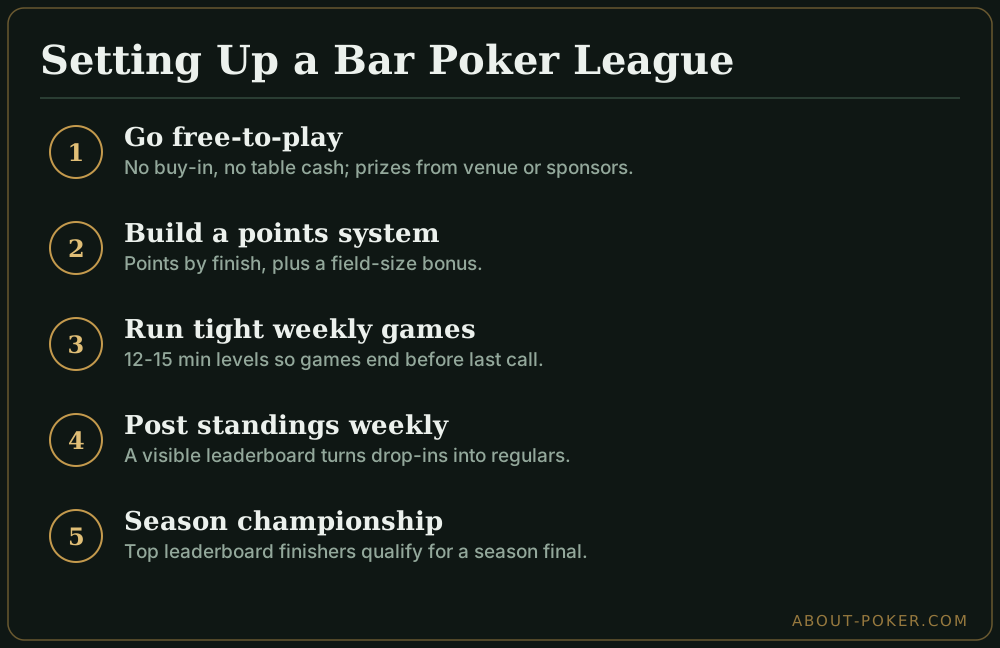
Points are the heart of a league because they reward consistency, not just one hot night. A workable system:
- Award points by finishing position each week — most to first, scaling down.
- Add a field-size bonus so beating 40 players is worth more than beating 12 (for example, points equal to a base value plus a fraction of the number of entrants).
- Cap or drop each player’s worst results at season end so one bad night does not sink a regular.
Post the standings publicly every week. A visible leaderboard is what turns casual drop-ins into loyal weekly regulars chasing the top spot.
Step 3: Run a tight weekly structure
Bars have last-call and a kitchen that closes, so your tournament must end on schedule. Use short, fast blind levels — 12 to 15 minutes — and steepen them after the first break so short stacks are pushed all-in and the field collapses on time. Standard tournament mechanics apply throughout; keep poker tournament rules explained on hand for disputes about all-ins, side pots, and eliminations.
Give a modest starting stack, get antes in early, and set a hard “final table by X o’clock” target. A league that regularly runs past midnight will bleed players fast.
Step 4: Manage venues, dealers, and behavior
Recruit self-dealing regulars or a small crew of volunteer dealers, and rotate the button clearly. Because bar leagues attract brand-new players, set a friendly, welcoming tone — a quick word on poker etiquette for beginners at each new table prevents the sharks from bullying newcomers out the door. Keep one director on the floor to make rulings, balance tables as players bust, and settle any dispute quickly and consistently.
A worked example: a season leaderboard
Suppose your league runs 12 weekly games, and you award points as 100 for first, 80 for second, 65 for third, and so on down, plus a field bonus of one point per entrant. Two regulars are neck and neck:
- Player A wins one week with 45 entrants: 100 + 45 = 145 points, but finishes mid-pack most other weeks.
- Player B never wins but places top-five in nine of twelve weeks, banking 60–90 points almost every time.
Over the season, Player B’s consistency stacks up: nine solid finishes around 75 points averages roughly 675 points from those weeks alone, while Player A’s single big night plus scattered small scores struggles to keep pace. This is by design — a good league points system rewards the player who shows up and performs every week, not the one who spiked a single deep run. Announce at season start how the leaderboard qualifies players for the championship (say, top 20 earn a seat), and that carrot keeps the room full right through the final week.
Keep the flywheel spinning
The league runs on momentum: a full room makes the venue happy, happy venues offer better prizes, better prizes draw more players. Protect that loop by starting and finishing on time, keeping standings visible, and making every newcomer feel welcome. Do that for a full season and you will have a weeknight fixture people plan their week around.
Frequently asked
Do bar poker leagues play for money?
Usually not directly. The most common and legally safest model is free-to-play: no buy-in, no cash prizes at the table. Players earn points across weekly games toward a season leaderboard, and prizes come from the venue or sponsors, such as bar tabs, gift cards, or a seat in a bigger event.
How does the points system work in a bar poker league?
Players earn league points based on how they finish each weekly game — more points for higher finishes, and often a bonus that scales with the number of entrants. Points accumulate over a season, and the leaderboard determines who qualifies for a season-ending final or championship.
Why are most bar poker leagues free to play?
Because charging a buy-in and paying cash prizes can classify the game as regulated gambling in many jurisdictions. The free-to-play model sidesteps that: the venue makes money on food and drink, players compete for points and non-cash prizes, and the league stays on the right side of the law.