How to Run a Dealer's Choice Night
How to run a dealer's choice night: rotate the choice with the button, keep an approved game list, cap the wild cards, and stop the chaos before it starts.
On this page · 5 sections
Dealer’s choice is the most social poker format you can run at home. Instead of grinding one game all night, whoever holds the button picks the variant — so the poker snob gets their Omaha, the nostalgic uncle gets his Five-Card Draw, and the chaos gremlin gets one orbit of a wild-card game before the button moves on. Run well, it’s the best night of the month. Run badly, it’s an argument about rules. Here’s how to keep it firmly in the first category.
Agree on an approved game list first
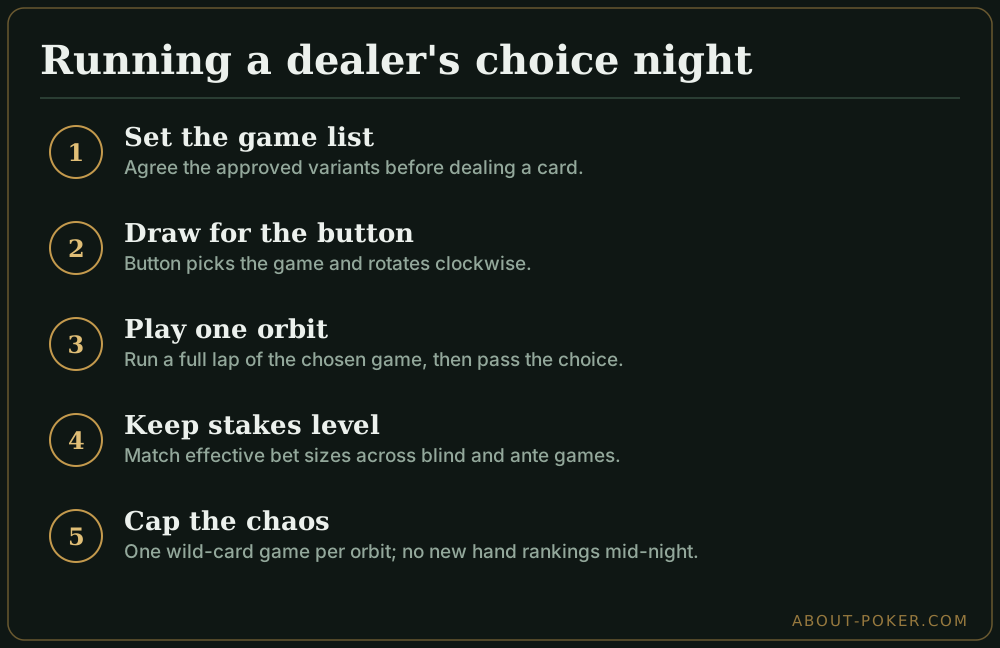
The single most important thing you do before dealing is write down which games are allowed. Without a list, someone will “remember” a variant from college with rules nobody else knows, and the table will grind to a halt. A solid, beginner-friendly menu covers the classics:
- Texas Hold’em and Omaha (blind games)
- Seven-Card Stud and Stud Hi-Lo (ante games)
- Five-Card Draw (ante game)
- One or two “fun” games capped hard, like a single wild-card variant
Post the list where everyone can see it. If someone wants to add a game, it needs a majority vote and a clear explanation before it goes on the list — never mid-hand. For a broader menu of options and their rules, keep our guide to the rules for different poker games open on a phone at the table.
Rotate the choice with the button
The cleanest way to assign the choice is to tie it to the dealer button, which already moves clockwise every hand. The player on the button chooses the game. Most groups play one full orbit of that game before the choice passes to the next player, rather than switching every single hand — switching per hand kills momentum and confuses the stakes.
That rotation guarantees fairness: over a night, everyone chooses the same number of times. It also uses the button structure you already know from any cash game, so there’s nothing new to learn.
Keep the money consistent across games
The trap in dealer’s choice is that different games use different betting mechanics. Hold’em and Omaha use blinds; Stud and Draw use antes and a bring-in. If you don’t normalize them, the “stakes” swing wildly and someone always feels cheated.
Fix this by matching the effective bet size. If your Hold’em game is 1/2 blinds, run your ante games with bets around the same size — for example, a $2 ante-equivalent and betting units near $2–$4. Announce the stakes for each game once so nobody is surprised. The chip denominations stay the same all night; only the wager mechanic changes.
Cap the wild cards and the weirdness
Wild-card games and “roll your own” variants are fun in small doses and miserable in large ones, because they blow up hand values — suddenly five-of-a-kind exists and pot sizes get silly. Set two hard limits before the night starts:
- One wild-card game per orbit, maximum. No stacking wilds on wilds.
- No new hand rankings invented mid-night. If five-of-a-kind is in play, decide before the deal that it beats a royal flush, and leave it there.
Worked example: a clean six-player rotation
Six friends sit down. You draw for the button, and it lands on Dana. Here’s how one lap plays out:
- Dana calls Texas Hold’em, 1/2 blinds — one full orbit.
- Button moves to Priya, who calls Omaha, same 1/2 blinds.
- Marcus calls Seven-Card Stud with a $2 ante and a $1 bring-in.
- Sam calls Five-Card Draw, $2 ante, $4 bets.
- Lee calls Stud Hi-Lo — the pot splits between the best high hand and the best qualifying low.
- Jordan, feeling brave, calls the one approved wild-card game, deuces wild, for a single orbit.
After Jordan’s orbit, the button returns to Dana and the whole cycle repeats. Everyone chose exactly once; the stakes stayed near $2 units the entire time; nobody had to argue about rules because the list was settled before hand one. That’s a dealer’s choice night that people actually want to come back to.
If it’s your first time hosting any home game, read how to set up a home poker game for the logistics — chips, table, and buy-in tracking — before you add the dealer’s choice layer on top.
Frequently asked
What is dealer's choice poker?
Dealer's choice is a home game format where the player currently on the button gets to pick which poker variant is played for that hand or orbit. It rotates so everyone gets to choose their favorite game.
Does the dealer choice change every hand?
It can, but most groups play a full orbit of the chosen game before the choice passes. Choosing per hand slows the game down and confuses stakes; per orbit keeps things moving while still spreading the fun around.
What games are good for dealer's choice night?
Stick to games everyone can follow: Texas Hold'em, Omaha, Seven-Card Stud, Five-Card Draw, and a couple of split-pot games like Hi-Lo. Agree on an approved list up front so nobody invents a game mid-session.
How do stakes work in dealer's choice?
Keep the same betting limits and blinds or antes across all games so the money stays consistent. Games with blinds (Hold'em, Omaha) and games with antes (Stud, Draw) can share a night as long as the effective bet sizes are similar.