Rules for Winning Without Showing
When you can win a poker pot without showing your cards: uncontested pots, mucking, the last-aggressor rule, and when you must table your hand at showdown.
On this page · 7 sections
One of the most reassuring facts for new poker players is that you often don’t have to show your cards to win. Poker is a game of concealed information, and the rules protect that concealment: you only reveal your hand under specific conditions. Understanding exactly when you can win in silence — and when you’re required to table your cards — keeps you from accidentally giving away information or, worse, losing a pot you actually won.
The core rule: uncontested pots need no showdown
The simplest way to win without showing is to win uncontested. If you bet or raise and every other player folds, the pot is yours the moment the last opponent releases their hand. There is no showdown, so there is nothing to show. You can slide your cards face-down into the muck and rake in the chips, and no one is entitled to see what you had.
This is true whether you had the nuts or pure air. A bluff that gets through wins exactly the same pot as a monster — and you keep your cards secret either way. Protecting that secrecy is a big part of why strong players fold so much: every hand you don’t show is information you keep. Related etiquette is covered in poker mucking rules.
When a showdown is required
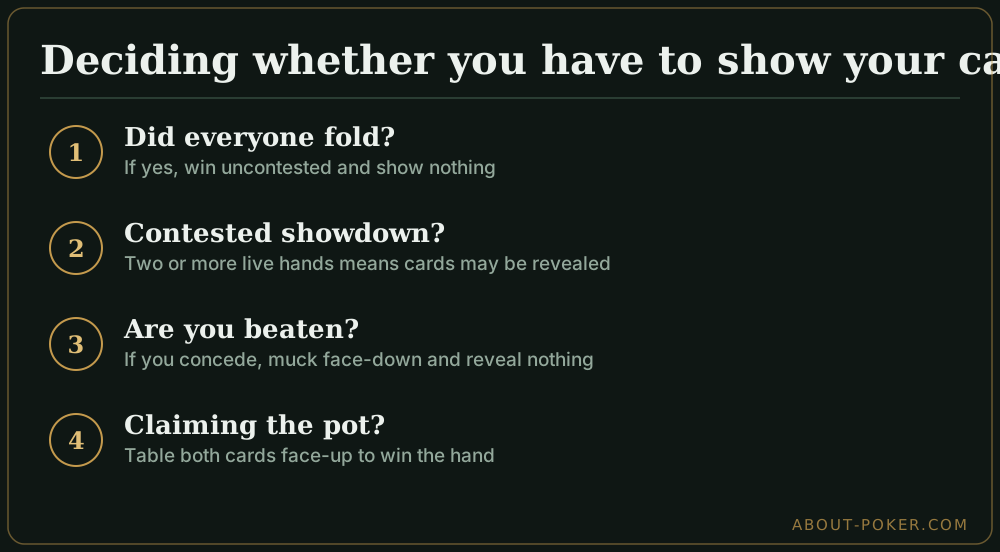
A showdown only happens when two or more players are still live after the final betting round is complete. At that point, cards must be revealed to determine the winner. But even here you have a choice: if you don’t believe you have the best hand, you can muck — fold face-down without showing — and simply concede the pot. You only must show if you intend to claim the pot by having the winning hand.
So the rule is really two-sided:
- To win at contested showdown, you must table your hand face-up.
- To lose (or concede) at showdown, you can muck and show nothing.
The last-aggressor rule and show order
Who reveals first at showdown follows a set order, which matters because it determines who might get to muck without showing. The last player to bet or raise on the final round must show first. If nobody bet on the river — the action checked around — then the first active player to the left of the button shows first, and play proceeds clockwise. The complete order is laid out in showdown rules: who shows first.
Why this matters for “winning without showing”: if you check the river and your opponent checks behind, you may have to show first. But if your opponent bets and you call, they must show first — and if their hand beats yours, you can muck yours face-down without ever revealing it. You lose the pot, but you keep your cards secret.
A worked example
You hold Ace-King and the board is King-9-4-2-7. On the river your opponent bets. You call. Now it’s showdown.
Because your opponent was the last aggressor (they bet the river), they show first. They table two pair, Kings and nines. Your top pair with an ace kicker loses. You are now free to muck face-down — you do not have to expose your Ace-King. You lost the pot, but the table never learns you were calling with top pair, top kicker.
Flip the situation: you bet the river and your opponent calls. Now you were the aggressor and must show first. To win the pot, you must table both cards so the dealer can read the winner. You cannot bet, get called, and then try to win while keeping your hand concealed.
Mucking a winning hand — the costly mistake
Here’s the danger. If you’re required to show and you toss your cards face-down toward the muck by mistake, you can forfeit a pot you actually won. Once cards touch the muck and become irretrievable, most rooms rule the hand dead — even if it would have won. Dealers try to protect obvious winners, but the responsibility is yours.
The safe habit: at any contested showdown, turn your cards face-up on the table rather than passing them to the dealer, and don’t release them until the pot is pushed to you. If you’re unsure whether you’ve won, show — showing a hand that turns out to be second-best costs you nothing extra, while mucking a winner costs you the whole pot. See what happens if you show one card for the related rule on partial exposure.
Common mistakes and misconceptions
- Thinking you must always reveal a winning hand. You don’t — only at contested showdown. Uncontested pots stay secret.
- Mucking too fast at showdown and killing a live winner. Keep cards on the felt until the pot is awarded.
- Believing opponents can demand to see a mucked losing hand. In most cardrooms this “right to see” has been largely removed except to enforce anti-collusion rules; you generally can’t be forced to expose a hand you mucked after folding.
- Showing one card to needle an opponent. This can trigger show-one-show-all rules and expose more than you intended.
Quick checklist
- Everyone folds → you win uncontested, show nothing.
- Facing a bet at showdown and beaten → muck face-down, reveal nothing.
- You were the last aggressor → you show first to claim the pot.
- To win a contested showdown → table both cards face-up.
- Never release cards until the pot is pushed to you.
Winning without showing is not a loophole — it’s the natural result of poker’s rules. Master when silence wins the pot and when the table earns the right to see your hand, and you’ll protect both your chips and your information.
Frequently asked
Do you have to show your cards if you win the pot?
Only if there's a showdown and another player is still in the hand. If everyone else folds, you win the pot uncontested and never have to reveal your cards — you can even muck them face-down. Cards are only required to be shown when two or more players reach showdown with live hands.
Can you win a poker hand without showing your cards at showdown?
Sometimes. If you're facing a bet at showdown and choose to fold, you show nothing. But if you want to win by having the best hand, you must table both cards face-up so the dealer can read them — you cannot claim a pot at contested showdown while keeping your hand hidden.
Who has to show their cards first at showdown?
The last player to make an aggressive action — the last bettor or raiser on the final round — must show first. If there was no bet on the final round, the first active player left of the button shows first. Everyone else may then show or muck in turn.