What Happens If You Run Out of Chips
What happens when you run out of chips in poker — the table stakes rule, going all-in, side pots, rebuys in cash games, and busting in tournaments.
On this page · 7 sections
Running out of chips sounds like a disaster, but poker has a clean, fair rule for it. You are never forced to put more money in the middle than you actually have, and you can never be bet off a hand just because someone has a deeper stack. Understanding table stakes, going all-in, and side pots turns a scary-sounding situation into a routine part of the game.
The table stakes rule
Modern poker is played under table stakes: you can only bet the chips you have in front of you at the start of a hand, and you can never be forced to add more during a hand. Two consequences follow directly from this rule:
- You cannot go “into your pocket” mid-hand for more money.
- No opponent can win more from you than you have in your stack.
This is the foundation for everything that happens when you run low. For the full rule and its history, see the table stakes rule explained.
Going all-in
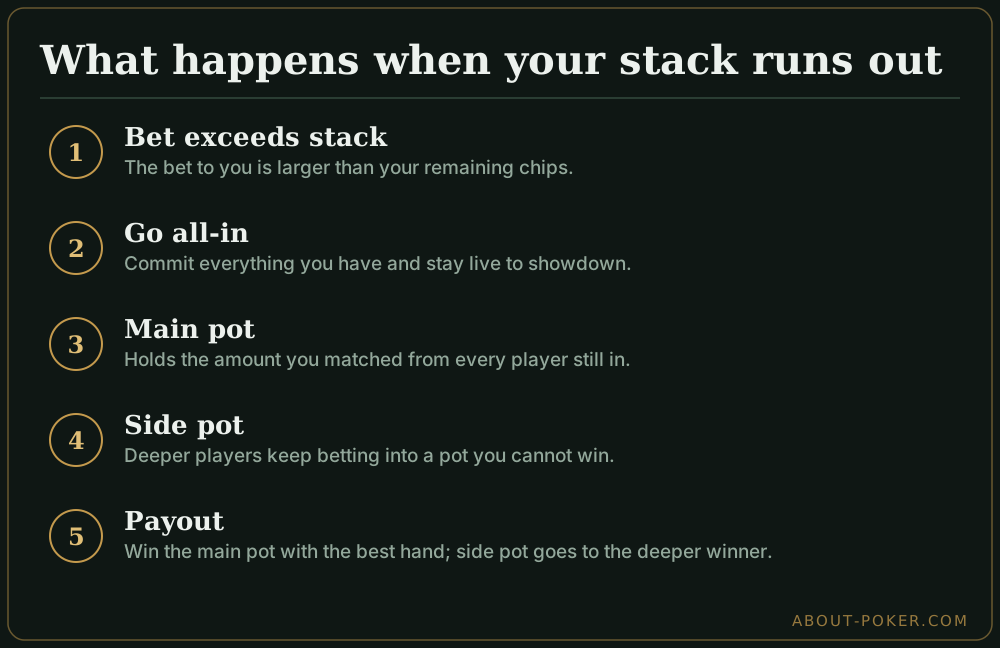
If a bet is larger than your remaining chips, you simply put in everything you have and declare all-in. You are then contesting the pot for the amount you have committed. From that moment you take no further betting action — you have nothing left to bet — but your cards stay live and you are dealt through to showdown. If you have the best hand, you win the portion of the pot you were eligible for.
Crucially, being all-in does not put you at a disadvantage in the hand itself. You get full value for your equity up to the amount you matched.
Side pots: money beyond your stack
When you are all-in for less than the current bet and other players still have chips, a side pot forms. The rule is straightforward:
- The main pot contains the amount you matched from every player still in.
- Any additional betting among the deeper players goes into one or more side pots that you are not eligible to win.
You can only ever win chips you have actually matched. If two opponents keep betting after you are all-in, they are playing for the side pot; you can win the main pot but nothing beyond it. The mechanics of building these pots are covered in all-in and side pots explained.
Worked example: short stack goes all-in
You have 40 in chips. An opponent bets 100, and a third player calls the 100. You want to play, so you put in your last 40 and are all-in.
The dealer builds the pots like this. The main pot takes 40 from each of the three players — your 40, plus 40 matched from each opponent — for 120, and that is the only pot you can win. The side pot takes the remaining 60 from each of the two deeper players, 120 total, contested only between them. If you win the showdown, you collect the 120 main pot; whoever wins between the two deeper players takes the 120 side pot. You cannot touch that side pot no matter how strong your hand is, because you never matched those chips.
Cash games: rebuy between hands
In a cash game, running out of chips is temporary. Because of table stakes you cannot reload during a hand, but the moment the hand is over you can rebuy or top up to any amount within the table’s maximum. Many players top up between hands to keep a full effective stack. There is no shame in it — refilling to the cap is standard practice and often correct, since a deeper stack lets you win more when you flop big. Just remember the new chips only play from the next hand onward.
Tournaments: busting out
Tournaments work differently because there is no reaching into your pocket. If you lose your last chips:
- In a freezeout, you are eliminated — done for the event.
- In a rebuy or re-entry tournament, you may be able to buy back in, but only during the designated period and under the event’s rules.
Because elimination is permanent in a freezeout, short-stacked tournament play revolves around picking the right moment to get your last chips in with the most fold equity or the best hand.
Quick checklist
- Table stakes: only the chips in front of you play; never forced to add more mid-hand.
- All-in: commit your stack, stay live to showdown, take no further action.
- Side pot: you can only win what you matched; extra betting is contested by deeper players.
- Cash game: rebuy or top up between hands, never during one.
- Tournament: zero chips means elimination unless a rebuy period is open.
Running out of chips is not the end of the road — it is a defined, protected situation with clear rules on your side. Learn how side pots form and you will always know exactly what you can win. For the underlying betting mechanics, see the betting rules, or head back to the how-to-play hub.
Frequently asked
What happens if you run out of chips in poker?
You go all-in for the chips you have. Under table stakes you can never be forced to add money mid-hand, and you can only win up to the amount you have matched from each opponent. Any bets beyond your stack go into a side pot you are not eligible for.
Can you keep playing after going all-in?
You stay in the hand you are all-in for and are dealt to showdown, but you cannot act in further betting rounds because you have no chips. Remaining players with chips keep betting into a side pot.
Can you add chips in the middle of a hand?
No. The table stakes rule means you play a hand only with the chips you had in front of you when it began. You can rebuy or top up between hands in a cash game, but never mid-hand.
What happens if you run out of chips in a tournament?
If you lose your last chips you are eliminated, unless the tournament is in a rebuy or re-entry period. In a freezeout you are simply out when your stack reaches zero.