What Happens on a Misdeal
What happens on a misdeal in poker: the exact errors that void a hand, the timing threshold that ends your right to call one, and how dealers re-deal fairly.
On this page · 7 sections
A misdeal is poker’s reset button: a dealing error serious enough that the fairest fix is to void the hand and start over. But a misdeal can only be called within a narrow window, and knowing exactly what triggers one — and what doesn’t — keeps a game running smoothly and stops disputes before they start.
What actually happens step by step
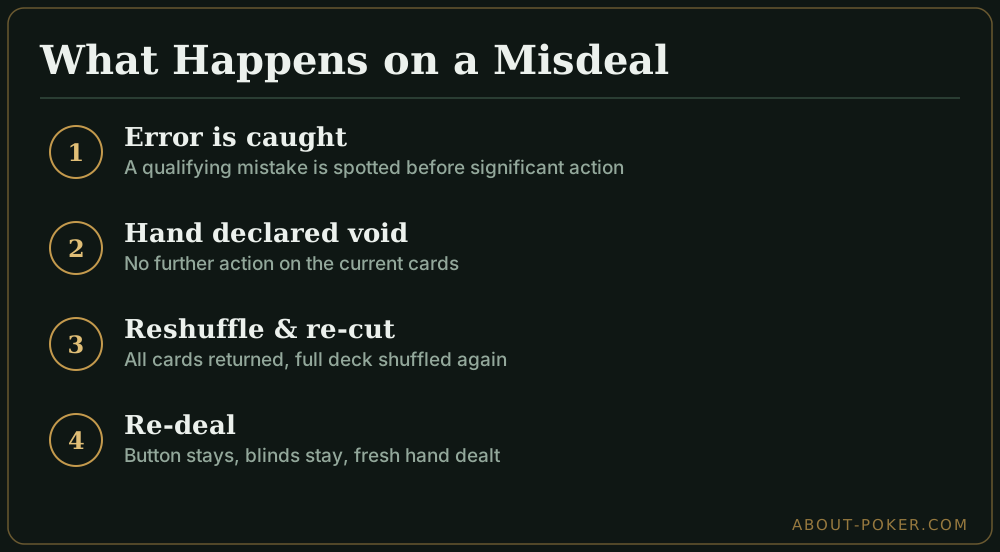
When a misdeal is correctly called, the sequence is simple and standardized across cardrooms:
- The hand is declared void. No further action is taken on the current cards.
- All cards are returned to the dealer, including any that were already exposed.
- The full deck is reshuffled and re-cut.
- The button stays put — it does not advance for the re-deal.
- Blinds and antes remain posted. Nobody gets their forced bets back; the same players are in the blinds.
- A fresh hand is dealt exactly as if the first attempt never happened.
That’s it. There’s no penalty to any player, because a misdeal is treated as a procedural error, not misconduct.
The errors that force a misdeal
Not every mistake is a misdeal. The classic triggers, drawn from standard house and TDA rules, are:
- The first card is dealt to the wrong seat (e.g., the dealer skips the small blind).
- A player receives too many or too few cards and it’s caught before action.
- Two or more cards are exposed during the deal by the dealer.
- The deck is fouled — a card found face up in the stub, a missing or extra card, or a deck that wasn’t properly shuffled or cut.
- Cards are dealt before the button, blinds, or a required cut are correct.
A single exposed card is usually not a misdeal — the dealer typically replaces it and turns the exposed card into the first burn card. For the full taxonomy of dealing errors, see our deep dive on poker misdeals and irregularities.
The timing rule that ends everything
Here’s the part players get wrong most often: a misdeal must be caught before significant action. The standard threshold is that once two or more players have acted on their hands — called, raised, folded, or checked in a meaningful way — the hand stands no matter what error is later discovered.
Why so strict? Because players commit chips based on the situation as they see it. If you 3-bet and get called, then someone notices the button was one seat off, unwinding all that action is impossible and unfair. The rule sacrifices perfect correctness for a clean, enforceable line.
A worked example
The dealer is dealing a nine-handed hold’em game. Instead of starting with the small blind, they accidentally deal the first card to the button’s seat and continue around. A player notices immediately — before anyone has looked at their cards or acted.
Because the first card went to the wrong player and no action has occurred, this is a textbook misdeal. The dealer pulls all the cards back, reshuffles, and re-deals from the correct starting seat. The button doesn’t move, the blinds stay posted, and play resumes normally.
Now change one detail: suppose two players had already called a raise before anyone noticed the misdeal. In that case the hand stands — the significant-action threshold was crossed, and the error, however real, is no longer correctable.
How it varies by format
Live cash: Dealers handle misdeals routinely; the floor is called only for disputes about whether action had occurred.
Tournaments: The TDA rules govern, and enforcement is precise because every chip has equity for the whole field. The same significant-action threshold applies, but tournament floors are quicker to rule to keep clocks moving.
Home games: Misdeals are common because amateur dealers make more errors. Agree in advance on the significant-action rule so you’re not arguing after the flop. Our standard poker rules guide is a good baseline to adopt.
Online: Software deals perfectly, so genuine misdeals essentially don’t happen — the client can’t misdeal, expose the wrong card, or foul the deck.
Dealer’s role and self-dealt games
If you’re the one dealing — at a home game, say — your job is to catch and call misdeals yourself, immediately, before action develops. The moment you see an exposed card fly out or realize you shorted a player, stop and assess. Learning clean dealing mechanics prevents most misdeals in the first place; our how to deal poker guide covers the burn-and-turn routine and how to protect the deck.
Quick checklist
- Void, don’t play on — if the error qualifies and action hasn’t started, kill the hand.
- Reshuffle the whole deck, don’t just fix the one card.
- Button stays, blinds stay — the re-deal repeats the same positions.
- Past significant action? Then no misdeal — the hand stands.
- Single exposed card is a replace-and-burn, not a misdeal.
Handled correctly, a misdeal costs nothing but a few seconds. Handled late or loosely, it becomes an argument. The whole rulebook here exists to keep that line crisp.
Frequently asked
What happens on a misdeal in poker?
On a misdeal the current hand is voided before any real betting has happened. The dealer collects all cards, reshuffles the full deck, and re-deals from scratch. Any blinds and antes stay in place, and the button does not move for the re-deal.
When can you no longer call a misdeal?
Once significant action has occurred — generally two or more players have acted on their hands — the hand stands and no misdeal can be called. The rule protects players who committed chips based on the deal as it happened.
What are the most common reasons for a misdeal?
The most common are the first card dealt to the wrong seat, too many or too few cards dealt to a player, two or more exposed cards during the deal, and a fouled or improperly cut deck. Any of these, caught in time, forces a re-deal.