Spin & Go Postflop
Spin & Go postflop is short, aggressive and c-bet heavy. Learn flop, turn and river play at shallow stacks with a worked continuation-bet example.
On this page · 6 sections
Spin & Gos are fast, three-handed hyper-turbos that start around 25 big blinds and escalate quickly. Because of that speed, a huge share of your win rate comes from preflop and flop decisions rather than deep postflop trees. But dismissing postflop entirely is a leak — the early levels are deep enough that flop, turn and river skill separates winning players from break-even ones. For the format overview first, read our Spin & Go strategy primer, then use this page for the postflop details.
Why Spin & Go postflop is compressed
The defining feature is stack depth. At 25 big blinds you have room for maybe two or three streets of betting before someone is all-in. As blinds climb, that shrinks to one or two streets. This compression means you rarely run elaborate multi-street bluffs. Instead you pick a plan on the flop and commit to it: bet-bet-jam, bet-and-give-up, or check-call down.
The other feature is that it is three-handed. With only three players, everyone plays wider ranges, so flops get contested more often and hands like top pair or even second pair hold up far more than they would in a full-ring game.
The small c-bet is your workhorse
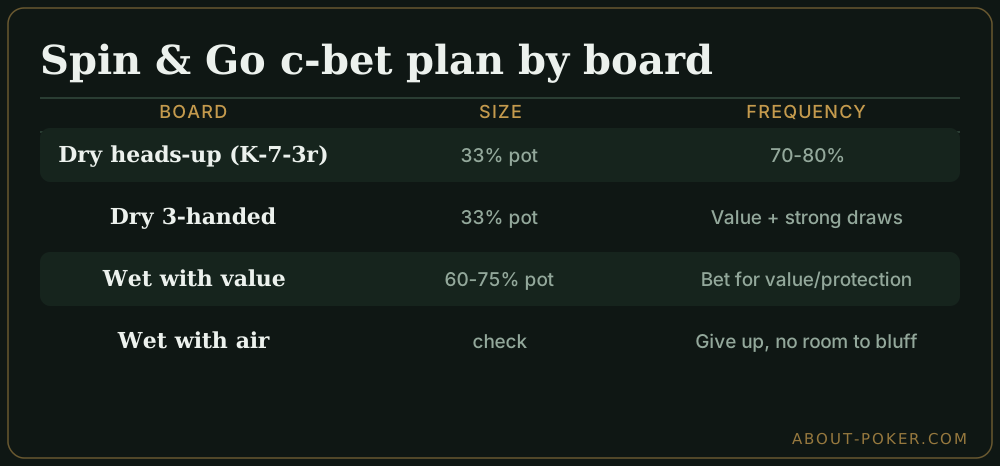
Because opponents miss the flop roughly two-thirds of the time, a small continuation bet of one-third to one-half pot is enormously profitable. It costs little, folds out air, and lets you barrel your value hands and best draws.
The key adjustment is who is in the pot. Heads-up on the flop you can c-bet a very high frequency — up to 70-80% of the time on dry boards. Three-handed, or into two callers, tighten up: a second player behind means more combined equity against you, so bet your genuine value and strong draws and check back your marginal air.
Turn and river at shallow depth
On the turn your stack-to-pot ratio is usually small. That simplifies decisions. If you c-bet the flop and get called, ask a single question: does barreling the turn get better hands to fold or worse hands to call? If yes to either, keep betting — often a jam or near-jam. If the turn helps your opponent’s likely range and your hand cannot stand a raise, check and reassess.
Rivers are frequently all-in or check decisions because the money is already mostly committed. Value-bet thinly against players who call too much, and give up your missed draws rather than firing a hopeless third barrel with no fold equity left.
A worked continuation-bet example
Blinds 50/100, effective 2,000 chips (20 big blinds), you raise the button to 200 with A-Q offsuit and the big blind calls. Flop is K-7-3 rainbow. You have ace-high and a backdoor gutshot only, but this is a mandatory c-bet.
Bet 150 into 400 (about one-third pot). This is a dry, disconnected board that misses the caller’s range far more than it hits. You represent the king credibly, you deny equity to overcards and small pairs, and you set up a cheap turn barrel if a scare card like an ace or a straightening card falls. If called, you check most turns and give up — your stack is too shallow to fire a second barrel profitably with no equity. That disciplined bet-then-fold line is the bread and butter of profitable Spin & Go postflop play.
Common Spin & Go postflop mistakes
- Over-bluffing at shallow depth. With no room for three barrels, elaborate bluffs just donate chips. Bluff the flop cheaply, then give up when the math dies.
- C-betting too big. Large sizings waste chips you cannot afford to lose. Small bets accomplish the same fold equity for a fraction of the risk.
- Ignoring the third player. Three-handed you must respect the caller behind. Do not c-bet junk into two players hoping both fold.
- Slow-playing on wet boards. At shallow depth you want to get value and protection now. Bet your strong hands instead of trapping.
Postflop checklist by street
- Flop: c-bet small on dry boards, check-back marginal air three-handed, size up on wet boards with real value.
- Turn: ask “fold better or call worse?” If neither, check. Barrel or jam when the answer is yes.
- River: value-bet thin against stations, give up dead bluffs, and take the free showdown when your hand can beat a bluff-catch.
These principles connect directly to the pace of the format. If you want the full aggressive framework for the shallowest structures, our hyper turbo SNG strategy covers the push/fold side that dominates once blinds spike beyond the early postflop levels.
Frequently asked
Do you play much postflop in a Spin & Go?
Less than in a normal game. Spin & Gos start at 25 big blinds with fast blind levels, so many pots are decided preflop or on the flop. Postflop skill still matters early and whenever stacks are deep enough to see multiple streets.
Should I c-bet a lot in Spin & Gos?
Yes, small c-bets are very effective three-handed at shallow depth. A one-third to half-pot continuation bet on most flops picks up dead money cheaply because opponents miss the flop about two-thirds of the time.
How does short stack depth change postflop play?
It compresses decisions. With 15-25 big blinds many hands become bet-flop, jam-turn or check-jam lines. You rarely have room for a three-street bluff, so equity and fold equity are realized quickly rather than over long postflop trees.
Is Spin & Go postflop different heads-up versus three-handed?
Yes. Three-handed you must respect that a second opponent can wake up behind, so you c-bet a touch tighter into two players. Heads-up you widen everything and barrel more aggressively.