Calling the Floor: When and How
Learn when to call the floor in live poker and how to do it right — dispute rulings, misdeals, and etiquette breaches — without slowing the game or looking rude.
On this page · 6 sections
The floor is the poker room’s referee — a supervisor who settles disputes, makes rulings, and enforces house policy. Knowing when to call the floor, and how to do it without turning a hand into an argument, is part of being a competent live player. Most sessions you will never need one; but when you do, handling it calmly protects your equity and your reputation at the table.
What the floor actually does
The floor person makes binding decisions on anything the dealer cannot or should not resolve alone: disputed bet amounts, whether a hand is dead, misdeals, angle-shooting, etiquette violations, and house-rule interpretations. In a card room the floor’s word is final for the hand, though you can politely escalate to a shift manager for policy questions.
The dealer runs the game; the floor resolves conflict. Understanding that division keeps you from arguing with the wrong person.
When to call the floor
You should call the floor whenever there is a genuine dispute or ambiguity, including:
- Disputed action or bet size — someone claims a different amount than you remember.
- A possible dead hand — cards that touched the muck, exposed cards, or a hand the dealer nearly killed.
- A misdeal — wrong number of cards, a card off the table, dealing out of order.
- String bets or acting out of turn where players disagree on the correct ruling.
- Angle-shooting or unethical conduct — deliberately ambiguous statements or motions designed to mislead.
- Chip or pot discrepancies — the pot does not add up, or a chip is missing.
If it is just a minor etiquette slip, a quick word or letting the dealer handle it is usually enough. Reserve the floor for real disputes. For the underlying rules these decisions rest on, see live poker rules.
How to call the floor — the right way
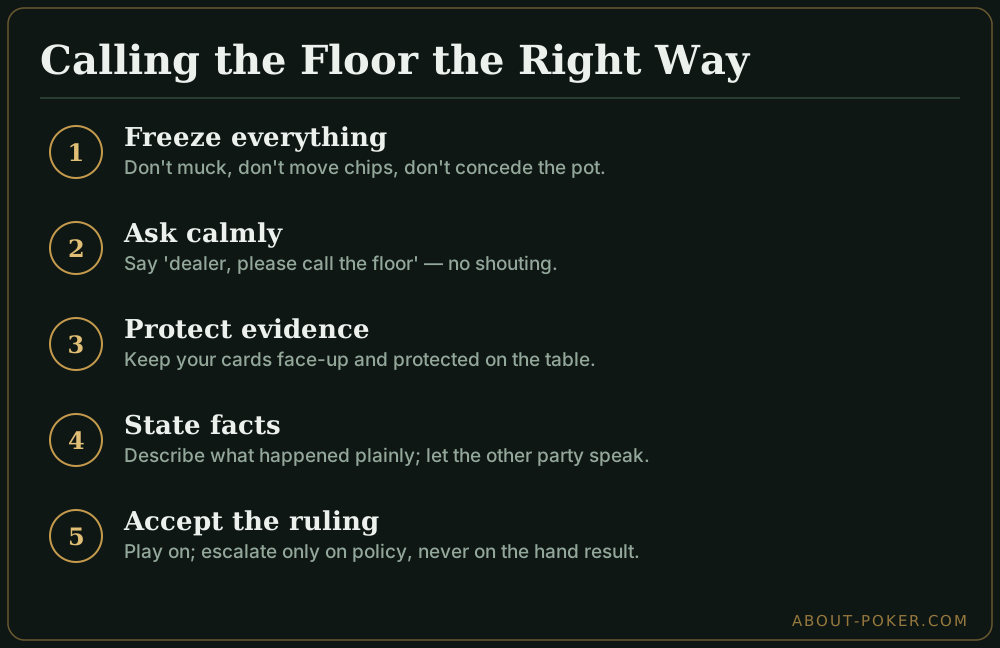
The mechanics are simple, but the manner matters:
- Freeze the situation. Do not muck your cards, do not move chips, do not let the dealer proceed. The moment you touch or fold anything, you may forfeit your claim.
- Ask clearly and calmly. Say “dealer, please call the floor” or just “floor.” No shouting, no accusations.
- State facts, not opinions. When the floor arrives, describe what happened plainly and let the other party do the same.
- Let the floor rule. Do not keep re-arguing after a decision. Accept it and play on.
Politeness is not just courtesy — floors have discretion, and a calm, factual player gets the benefit of the doubt far more often than a loud one.
Worked example: the mucked winner
You call a river bet and turn over what you are sure is the winning flush. Your opponent, holding a set, quickly says “you’re good” and slides his cards toward the muck — but they graze another player’s discarded hand before the dealer can secure them. Now there is a question of whether his hand is dead and whether yours is entitled to the pot. This is exactly the moment to freeze: do not let anyone touch the pot, keep your own cards face-up on the table, and say “floor, please.” The floor will reconstruct what happened, determine if the losing hand was retrievable, and rule on the pot. Had you started stacking chips or celebrating, you could have muddied the evidence and cost yourself the ruling.
Etiquette and reputation
Calling the floor is your right and dealers expect it, so never feel embarrassed to use it. What earns you a bad table image is the how: berating the dealer, slow-rolling a floor call to needle an opponent, or calling the floor over trivial nonsense to tilt someone. Use it for genuine disputes, stay factual, and thank the floor and dealer afterward. Our poker etiquette rules cover the surrounding conduct, and if you are new to the room the first-time live poker guide is worth a read.
Quick reference checklist
When something goes wrong, in order:
- Stop. Do not muck, do not move chips, do not concede.
- Say “floor, please” — calmly.
- Keep your cards face-up and protected on the table.
- State the facts when the floor arrives; do not editorialize.
- Accept the ruling; escalate only on policy, never on the hand result.
- Thank the dealer and floor, and move on.
Handled this way, a floor call is a routine tool — not drama. It protects your pots and shows the table you know how the game runs.
Frequently asked
How do I call the floor in a poker room?
Simply say 'floor, please' or ask the dealer to call the floor. Stay calm, keep the situation frozen — do not muck cards or move chips — and let the floor supervisor arrive and hear both sides before making a ruling.
Is it rude to call the floor?
No. Calling the floor is a normal, accepted part of live poker for resolving disputes and rulings. It is your right, and dealers expect it. What is rude is arguing endlessly with the dealer instead of politely asking for a floor decision.
Can I dispute a floor ruling?
You can politely ask the floor to reconsider or explain, and in a casino you may escalate to the shift supervisor. But floor rulings are generally final for the hand in question, and the game continues. Accept the ruling gracefully and move on.