Dealing at a Home Game
How to deal at a home game: shuffle and cut properly, deal Texas Hold'em correctly, manage the button and blinds, and avoid misdeals and exposed cards.
On this page · 6 sections
In a self-dealt home game, whoever holds the deck is the referee, so dealing well is not just a nicety — it keeps the game fair and fast. Clean dealing prevents the two most common home-game headaches: exposed cards that force a misdeal, and confusion over whose turn it is. Whether you rotate the deal with the button or one person deals all night, the mechanics are the same, and they are easy to get right with a little care.
Shuffle, cut, and protect the deck
Start every hand with a proper shuffle: at least a few riffle shuffles followed by a cut. The cut, done by the player to the dealer’s right, is what stops any accusation that the dealer stacked the deck, so never skip it. Use a cut card — a solid plastic card placed on the bottom of the deck — so the bottom card is never exposed while you deal. Keep the deck low and squared, and pitch cards so they slide, not flip. If you are dealing all night, a second deck lets the next hand’s shuffle happen while the current one plays, which keeps the pace up. Our home game hosting checklist covers the gear side of this in more detail.
Dealing Texas Hold’em step by step
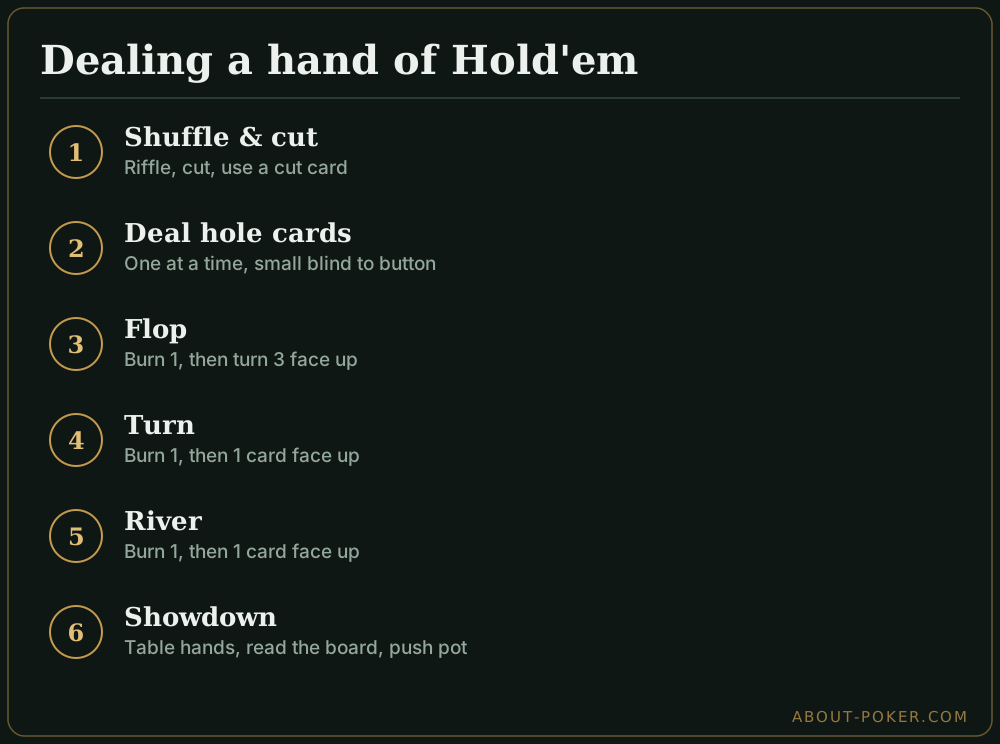
The order matters. Here is the standard sequence:
- Hole cards: Deal one card at a time, face down, clockwise, starting with the small blind and ending on the button. Go around twice so each player has two cards. Dealing one at a time (not two at once) is the convention that reduces cheating and errors.
- Preflop action, then burn one card face down.
- The flop: Turn three community cards face up together.
- Flop action, then burn one card.
- The turn: One card face up.
- Turn action, then burn one card.
- The river: One card face up.
- Final action, then showdown.
Burning before each community card is not optional — it protects against anyone having glimpsed or marked the top card. Keep your burn pile separate from the muck so the count stays honest.
Manage the button and blinds
The dealer button marks who is nominally the dealer and therefore acts last postflop. It moves one seat clockwise each hand. Even if one person physically deals all night, the button still rotates so position rotates fairly. Before dealing, confirm the small and big blinds are posted by the correct seats — the small blind is immediately left of the button, the big blind left of that. Getting the button position right is the foundation of position, and if you want to sharpen how much that seat is worth, the positions pillar breaks it down. A misplaced button is one of the most common quiet errors in home games, so glance at it every hand.
Avoiding and handling misdeals
A misdeal voids the hand if it is caught early. The usual triggers: dealing the wrong number of cards, exposing one of a player’s first two cards, dealing out of order, or a card flipping face up off the top of the deck. When a misdeal is called before meaningful action, gather the cards, reshuffle, and the same dealer redeals. Once real action has happened — bets and calls — the hand almost always stands, and only a single exposed card is typically replaced with the burn. Knowing the line between “void it” and “play on” prevents arguments; for the trickier judgment calls, see handling disputes at home games.
A worked example
You are dealing a nine-handed game. You shuffle, the player on your right cuts, and you pitch two cards to each player starting with the small blind. As you deal the second card to the player under the gun, it flips face up on the table before reaching them. That is an exposed card during the initial deal — a misdeal trigger. Because no action has occurred yet, you call the misdeal, collect all the cards, reshuffle, cut, and redeal from scratch. Now contrast: the same flip happens, but on the turn card you accidentally expose it before the betting on the flop is complete. Here the exposed community card is not simply reshuffled — the standard fix is to complete the current betting round, then that exposed card is burned and the next card is used, following the room’s live rules. Knowing which fix applies to which stage is the whole skill.
Dealing etiquette and pace
Good dealers keep the game moving and everyone informed. Announce the action clearly — “check,” “bet three,” “all in” — so nobody acts out of turn. Do not reveal cards early, keep the pot in the center and pull bets in only once action is complete, and count the pot before pushing it to the winner. Push winning pots cleanly and let the winner stack their own chips. A dealer who talks little, moves steadily, and keeps the board and pot tidy makes the whole night better. For the underlying conventions, the live poker rules guide is a useful reference to standardize your home game on.
Frequently asked
What counts as a misdeal in a home game?
Common misdeals include dealing to a wrong number of players, exposing one of the first two cards during the deal, dealing out of order, or a card flipping face up off the deck. When a misdeal is called before significant action, the hand is void, cards are returned, and the same dealer reshuffles and redeals. Once meaningful action has occurred, the hand usually stands.
How do you deal Texas Hold'em step by step?
Shuffle and cut, then deal one card at a time face down clockwise starting with the small blind and ending on the button, giving each player two cards. Burn one card before the three-card flop, burn again before the turn, and burn again before the river, revealing community cards after each betting round completes.
Should home games use a burn card?
Yes. Burning the top card before the flop, turn, and river is standard and protects against anyone reading a marked or glimpsed top card. Place burn cards face down in a small pile near the muck, separate from folded hands, so the count stays clear.