Live Cash vs Online Cash
Live cash vs online cash compared: pace, field strength, bet sizing, tells, and rake — plus how to adjust your strategy when you cross over.
On this page · 7 sections
Live cash and online cash are the same game with different physics. The cards, the hand rankings, and the math are identical, but the pace, the opponents, the bet sizing, and the information available are so different that a strong online player can look lost at their first live table, and vice versa. Understanding the gaps lets you carry your edge across the divide instead of leaving it at the door.
Pace: the biggest single difference
Online you might see 60 to 100 hands per hour per table, and multi-tabling pushes that into the hundreds. A live table deals roughly 25 to 35 hands per hour. That one fact drives almost everything else. Live, variance arrives slowly, patience is a real skill, and a single big pot represents a much larger share of your session. You cannot grind volume out of a downswing in an afternoon the way you can online, so tilt control and hand selection matter more. If you are used to the firehose of online decisions, the live pace can lull you into playing too many hands out of boredom — resist it.
Field strength and playing style
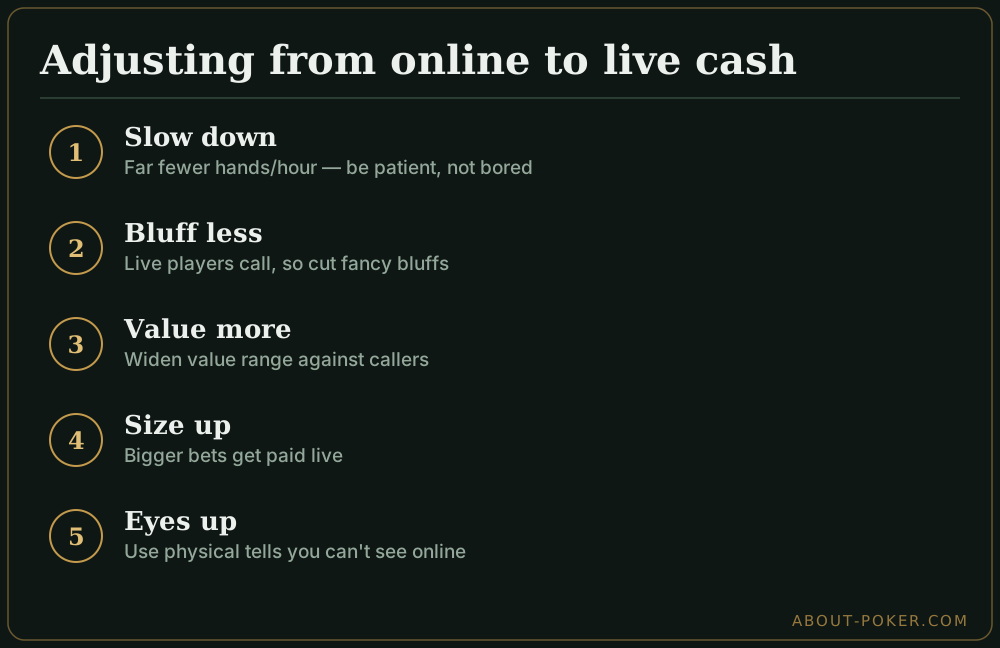
At comparable stakes the live pool is usually softer. Live $1/$2 and $2/$5 attract recreational players who limp, call down light, and rarely bluff, whereas an online pool of the same buy-in is full of players who have studied ranges and solvers. The correct adjustment is well known: bluff less and value bet more. Against a field that loves to call, your thin value bets print and your elaborate bluffs burn money. Widen the hands you bet for value and cut the fancy multi-street bluffs. Our live poker tips guide expands on this “bet more, bluff less” principle, which is the highest-value single adjustment when you move to live.
Bet sizing and stack depth
Live bet sizing is bigger and less balanced. A standard online open might be 2.2 to 2.5 big blinds; live opens of 4 to 6 big blinds (or more, with several limpers ahead) are normal, and postflop sizing runs large. Effective stacks are often deeper too — many live players sit with 150 to 300 big blinds — which raises the premium on position, on strong-hand playability, and on not getting stacked with one-pair hands. The larger sizes also mean you can size up your own value bets and get paid, because live opponents anchor on pot size, not on solver-approved fractions.
Information: tells versus timing
Live, you can see hands shake, chips get handled nervously, eyes dart, and posture shift — a whole channel of information that online simply does not have. Online, that channel collapses into timing and bet-sizing patterns. Neither is strictly better; they are different reads. A live player leaning on physical behavior should study our guide to how to read poker tells, while a crossover player should not expect the same signals online, where online timing tells are the closest equivalent.
Rake and the true cost of playing
Rake shapes profitability more than most players realize. Live rooms typically rake a percentage of each pot up to a cap, often add a bad-beat jackpot drop, and expect a dealer tip on winning pots. On small pots this is a punishing share of the money. Online rake is lower per hand but applied to far more hands. The practical live takeaway: avoid limping into tiny multiway pots that get raked to the cap for little reward, and prefer building bigger pots with strong hands where the rake is a smaller fraction of what is at stake.
A worked example
Imagine the same premium spot — you flop top set on a wet board and the pot is $200 with $600 behind. Online against a studied regular, you might size carefully to balance your value and bluffs and expect a thin call or a fold. Live against a recreational player, the correct play is often to bet large and keep betting, because that player will call two or three streets with top pair or a draw they should fold. Same cards, same math, but the live opponent’s calling tendency turns your set into far more value. The online version of you would leave money on the table by sizing “correctly” small.
Which should you play?
If you value soft opponents, the social side, and can tolerate low volume and high per-session variance, live cash is appealing — especially away from the raked-out micro stakes. If you value volume, low rake per hand, and the ability to quit instantly and study with tracking software, online cash rewards a more technical, aggressive game. Many players do both and simply switch their mental settings on the drive to the casino: fewer bluffs, more value, more patience, and eyes up.
Frequently asked
Is live cash easier than online cash?
At comparable stakes, live is usually softer. Live low and mid stakes draw more recreational players who call too much and bluff too little, while online pools are more studied and aggressive. The tradeoff is that live plays far fewer hands per hour, so your dollar edge per hour can be similar despite the softer field.
How should I change my strategy from online to live?
Bluff less and value bet more, because live players call more. Widen your value range, size up your bets, lean on physical tells and betting patterns, and be patient with far fewer hands per hour. Play more straightforwardly than a balanced online strategy would suggest.
Why is live cash rake so high?
Live rooms rake a percentage of each pot up to a cap and often add a jackpot drop, plus you tip the dealer. On small pots this can be a large share of the money, which is why very low live stakes can be hard to beat even against weak players. Play bigger pots and avoid limping into tiny raked pots.