Live Poker Dress and Conduct
Live poker dress and conduct — what to wear to a card room, comfort choices, and the behavior standards that keep you welcome at any poker table.
On this page · 6 sections
Live poker dress and conduct come down to two goals: be comfortable enough to sit for hours, and behave so that everyone — dealers, floor staff, and opponents — is glad you’re at the table. The good news is that poker is one of the most relaxed environments in any casino. There’s rarely a strict dress code, and the conduct rules are mostly common courtesy. Knowing them ahead of time means you’ll blend in from your first session instead of drawing attention.
What to wear
The default poker room dress code is casual. Jeans, t-shirts, sneakers, and hoodies are all standard, and you’ll see them at every stakes level up to high-roller tables. Comfort matters more than style because you may be seated for four to eight hours; layers are smart since card rooms are often cold from heavy air conditioning.
A minority of venues enforce smart-casual, particularly older European casinos and some resort properties. That typically means no beachwear — no shorts, tank tops, flip-flops, or athletic gear — but a collared shirt and jeans will pass. When in doubt, check the venue’s website. If you’re brand new to the room environment, the first time live poker guide covers what to expect on arrival.
Sunglasses, hats, and hoodies
Sunglasses, caps, and hoods are all permitted and widely used. Their practical purpose is to hide eye and facial reactions — the involuntary tells opponents read. If concealing your face helps you feel comfortable and play your natural game, use them; if they make you feel isolated from the table, skip them. Either is fine.
The only limits are security-driven: you can’t wear something that fully masks your identity, and some tournaments restrict headphones or hoods pulled fully over the face in later stages so officials can monitor play. Follow any specific instruction from the floor without argument.
Core conduct rules
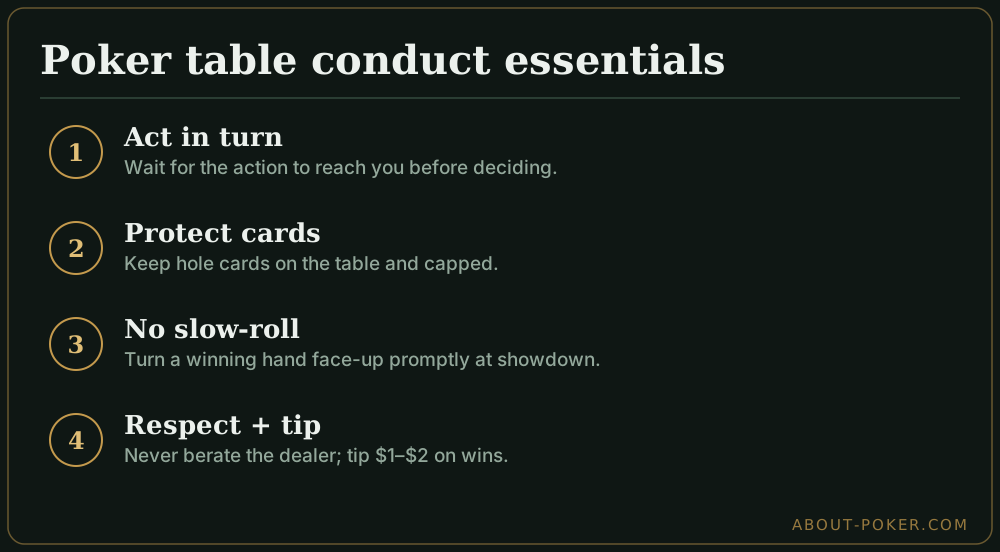
Good conduct is mostly about not gaining an unfair edge and not making the game unpleasant. The essentials: act only in turn, keep your cards on the table and protected, don’t splash chips into the middle (place your bet in a neat stack in front of you), and never discuss a hand that’s still live. These overlap heavily with the broader poker etiquette rules, which every player should read once.
Treat the dealer with respect. Dealers don’t control the cards, so berating them for a bad beat is both pointless and a fast way to draw a warning. Tipping when you win a pot — a dollar or two in cash games — is customary and keeps the room friendly.
The one that gets people in trouble: slow-rolling
Slow-rolling is the cardinal sin of poker conduct. It means deliberately delaying the reveal of a winning hand to let an opponent believe, briefly, that they’ve won. It offers no strategic benefit and exists only to humiliate, and it will earn you glares from the entire table and possibly a penalty.
Here’s a worked example. It’s the river, all-in, and you’re heads-up. Your opponent tables Ac-Kc for top pair. You’re holding a flopped set, 7d-7s on a 7h-4c-2d-Jh-9s board — the clear winner. The correct conduct is to turn your cards face up promptly so the dealer can read the hands and push the pot. A slow-roller instead pauses, sighs, pretends to be beaten, and only then flips the set to enjoy the opponent’s false relief. Everyone at the table notes it, and you’ve made an enemy for no gain. Table your winner fast, every time.
Celebration, tilt, and phones
Winning a big pot warrants a smile, not a spectacle. Excessive celebration, especially aimed at the player you just beat, is poor form. Likewise, tilting — slamming chips, cursing, or lecturing opponents on how they “should” have played — makes you the least-liked player at the table and, ironically, the most exploitable, since angry players leak information and money.
Keep your phone off the felt while you’re in a hand; texting during live action can get your hand killed in tournaments and is frowned on in cash. Step away from the table for calls.
Quick checklist
Dress for comfort and layer up against the AC. Sunglasses and hats are fine if they help you. Act in turn, protect your cards, and never splash the pot. Table winning hands immediately — no slow-rolls. Respect the dealer and tip on wins. Keep celebration modest and your phone off the felt. Follow those and you’ll be a welcome regular anywhere you play.
Frequently asked
Is there a dress code for casino poker rooms?
Most poker rooms are casual — jeans, t-shirts, and hoodies are fine. A few upscale or European casinos require smart-casual, meaning no shorts, flip-flops, or sportswear. Check the venue's website in advance, but comfort is standard almost everywhere.
Can you wear sunglasses at the poker table?
Yes, sunglasses and hats are allowed at nearly every poker table and are a common way to hide eye tells. You cannot wear anything that fully obscures your face for security reasons, and headphones may be restricted in some tournaments during late stages.
What is considered bad conduct at a poker table?
Slow-rolling, berating other players or the dealer, splashing the pot, acting out of turn deliberately, discussing live hands, and excessive celebration are all poor conduct. Repeated offenses can draw a warning, a penalty, or removal from the room.
Do I have to tip the dealer in live poker?
Tipping isn't mandatory but is strongly customary. Most players tip one to two dollars when they win a cash-game pot, and a percentage of tournament winnings on a cash. Dealers rely heavily on tips, and tipping keeps you in good standing.