Reading a Bet-Timing Tell
Learn how to read a bet-timing tell in live poker — what snap bets, delayed bets, and long tanks reveal, and how to weigh tempo against a player's baseline.
On this page · 6 sections
A bet-timing tell is information hidden in how long a player takes before putting chips in — and how that tempo compares to how hard the decision actually was. Because deliberation speed is only partly under conscious control, betting tempo leaks more than most players realize. This guide shows you how to read a bet-timing tell without over-trusting it.
Why bet timing leaks information
Every decision has a natural speed. A trivial choice happens fast; a genuinely hard one takes time. A bet-timing tell appears when a player’s tempo does not match the difficulty of the spot. When someone bets instantly in a situation that should require thought, or tanks forever in a spot that should be automatic, the mismatch between the clock and the difficulty is the signal.
The key word is mismatch. Speed on its own means nothing until you ask, “How hard was this decision, really?” A snap bet in an obvious spot is meaningless. A snap bet in a spot that should have been agonizing is loud. Overlay tempo on the rest of the picture from how to read poker tells rather than reading it in isolation.
What a snap bet usually means
A snap bet means the decision was made before it was that player’s turn. What that implies depends on the street. Early in the hand, a snap bet is often a pre-planned continuation bet or an obvious strong hand the player never doubted. By the river, snap bets skew slightly toward bluffs and planned polarized lines, because genuine value hands more often pause to consider the ideal size to get paid.
There is an important exception: many strong recreational players snap-bet the nuts out of pure excitement, especially in position after hitting a big draw. Do not assume “fast equals weak.” Assume “fast equals decided in advance,” then ask why the decision was so easy.
What a delayed or tank bet usually means
A delayed bet — a real pause, then chips — is the harder read. A genuine long tank followed by a large bet is frequently strong: the player is calculating the maximum value bet, or deliberately performing uncertainty so you feel safe calling. But the tank is also the most common deliberate act at the table, used to sell a weak hand as a tough decision.
Distinguish the two by watching what happens after the chips land. A player who tanks, bets big, and then goes still and quiet is often genuinely strong and does not want to give anything else away. A player who tanks, bets, and then relaxes, chats, or watches you closely is more often bluffing and monitoring your reaction.
A worked example
You are heads-up on the river with a board of Ks 9d 4c 7h 2s. The pot is 60 big blinds. Your opponent has been quick and decisive all session — that is his baseline. On the river he suddenly tanks for a full 30 seconds, then bets 55 big blinds, nearly pot.
The tell is the tempo change against his own baseline. A fast, decisive player who suddenly slows down and then bets big is often genuinely strong or genuinely torn. On this dry, disconnected runout there are very few missed draws to bluff with, so the value-heavy reading gets more weight. Against a player like this you should be far more willing to fold a marginal top pair than the raw pot odds suggest — the timing and the board texture point the same way.
Common mistakes when reading bet timing
The biggest error is ignoring the baseline. A naturally slow, deliberate player who tanks on every street is giving you nothing when he tanks again. Only tempo changes carry information. The second mistake is reading tempo alone without the board. A snap bet on a wet, draw-heavy board means something different from a snap bet on a dry board.
A third trap is acting on reverse tells. Skilled players know the “tank then bet big equals strong” pattern and will occasionally perform it while bluffing. Weight timing more heavily against straightforward opponents and much less against tricky, aware ones. For the underlying mechanics, see timing tells in live poker and betting and timing tells.
A quick checklist for reading a bet-timing tell
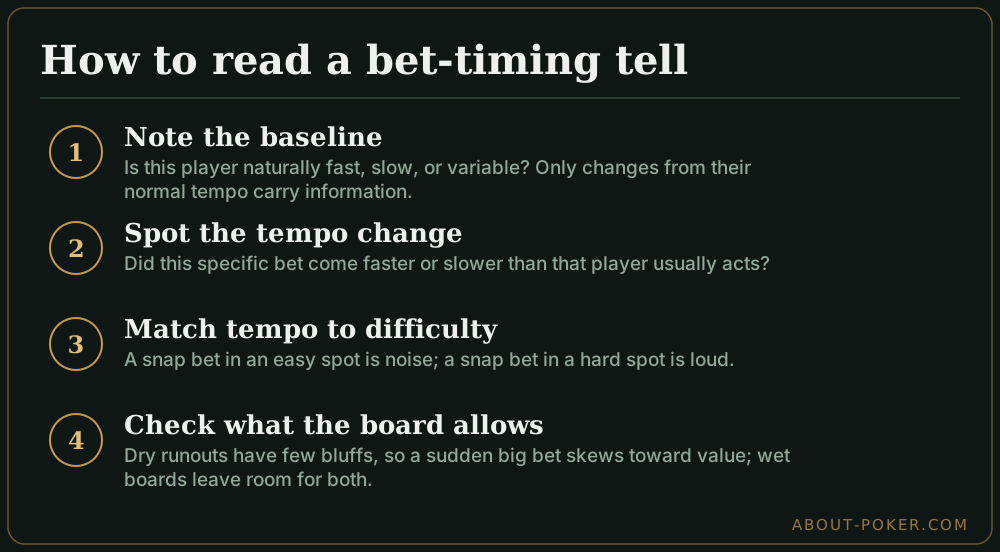
Before you act on any timing read, run through four questions. First, what is this player’s baseline tempo — fast, slow, or variable? Second, did the tempo change from that baseline on this specific bet? Third, how hard was the decision actually — does the tempo match the real difficulty? Fourth, what does the board texture allow — are there bluffs available, or is the runout dry?
Only when the tempo mismatches the baseline, the mismatch fits the difficulty, and the board supports the story should you lean on the read. A single timing cue is a data point that nudges a close decision, never a reason to make a big call or fold on its own.
Frequently asked
What does a snap bet usually mean?
A snap bet — an instant bet with no visible thought — most often means the decision was made in advance. On earlier streets that frequently signals a planned continuation bet or a strong, obvious value hand. On the river a snap bet skews slightly toward bluffs and planned polarized bets, because value hands more often pause to size up.
Is a long tank before betting strong or weak?
A genuine long tank followed by a large bet is often strong — the player is calculating the maximum value bet or acting out uncertainty to get paid. But tanks are also used to sell weakness, so read the tank against that player's baseline and against whether the spot was actually difficult.
How reliable are bet-timing tells?
Timing is one of the more reliable live categories because tempo is partly involuntary, but it is still a probability, not a verdict. Always compare tempo to the player's baseline and to how hard the decision genuinely was before acting on it.