Reading a Chip-Glance Tell
Learn to read the chip-glance tell — why a quick look at chips after seeing cards often signals a strong hand, and how to weigh it against baseline behavior.
On this page · 6 sections
The chip-glance tell is one of the oldest and most cited reads in live poker: a player looks at their cards or the flop, then flicks a quick glance down at their own chips. Because that glance is usually unconscious — the brain is already planning a bet — it tends to signal a strong hand. This guide explains how to read a chip-glance tell reliably and when to ignore it.
Why the chip glance leaks information
When a player likes their hand, part of the mind immediately jumps ahead to “how much can I win?” That thought pulls the eyes toward the chips before conscious control kicks in. The glance is a planning behavior, and planning to bet implies a hand worth betting. This is the reasoning behind Mike Caro’s classic observation that players who look at their chips after the flop are often loading up to play a big pot.
Contrast that with a weak hand. A player who flops nothing has no bet to plan, so there is no pull toward the chips — the eyes more often drift away, toward the board, the opponents, or nowhere in particular. Layer this glance onto the broader picture from eye tells in poker rather than treating it alone.
The timing that makes it meaningful
The glance carries the most information when it is immediate and involuntary — right after the cards or the flop appear, before the player has had a moment to compose themselves. A glance that comes half a second after seeing a great flop is close to pure signal. A slow, deliberate look at the stack much later is far weaker, because by then the player is consciously thinking about strategy and may be performing.
Position matters too. A player about to act glances to size their own bet. A player who has already acted, or who is waiting on others, has less reason to glance, so an unguarded look from an early-position player who is first to act is especially telling.
A worked example
You are in a live 1/2 cash game. A recreational player limps in from middle position. The flop comes Qh Jh 4d. The dealer spreads the cards, and within a beat you see the limper’s eyes drop straight to his stack, then back up to the board. He then checks to you.
The chip glance right on the flop, from an unguarded recreational player, strongly suggests he connected — a set, two pair, a big draw, or top pair he intends to play for stacks. His check is far more likely a check-raise trap than genuine weakness. The correct adjustment is to slow down: check back a marginal hand rather than c-betting into a stack he has already, unconsciously, told you he plans to commit.
When the chip glance lies
The tell reverses in two situations. First, aware players know it and will deliberately glance at chips while holding air, hoping you fold. Second, some players glance at their stack out of pure habit on every hand — for them the glance is baseline noise, not signal. Both reasons make the baseline check essential, the same discipline you apply to any read in how to read poker tells.
There is also a subtler false positive: a player counting chips because they are considering folding and mentally tallying what a call would cost. That is a defensive glance, usually slower and paired with a worried look at the board, not the quick, eager flick of a made hand.
Common mistakes
The most common error is treating any look toward the chips as strength. You must distinguish the fast, involuntary flick of a hand that wants to bet from the slow, deliberate count of a hand deciding whether to continue. The first is strong; the second often is not. Watch the speed and the accompanying expression.
The second mistake is over-weighting the tell against strong, aware opponents. The chip glance is most reliable against recreational and inexperienced players. Against a thinking regular who could be running a reverse tell, discount it heavily. It also pairs naturally with chip-handling tells, which give more context on how a player interacts with their stack.
A quick checklist
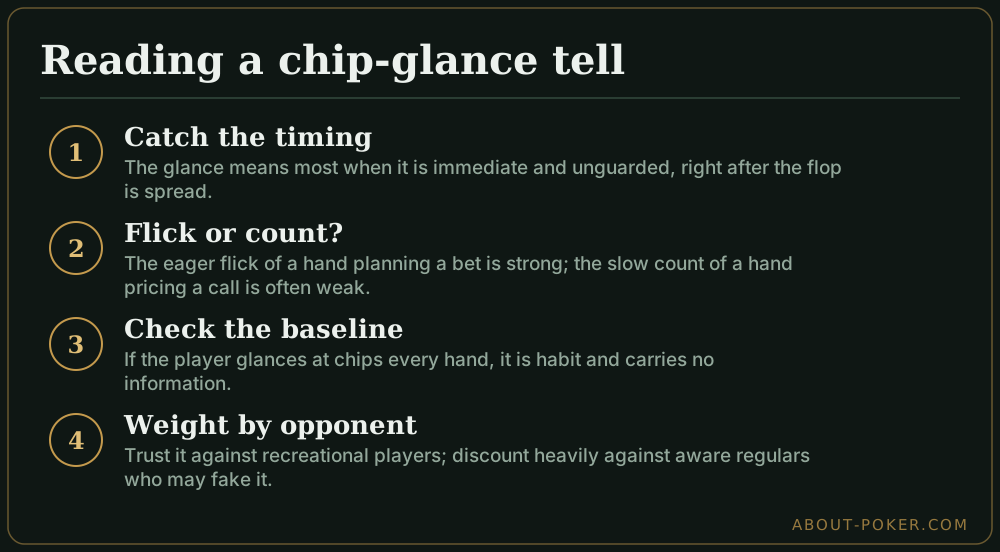
Before acting on a chip glance, confirm four things. Was the glance immediate and unguarded, or slow and deliberate? Was it the eager flick of a hand planning a bet, or the worried count of a hand considering a fold? Is this glance a change from the player’s baseline, or something they do every hand? And is the opponent recreational enough that a reverse tell is unlikely?
When the glance is fast, unguarded, off-baseline, and from a straightforward player, it is one of the more trustworthy live reads. Use it to tighten up and avoid bloating a pot against a hand the player has quietly told you is strong.
Frequently asked
What does it mean when a player glances at their chips?
A quick, involuntary glance at one's own chips right after seeing cards or a flop most often signals a strong hand. The player is subconsciously planning how much to bet. It is one of the more reliable classic tells, described by Mike Caro decades ago, but it should still be read against the player's baseline.
Is glancing at chips always a strong hand?
No. The glance is a probability, not a certainty. It skews strong because the player is unconsciously sizing a bet, but aware players can fake it as a reverse tell, and some players glance at chips out of habit regardless of hand strength. Confirm against baseline before acting.
When is the chip-glance tell most reliable?
It is most reliable on the flop, immediately after cards are exposed, and among less experienced or recreational players who are not consciously guarding their reactions. The more automatic and unguarded the glance, the more information it carries.