Heads-Up vs Full Ring
Heads-up vs full ring poker compared: hand values, aggression, position, and how table size transforms the ranges and skills you need to win.
On this page · 7 sections
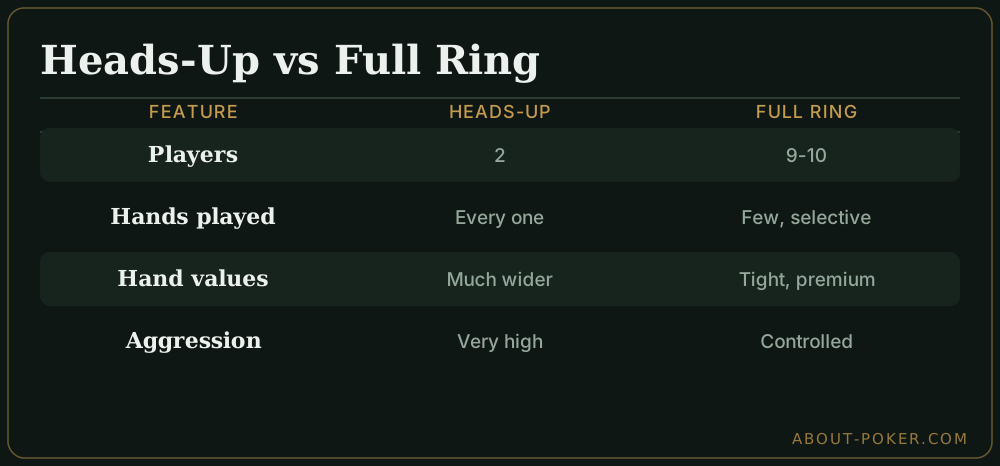
The number of seats at the table changes poker more than almost anything else. Heads-up (two players) and full ring (nine or ten) are the extremes, and moving between them flips your starting ranges, your aggression, and how much every position is worth.
| Feature | Heads-up | Full ring |
|---|---|---|
| Players | 2 | 9–10 |
| Hands played | Every one | Few, selective |
| Position | Button vs BB only | Full positional ladder |
| Hand values | Much wider | Tight, premium-leaning |
| Aggression | Very high | Controlled |
How table size rewrites hand values
In full ring, you are up against eight or nine opponents, so any hand you play has to beat many possible strong holdings. That is why you fold the vast majority of hands and treat premiums with respect — the more players behind you, the greater the chance someone holds a monster.
Heads-up removes that entirely. With only one opponent, you are simply racing a single random hand, which is usually weak. Marginal hands become strong: any ace, any king, most suited cards, and even many offsuit hands are now open-raising material. You play every hand in some way because folding the small blind constantly just donates chips.
Position and aggression
Full ring gives you the whole positional ladder — under the gun, middle, cutoff, button, blinds — and your range widens dramatically as you get closer to the button. Discipline in early position and aggression in late position is the backbone of solid full-ring play.
Heads-up collapses this to two seats: the button (who acts first preflop but last postflop) and the big blind. The button is enormously powerful because it has position on every postflop street, so you raise a huge chunk of hands from it. The whole match becomes a fast, aggressive back-and-forth where relentless pressure and constant adjustment decide the winner. Six-max sits between the two, sharing full ring’s structure but with the wider ranges and higher aggression of short-handed play covered in the short-handed guide.
A worked example
You hold K9 offsuit. In a full-ring game under the gun, this is a fold — too many players can dominate it with better kings or bigger hands. Now put the same K9 offsuit on the button heads-up. Here it is a clear raise: against one random hand, K9o is well ahead of your opponent’s average holding. If they defend with a hand like Q8 offsuit, you are roughly a 61% to 39% favorite. The cards did not change; the table size flipped a routine fold into a routine raise. That single example captures the entire difference between the formats.
Variance and skill edge
Heads-up is higher variance simply because you play every hand and pots come constantly. It is also where skill edges show up fastest — a better adjuster can exploit an opponent’s leaks over a short match. Full ring is lower variance and more patience-driven; you fold and wait, then capitalize when you have a strong hand against the field. Which suits you depends on whether you enjoy constant combat or measured selectivity.
Common mistakes
The classic error is importing full-ring tightness into heads-up: folding hands like A5 offsuit or K7 suited from the button, which bleeds the small blind and hands your opponent free pots. The reverse mistake is playing full ring like heads-up — raising junk under the gun and getting punished by the many players behind you. Each format demands its own range discipline; the ranges that print money in one lose in the other.
Which should you play?
Play full ring if you prefer patience, lower variance, and clear positional discipline — it is forgiving and great for building fundamentals. Play heads-up if you want maximum action, fast skill development, and a pure test of adjustment and aggression, and you can stomach the swings. Six-max is the popular middle ground with wider ranges than full ring but more structure than heads-up.
Quick checklist
- Full ring is 9–10 players; heads-up is 2; six-max sits between them.
- Fewer players means wider ranges and more aggression.
- The button is dominant heads-up because it has position postflop every hand.
- Never carry full-ring tightness into heads-up — play far more hands.
- Full ring rewards patience; heads-up rewards adjustment and pressure.
Frequently asked
How many players is full ring?
Full ring means a full table, typically nine or ten players in Texas Hold'em. Six-max sits between full ring and heads-up with six seats, and heads-up is just two players. The fewer the players, the wider you play and the more every position matters.
Is heads-up or full ring harder?
They are hard in different ways. Full ring is more about patience and hand selection against many opponents, so mistakes are less frequent but each pot can involve several players. Heads-up is a fast, high-variance battle of aggression and adjustment where you play every single hand and edges are decided by who adapts faster.
Do the same starting hands play in both formats?
No. In full ring you fold most hands and value strong holdings highly because many players can wake up with a big hand. In heads-up, hand values shift dramatically upward — any ace, any king, and most suited hands become strong because you are only ever against one random hand.