How to Defend Your Big Blind
You already have money in the pot, so the big blind gets a discount to call. Learn which hands to defend, when to 3-bet, and how position sets the price.
On this page · 6 sections
The big blind is the one seat where you’re forced to put money in before you see your cards — and that forced bet quietly changes the math of every hand. Because you already have chips in the pot, you get a discount to continue, which means you can defend far more hands than you’d ever play from any other position. But “defend wider” is not the same as “defend everything.” Knowing exactly how wide, and whether to call or raise, is one of the biggest edges a thinking player has over a beginner.
Why the discount exists
When someone raises and it folds to you in the big blind, you’re not calling the full raise — you’re only adding the difference between your posted blind and the raise size. If the button min-raises to 2 big blinds, you’ve already got 1 in, so you only have to add 1 more to see the flop. You’re getting a great price relative to the pot.
That price is the whole reason big-blind defense is a distinct skill. The blinds force action, and the big blind gets compensated for its bad position by a permanent discount to see flops. Your job is to convert that discount into profit without turning it into an excuse to call with garbage.
The pot-odds foundation
Suppose blinds are 1/2 and the button raises to 6. The pot is now 6 + 2 (your blind) + 1 (small blind) = 9, and you must call 4 more. You’re getting 9-to-4, roughly 2.25-to-1, so you only need about 31% equity to make the call break even. Many hands clear that bar against a wide steal range — even weak suited hands and small connectors realize enough equity to continue.
The catch is position. You’ll be out of position for the whole hand, which lowers how much of that raw equity you actually capture. So shade your calling range toward hands that flop well and are easy to play: suited cards, connectors, and pairs, rather than weak offsuit junk that makes bad top pairs. Position’s impact is covered in depth in the position strategy guide.
A worked example
Blinds 1/2, effective stacks 100 big blinds, cutoff opens to 5, folds to you in the big blind with 7♠ 6♠.
This is a clear call. The pot lays you 8-to-3 (you add 3 to a pot of about 8), and 7-6 suited is exactly the kind of hand that thrives at a discount: it makes straights, flushes, and disguised two pairs that stack a top-pair hand. You’re out of position, but the hand’s playability and the price make continuing profitable.
Change the hand to K♠ 4♦ and it’s a much closer spot — offsuit, dominated when it flops a king, and awkward out of position. Against a loose cutoff you can defend it, but it’s near the bottom of the range, and against a tight opener it’s a fold.
Call or 3-bet?
Defending isn’t only calling. Build your big-blind range in two parts:
- 3-bet your premiums (big pairs, A-K, A-Q) for value, plus a few bluffs like suited aces and suited connectors that block strong hands and play well when called. Re-raising also denies the raiser their positional advantage and can win the pot immediately.
- Call the broad middle: suited broadways, most pairs, suited connectors, and suited gappers that flop well and keep the pot manageable.
Mixing 3-bets and calls keeps you unpredictable. If you only ever call, opponents know your 3-bet is always the nuts and can fold everything but their best.
Adjust to the raiser’s position
Defend widest against late-position steals. When the button or cutoff raises, their range is loose because they’re trying to steal your blinds, so you’re right to fight back with a wide calling and 3-betting range.
Tighten dramatically against early-position raises. An under-the-gun open at a full table represents real strength, so your discount matters less than the fact you’re up against a strong, narrow range out of position. Fold the speculative junk and defend only hands that can stand heat.
Raise size matters too. Against a small min-raise, defend very wide because the price is fantastic. Against a large raise (3.5–4 big blinds or more), your discount shrinks, so tighten up.
A defense checklist
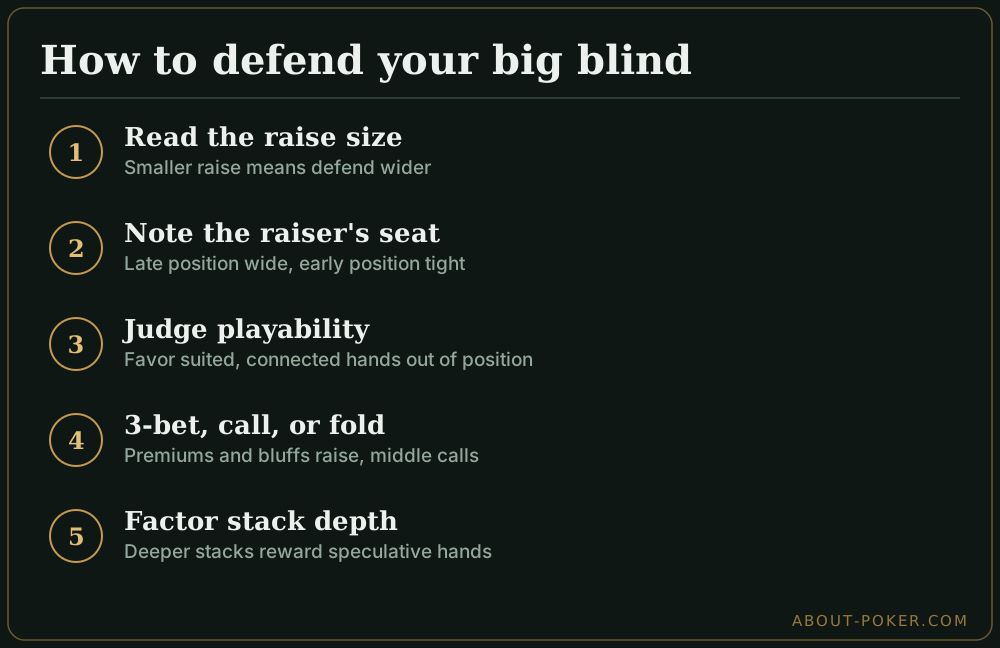
Run this every time it folds to you in the big blind:
- What’s the raise size? Smaller means defend wider.
- Where did the raise come from? Late position, wide; early position, tight.
- Does my hand flop well out of position? Favor suited and connected hands.
- Is this a 3-bet, call, or fold? Premiums and some bluffs raise; playable middle calls; junk folds.
- How deep are we? Deeper stacks reward speculative, high-implied-odds hands.
Play the big blind well and you plug one of the biggest leaks in beginner poker — either folding away your discount too often or calling with hands that can’t win. The forced bet is a cost, but the discount is a real edge if you use it with discipline.
Frequently asked
Why does the big blind get to defend so wide?
Because you already have one big blind invested, the pot lays you a discount to call. Against a min-raise you often only need to add one more big blind to see a flop, so you can profitably continue with many more hands than from other positions.
Should I call or 3-bet from the big blind?
3-bet your strongest hands and some bluffs to punish steals and stay balanced; flat-call the medium hands that play well multiway and flop decently. Folding the pure trash is still correct even at a discount.
How does the raiser's position change my defense?
Defend widest against late-position steals from the button and cutoff, since their ranges are loose. Tighten up sharply against early-position and under-the-gun raises, which represent much stronger hands.