How to Fold Discipline
Build fold discipline in Texas Hold'em: recognize when to lay down strong hands, beat sunk-cost thinking, read the story, and stop paying off the nuts.
On this page · 6 sections
Fold discipline is the ability to release a hand you are attached to when the evidence says you are beaten. It sounds simple, but it is the hardest habit to build, because folding a good-looking hand feels like surrender. In reality, the folds you make correctly are worth as much as the value bets you make correctly. The money you do not lose is money you keep.
Why Folding Is a Skill, Not a Weakness
Most losing players are not losing because they miss value — they are losing because they pay off hands that beat them. They call the river with top pair against an obvious flush, they refuse to fold an overpair when a tight player raises, and they bleed chips one “curiosity call” at a time. Learning to fold well plugs the biggest leak in most players’ games.
Folding correctly is an active, evidence-based decision. You are not being timid; you are reading the situation and concluding your hand is no longer good enough to invest more. That is strength, not weakness.
Beat the Sunk-Cost Trap
The most common reason players make bad calls is the money already in the pot. “I’ve put too much in to fold now” is the phrase that empties bankrolls. Those chips are gone the moment they leave your stack — they belong to the pot, not to you. The only question that matters is: for the price I must pay right now, do I have enough chance to win the pot as it stands?
If you must call 100 into a 300 pot but you are beaten 80% of the time, the fact that you already invested 200 earlier is irrelevant. You are risking new money on a losing proposition. Train yourself to reset at each decision point and evaluate only the current price against your current equity.
Read the Story the Betting Tells
Every hand tells a story through its betting. Fold discipline is largely the skill of reading that story honestly. Ask whether the line your opponent took makes sense as a bluff or as value. A passive player who calls, calls, then suddenly raises big on a scary river is almost never bluffing — the pattern says value. A board that completes an obvious flush or straight, followed by heavy betting, is a warning you should heed.
Combine this with reading the board: if the nuts is out there and your opponent is repping it with their sizing and timing, your one-pair hand is a bluff-catcher at best. Believe the story. Players who talk themselves into a call by inventing an unlikely bluff are the ones who go broke.
A Worked Example: Laying Down an Overpair
You hold Kh Kd and open to 3 big blinds. A tight, straightforward player calls from the big blind. The flop comes 9c 7c 5h. They check, you bet, they call. The turn is the 8c, and now they lead into you with a large bet.
Stop and read it. The board now has three clubs (flush possible), and 9-8-7 is deeply connected (straights everywhere). This is a passive player who checked the flop and is now betting big into the preflop raiser on a card that completed multiple draws. Your overpair — a monster on a dry board — is a modest hand here. Against this specific opponent’s line, kings are frequently beaten by a flush, a straight, or a set. This is a textbook disciplined fold, even though pocket kings feel too strong to release. The willingness to fold an overpair or top pair in the right spot is exactly what separates disciplined players from calling stations.
Avoid Tilt-Driven Hero Calls
Discipline collapses under emotion. After a bad beat, players often “hero call” the next big bet out of frustration or a desire to be right. That is tilt, not analysis. If you notice you want to call because you are annoyed, angry, or bored, that is your signal to fold and reset. Correct folds are calm folds. Take a breath, evaluate the price and the story, and if the numbers say fold, fold — regardless of how the last hand went.
A Fold-Discipline Checklist
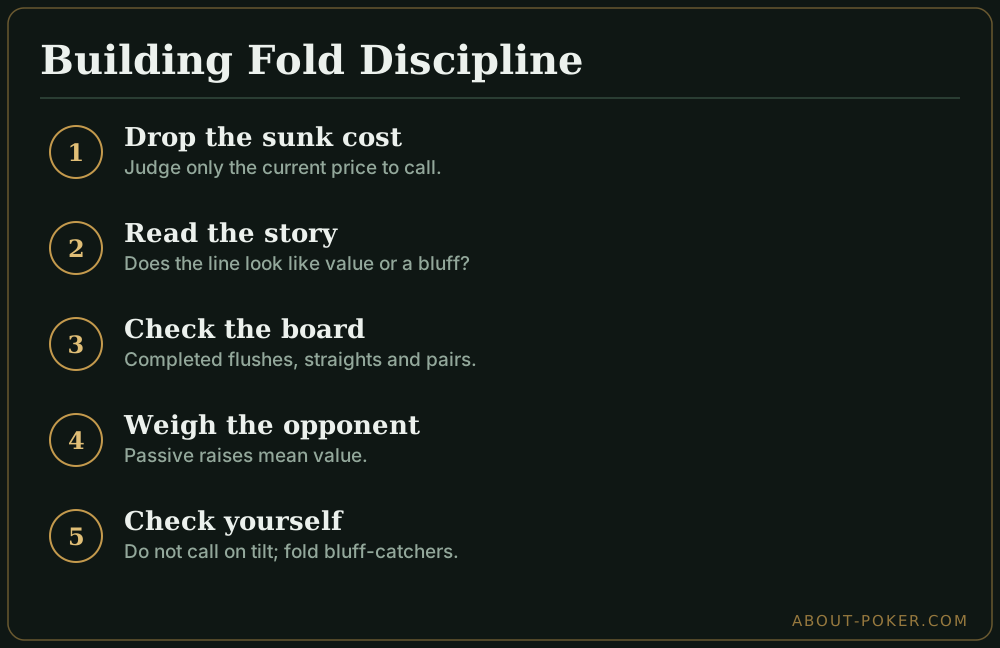
Run through this before any large call:
- Ignore the chips already in the pot — evaluate only the current price.
- Read the betting story: does it look like value or a bluff?
- Check the board for completed flushes, straights, and paired danger.
- Weigh your opponent’s tendencies — passive raises mean value.
- Notice your emotional state; do not call on tilt.
- If your hand is a clear bluff-catcher against a value line, let it go.
Fold discipline will not win you flashy pots, but it will quietly transform your results. Every big pot you avoid losing goes straight to your bottom line. The best players in the world are famous for their big folds precisely because those folds, made calmly and on evidence, are worth a fortune over time.
Frequently asked
Isn't folding a good hand just being weak?
No. Folding the second-best hand is one of the biggest money savers in poker. Strong players fold top pair or an overpair when the action screams a bigger hand. Discipline means acting on evidence, not on how pretty your cards look.
How do I stop calling just because I already put money in?
Ignore the chips already in the pot; they are no longer yours. Each decision is only about the price to call now versus your chance to win now. Sunk-cost thinking is the single most expensive leak for most players.
How can I tell when a fold is right?
Read the whole story: does the betting line make sense for a bluff or for value? On a scary board, when a passive player suddenly raises big on the river, they almost always have it. Trust the pattern over your attachment to your hand.