How to Size a Preflop Raise
How to size a preflop raise in Texas Hold'em: standard open-raise sizes, adjusting for limpers and position, 3-bet sizing, and a clear worked example.
On this page · 6 sections
Your preflop raise size quietly shapes the entire hand. Raise too small and you invite a crowd, bloat multiway pots, and give speculative hands a cheap look. Raise too large and you win small pots while risking a lot, and you telegraph your strong hands if you only size up with them. Good preflop sizing is consistent, position-aware, and adjusted for the specific table — and it is learnable in an afternoon.
Why Preflop Sizing Matters
The open raise does three jobs at once: it builds the pot with your good hands, it charges worse hands to continue, and it thins the field so you play more often in position against fewer opponents. A well-chosen size accomplishes all three. Getting it wrong undermines your whole postflop game, because you inherit either a giant multiway pot with a marginal hand or a pot so small it is not worth the risk you took.
Sizing also interacts with your bet-sizing plan on later streets — a bigger preflop pot means bigger absolute bets postflop, so choose your open with the whole hand in mind.
The Standard Open-Raise Size
The modern default in no-limit Hold’em is about 2.5 to 3 big blinds. Online, tougher games have drifted toward 2.2 to 2.5 big blinds because opponents defend well and the smaller size keeps the pot manageable. Live and lower-stakes games play looser, so 3 to 4 big blinds is standard there — you need a larger raise to actually get folds when the table loves to call.
Pick one baseline and use it for your whole opening range from a given position, whether you have aces or a suited connector. Sizing consistently is critical: if you only make it large with premium hands, observant opponents will read your holding from your bet size alone.
Adjust for Position and Table
Your position shifts the sizing slightly. From early position, where you will often be out of position postflop, a marginally larger open (say 3 big blinds) helps thin the field. From the button, a smaller open (2.2 to 2.5 big blinds) is fine because you will have position and can steal the blinds cheaply. Against tight players who overfold, size down to steal more efficiently. Against sticky callers, size up so your value hands get paid and your weak hands still fold out the trash.
Adding for Limpers
When players limp in front of you, the standard raise is no longer enough — several callers are already in, and your normal open gives them a cheap multiway pot. The rule of thumb is to add one big blind for each limper on top of your usual size.
Example: your baseline open is 3 big blinds. Two players limp. Raise to roughly 3 + 2 = 5 big blinds. This charges the limpers a real price to continue and reduces the chance you face three or four callers. If you would normally open to 3 and there are three limpers, go to about 6. The point is to keep the same proportional pressure regardless of how many limpers you face.
A Worked Example
You are on the button in a 1/2 no-limit cash game (big blind is 2). It folds to you. Your baseline is 2.5 big blinds, so you open to 5. Clean and standard.
Now rewind: two players limp in for 2 each before it reaches you. The pot is already 1 + 2 + 2 + 2 = 7. If you raise to your usual 5, both limpers get a great price and likely call, and you are playing a bloated multiway pot. Instead, add a big blind per limper: 2.5 + 2 = 4.5 big blinds, so raise to about 9. That pressures the limpers and often folds out the blinds.
Facing a 3-bet next hand: you open to 5, a player 3-bets you. If they are in position, expect about 3 times your raise (around 15); out of position, 3.5 to 4 times (around 18 to 20). If you are the one 3-betting, mirror those numbers. With deep stacks, lean toward the larger multipliers; with shallow stacks, smaller.
A Preflop Sizing Checklist
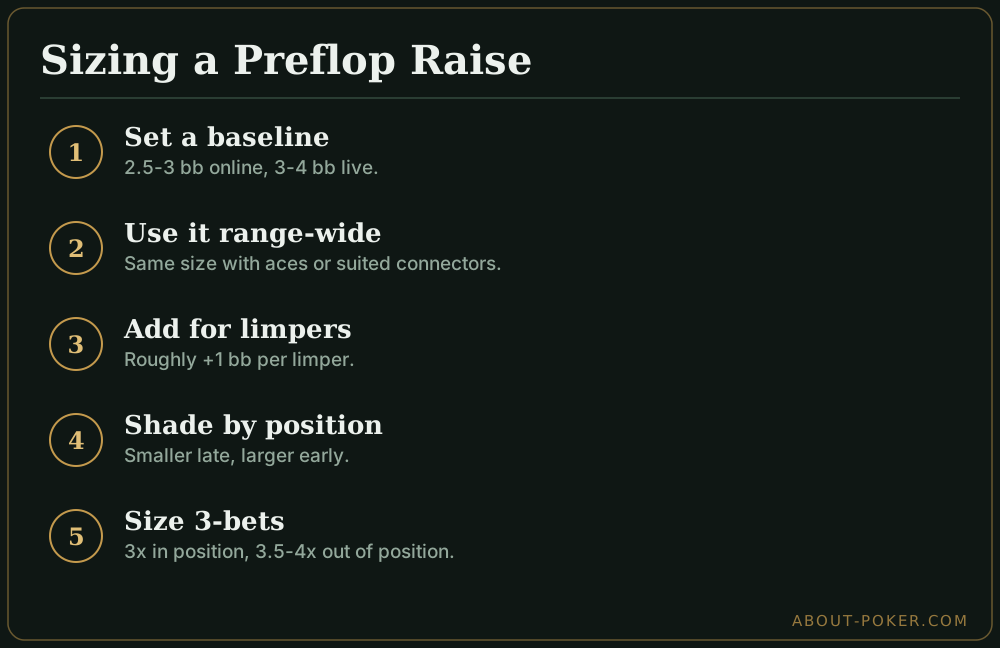
Keep this handy until the numbers are automatic:
- Set a baseline open of 2.5 to 3 big blinds (3 to 4 live).
- Use the same size across your whole range from a position.
- Add roughly one big blind per limper.
- Shade smaller from late position, larger from early position.
- Size 3-bets to about 3x in position, 3.5 to 4x out of position.
- Adjust up versus callers, down versus overfolders.
Consistent, thoughtful preflop sizing keeps you out of ugly multiway spots, builds pots with your strong hands, and hides your holdings. It is one of the highest-leverage habits a developing player can build, and it costs nothing to start doing correctly today.
Frequently asked
What is a standard preflop raise size?
In no-limit cash games a standard open is about 2.5 to 3 big blinds from most positions, with online play trending toward 2.2 to 2.5 big blinds. Live games and looser tables often use 3 to 4 big blinds because more players call.
How much should I add for limpers?
Add roughly one big blind for each limper on top of your normal open. If you would open to 3 big blinds and two players have limped, raise to about 5 big blinds so you are not laying a cheap price to the field.
How big should a 3-bet be?
In position, 3 times the original raise is a common 3-bet size; out of position, 3.5 to 4 times is standard because you want to charge more when you will be acting first postflop. Adjust with stack depth.