Tight vs Loose Play
Tight vs loose play in poker explained: how many hands to play, why tight-aggressive wins for most players, and when opening up actually makes money.
On this page · 5 sections
“Tight” and “loose” describe how many hands you choose to play, while “aggressive” and “passive” describe how you play them. The two axes are separate, and confusing them causes most of the bad advice you hear at the table. Tight vs loose is purely about selection: a tight player folds most of their starting hands and enters pots only with holdings that have real value, while a loose player plays a much wider range, including speculative and weak hands. Getting this dial set correctly is the fastest way for a developing player to stop losing money.
What tight and loose actually mean
Every player has a voluntarily-put-money-in-pot number, or VPIP — the percentage of hands they choose to play rather than fold. That single figure defines where you sit on the tight-loose spectrum. A tight full-ring regular plays around 18-24% of hands; a loose recreational player might play 40-50%. The difference sounds small on paper but it is enormous in practice, because the extra hands a loose player adds are, by definition, the weakest ones. Those hands make weak pairs, dominated top pairs, and second-best draws — exactly the holdings that lose big pots.
The key insight is that hand strength is relative. If you fold everything except strong hands, then every time you do enter a pot you start with an edge over an opponent who plays trash. Tight play manufactures that edge automatically, before a single community card is dealt.
Why tight play wins for most players
Poker punishes marginal decisions. When you play too many hands, you constantly find yourself in tricky spots: middle pair on a scary board, a weak flush draw against a raise, top pair with a bad kicker facing heavy action. Each of those spots is a coin-flip decision where mistakes cost real money. A tight range removes most of those spots before they happen.
Tight play also gives you the range advantage. Because your hands are stronger on average, you can bet and raise more confidently, and your opponents cannot profitably call you down light. This is why “tight-aggressive” (TAG) is the recommended starting style for anyone serious about improving — it pairs disciplined selection with the initiative that comes from betting rather than calling. If you find yourself involved in too many pots, that is usually the most common Texas Hold’em mistake beginners make.
A worked example
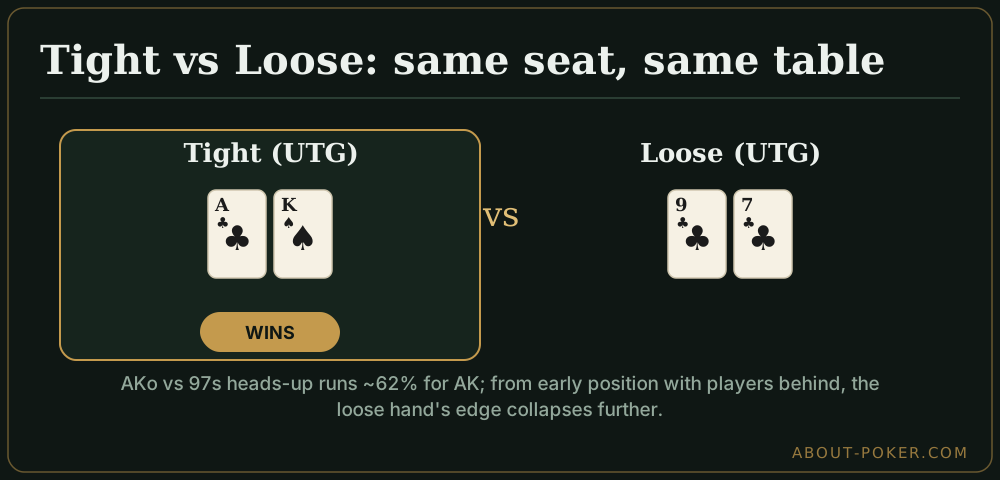
You are in a 6-max game and dealt 9c 7c (nine-seven suited) under the gun. A loose player reasons, “It’s suited and connected, it can flop big.” A tight player folds instantly — and here is why the fold is correct.
From the first seat, four players still act behind you. When you flop a pair of nines, someone with a bigger pair or a nine with a better kicker is punishing you. When you flop your flush draw (about 11% of the time), you often face aggression from position with no fold equity. The hand simply does not have the strength to overcome acting first against so many opponents. Move that exact hand to the button, though, and it becomes a fine open — the same cards, different position. That is the whole game: hand value depends on position, and tight ranges get looser the later you sit. See starting hands by position for the seat-by-seat breakdown.
When loose play makes money
Loose is not automatically bad. Skilled loose-aggressive (LAG) players win by applying constant pressure, forcing opponents into uncomfortable decisions, and getting paid off because their range is hard to read. But this style only works with three things in place: excellent postflop skill, reliable reads on opponents, and the discipline to fold when the pressure is turned back on you. Without those, “loose” just means “spewing chips into pots you should never have entered.”
There are also legitimate spots to widen. In late position against tight opponents, stealing the blinds with a wide range is pure profit. Short-handed and heads-up games force everyone looser because there are fewer hands to wait for. And against a single very weak player, calling a bit wider to isolate them can be correct. The point is that these are deliberate, situational adjustments — not a general license to play more hands.
How to find your correct balance
Start tighter than feels comfortable and loosen only where you have a clear reason. Use position as your primary guide: fold the widest under the gun, open up through the middle, and play your widest range on the button and in the cutoff. Anchor your selection to acting last whenever possible, because position is the single biggest edge in Hold’em.
A practical checklist to calibrate your play:
- Track your VPIP. If it is above 28% in full ring, you are too loose.
- Fold more from early position. Most leaks live in the first two seats.
- Widen only in position and against weak, passive opponents.
- Tighten up when facing aggression — a raise in front of you should shrink your range immediately.
- Never confuse tight with passive. Play your tight range aggressively; folding a lot does not mean checking and calling with what you keep.
Set the dial to tight, add aggression, and adjust looser only with a reason. That single discipline outperforms almost every other adjustment a new player can make.
Frequently asked
Is tight or loose play better in poker?
For most players, tight is better as a default. Playing fewer, stronger hands means you make fewer difficult decisions and enter more pots with the range advantage. Loose play only wins when it is paired with genuine skill after the flop; without that skill it just bleeds chips.
What percentage of hands should I play?
In a full-ring cash game a solid tight-aggressive regular voluntarily puts money in the pot with roughly 18-24% of hands. In 6-max that rises to about 22-28%. Beginners are usually far too loose, playing 40% or more, which is the single most common leak.
What does TAG and LAG mean?
TAG means tight-aggressive: a narrow hand selection played with betting and raising rather than calling. LAG means loose-aggressive: a wider range played just as aggressively. TAG is the safest winning style to learn first; LAG is higher-variance and demands strong postflop reads.