Zoom vs Regular Cash
Zoom vs regular cash games compared: hands per hour, table reads, strategy adjustments, and which format grows your win rate fastest.
On this page · 7 sections
Zoom (and its cousins like Fast-Forward and Rush) is fast-fold poker: the instant you fold, you are whisked to a new table with a new hand and new opponents. Regular cash keeps you at one table, hand after hand, with the same players. That difference reshapes your reads, your ranges, and your hands per hour.
| Feature | Zoom | Regular cash |
|---|---|---|
| Fold behavior | Instant new table | Wait for next hand |
| Opponents | Constantly changing | Stable |
| Hands per hour | Very high | Moderate |
| Reads/reads-based exploits | Minimal | Strong |
| Default strategy | GTO-leaning | Exploit-leaning |
The core mechanic
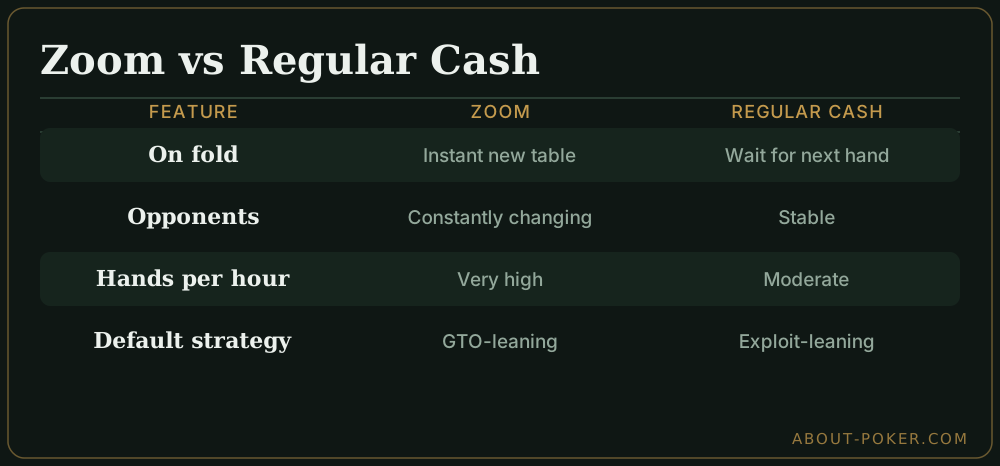
In a regular game you sit with the same eight opponents and, over dozens of hands, learn who limps too much, who bluffs the river, and who folds to c-bets. You exploit those tendencies. In Zoom, that intel evaporates — every hand you fold sends you to a fresh table full of strangers, and the players you face are effectively anonymous. You cannot build a read that lasts more than a hand or two.
The upside is raw volume. Because you never wait out a hand you have folded, you can play three to four times as many hands per hour as at a single regular table. That volume is why Zoom appeals to grinders and study-focused players: more hands means faster feedback and faster sample size.
How strategy shifts in Zoom
Without reliable reads, your best default in Zoom is a solid, balanced, near-GTO strategy. You lean on sound preflop ranges and standard bet sizing rather than opponent-specific plays. Two practical adjustments matter most:
- Fold marginal hands out of position more freely. In regular cash you might defend a wide big-blind range to exploit a specific opener. In Zoom, folding and instantly getting a new hand is often better than defending a tricky spot against an unknown.
- Attack out of position less. Fancy floats and multi-street bluffs against strangers are riskier when you have no read to lean on.
Regular cash, by contrast, rewards patience and observation — the cash-game strategy guide covers the exploitative reads that Zoom largely removes.
A worked example
You are in the big blind in Zoom facing a min-raise from the button, holding Q7 offsuit. At a regular table where you have watched the button steal relentlessly, defending here is fine — you know they will fold to resistance. In Zoom, the raiser is an unknown, your hand plays poorly out of position, and folding costs you almost nothing because you immediately get dealt a new hand at a new table. The instant fold-and-move is the higher-value play. Multiply that logic across a session and Zoom quietly folds you into more profitable spots simply because sitting out marginal ones is free.
Volume versus edge
The real trade-off is a smaller per-hand edge for a much larger number of hands. If your regular-table win rate is higher because of reads, but you only play 80 hands an hour, a lower Zoom win rate over 250 hands an hour can still yield a better or comparable hourly rate. The right choice depends on whether your strongest skill is reading opponents (favors regular) or executing a solid, disciplined default at speed (favors Zoom).
Common mistakes
The biggest Zoom leak is trying to play it like a regular table — hunting for reads that do not exist and making hero calls or floats against strangers. The second is auto-folding so much that you become predictable and stop defending hands you should. Balance is the antidote: play a solid default, defend the right frequency, and let the volume do the work.
Which should you play?
Play Zoom for volume, faster study feedback, and a game that rewards a disciplined GTO-leaning default. Play regular cash when your edge comes from reading and exploiting specific opponents, when you want to table-select softer games, or when you prefer a calmer pace. Many players use Zoom to build fundamentals and regular tables to cash in on soft lineups.
Quick checklist
- Zoom moves you to a new table the instant you fold; regular cash keeps the same opponents.
- Zoom removes reads, so lean on a solid, balanced default strategy.
- Fold marginal out-of-position hands more freely in Zoom — a new hand is one click away.
- Regular cash rewards observation and opponent-specific exploits.
- Weigh Zoom’s volume against regular cash’s higher per-hand edge for your hourly rate.
Frequently asked
What is Zoom poker?
Zoom is PokerStars' fast-fold cash format, where folding instantly moves you to a new table with new opponents instead of waiting for the current hand to finish. Other rooms have their own names for it, like Fast-Forward or Rush, but the mechanic is the same: constant, table-hopping action.
Is Zoom or regular cash more profitable?
Regular tables usually have a higher win rate per hand because you can build reads and exploit specific opponents over time. Zoom trades that per-hand edge for volume — you play many more hands per hour, so a smaller edge can still produce solid hourly profit.
Does Zoom require different strategy than regular cash?
Yes. Because you constantly face new, anonymous opponents, Zoom pushes you toward a solid, GTO-leaning default strategy rather than opponent-specific exploits. You also fold more marginal hands out of position since you can instantly move on to a fresh hand.