What Is Attempt To Steal in Poker?
Attempt to steal (ATS) measures how often a player opens to win the blinds from late position. Learn what it means and how to exploit high and low stealers.
On this page · 6 sections
Attempt to steal, usually abbreviated ATS, is the HUD stat that measures how often a player raises from a late position when the action folds to them, trying to win the blinds without a fight. Late position here means the cutoff, the button, and the small blind. Because these seats can pick up the blinds uncontested more often than any other, raising from them is called stealing, and the frequency at which a player does it tells you a lot about how aggressive and positionally aware they are.
What the stat counts
ATS is calculated as the number of times a player open-raised from a steal position when folded to, divided by the number of times they had that opportunity, times 100. The three steal positions are the cutoff, the button, and the small blind. If the pot is already opened or someone has limped in, it is no longer a steal opportunity and does not count.
A single blended number can hide a lot, so most trackers let you split ATS by seat. Button steals should be the widest because the button acts last postflop and faces only two players. Cutoff steals are tighter because one more player, the button, still sits behind. You can read more about this stat and its cousins in our guide to advanced HUD stats: steal and postflop.
What a good steal percentage looks like
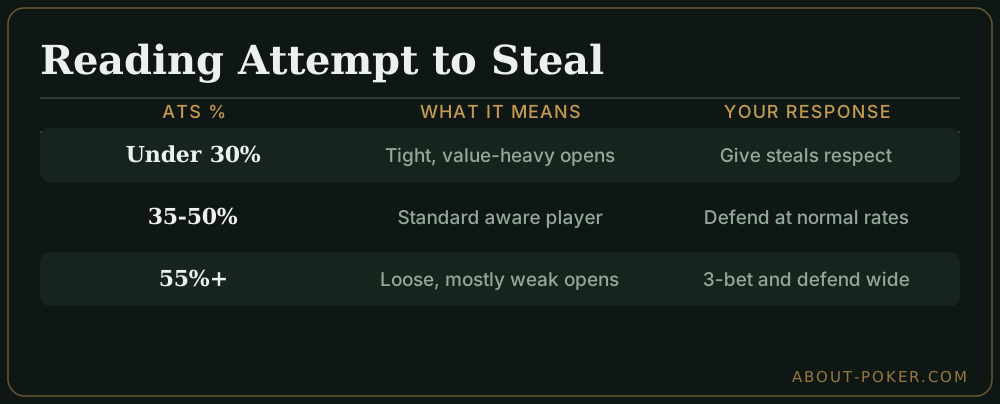
There is no single correct number, but useful benchmarks help:
- Under 30 percent: too passive. This player folds hands that should raise for value against tight blinds and leaves easy chips uncollected.
- 35 to 50 percent: solid and standard for a thinking player.
- 50 to 60 percent+: aggressive. On the button specifically, strong regulars steal well over half their opportunities, which is correct when the blinds fold too much.
The right number depends on how the blinds defend. If the players behind rarely fight back, a very high steal is printing money. If they 3-bet constantly, a lower, tighter steal is smarter.
A worked example
You are in the big blind. The button, whose HUD shows a 62 percent button ATS over 1,500 hands, raises to 2.5 big blinds. That 62 percent means their range is enormous: any ace, most suited hands, offsuit broadways, and plenty of junk. Your hand is K9o. Normally a marginal big-blind defend, but against this range K9o is a clear continue. You can call and see a flop with a hand that dominates a lot of their offsuit garbage, or 3-bet to punish the steal directly. Folding K9o here would be a mistake; you would be over-folding to a range that is mostly weak.
Now suppose the button shows a 34 percent ATS. That tighter range contains fewer trash hands and more real values, so K9o slides back toward a fold or a cautious call, because more of their range beats you.
How to exploit the number
Against a high stealer, the counter is to defend your blinds more, not less. Widen your big-blind calling range and 3-bet more often, targeting the weak bottom of their opening range. Because they raise so much air, your 3-bets get through frequently, and when called you often have the better hand. Against a low stealer, do the opposite: give their steals more respect, fold marginal blind hands, and do not spew chips 3-betting into a tight range. The fold to steal stat on your own HUD is the mirror image and tells opponents whether stealing against you is profitable.
Common mistakes
The first mistake is reading the blended ATS number and forgetting to check position. A 45 percent overall steal might be a tight 30 percent from the cutoff and a loose 60 percent from the button, which demand different responses. The second is under-defending against high stealers because their raise “looks strong”; the whole point of a high steal is that most of the range is weak. The third is trusting the stat on a tiny sample. Steal frequencies need a few hundred opportunities per position before they mean much.
Quick checklist
- Confirm the sample size and split ATS by cutoff, button, and small blind.
- Under 30 percent means tight; respect their opens.
- Over 55 percent means loose; defend and 3-bet your blinds wider.
- Cross-reference with fold-to-3-bet to know if re-raising their steals works.
- Watch your own fold-to-steal so regulars cannot run over your blinds.
Read alongside the rest of your layout as described in how to read and use a poker HUD, attempt to steal turns the blind battle from a guess into a math problem you can win.
Frequently asked
What is a good attempt to steal percentage?
For a competent player, roughly 35 to 50 percent from the steal positions is standard, and strong regulars often push toward 45 to 55 percent when the blinds are tight. Below 30 percent is too passive and leaves money on the table.
Which positions count as steal positions?
Attempt to steal counts open raises from the cutoff, button, and small blind when the action folds to that player. These are the seats where an open can win the blinds uncontested most often, so raising there is called a steal.
How do I exploit a high stealer?
Against someone who steals over 55 percent, defend your blinds wider by 3-betting and calling more, especially from the big blind. Their opening range is weak, so re-raising light and continuing on many flops shows a profit.